

Scientists have uncovered the cause of sea star die-offs
Scientists have discovered that the mass die-off of sea stars along the Pacific coast was caused by the bacterium Vibrio pectenicida. This finding offers hope for restoring ecosystems that have suffered from the disappearance of key predators and the destruction of underwater forests.
Natura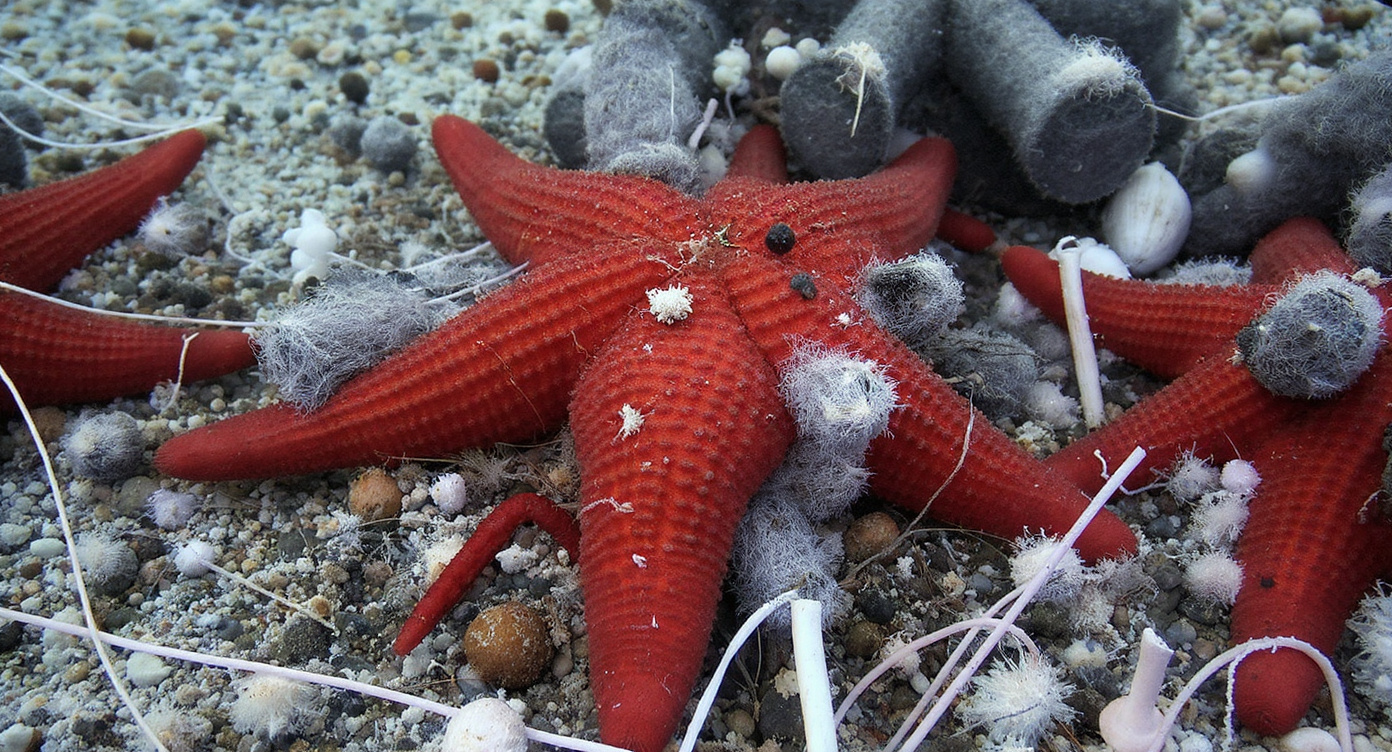
A mysterious epidemic that swept along the Pacific coast of North America has wiped out billions of sea stars. After more than a decade of searching, scientists have finally identified the culprit behind this catastrophe: the bacterium Vibrio pectenicida—an invisible predator capable of transforming entire coastal ecosystems. Under its influence, sea stars develop ulcers, lose their arms, and literally dissolve, leaving behind only ghostly remains.
Uncovering the Cause of the Epidemic
A recent study published in the journal Nature Ecology & Evolution confirmed that it is specifically the FHCF-3 strain of Vibrio pectenicida that causes sea star wasting disease. This marine plague can decimate entire populations in just a matter of days. Since 2013, the outbreak has led to the death of an estimated five billion sea stars from Baja California to Alaska, triggering profound changes in local ecosystems.
For a long time, the cause of this mass die-off remained a mystery. Early research focused on densovirus, but it turned out to be common even in healthy sea stars. The breakthrough came when scientists began analyzing not only dead tissue but also coelomic fluid—the internal “blood” of sea stars. There, they discovered the Vibrio pectenicida pathogen, which had previously escaped detection due to its poor preservation in deceased organisms.
Experimental Confirmation
The next step was to infect healthy sea stars with this bacterium. Within days, the animals developed the same symptoms seen in the wild: rapid tissue loss and death. This provided definitive proof that Vibrio pectenicida is the cause of the wasting disease.
The Significance of the Discovery and Ongoing Challenges
Identifying the cause gives scientists a concrete target in the fight against the epidemic. As Dr. Hugh Carter, curator of marine invertebrates, noted, there were many competing theories for years, but now that the culprit is known, efforts can focus on finding solutions. However, full ecosystem recovery is still a long way off.
Part of the challenge lies in the very nature of the pathogen. Vibrio bacteria are not newcomers but long-standing residents of the sea, playing a crucial role in nutrient cycling and organic matter decomposition. Under normal conditions, they even help maintain the health of marine life. But when faced with unfavorable factors—such as warming waters, excess nutrients, or host stress—they can become dangerous, spreading rapidly and causing mass die-offs.
Consequences for the Ecosystem
At first glance, the disappearance of sea stars might seem insignificant—until you see how the coastline changes. Without their key predators, the balance of coastal ecosystems is disrupted: sea urchins multiply unchecked and destroy kelp forests, waves grow stronger, and the usual rhythm of life is thrown off. Losses that began underwater are felt much more broadly.
Such ecological upheavals have happened before. For example, after wolves were eradicated from Yellowstone National Park in the early 20th century, elk populations soared, decimating vegetation and leading to riverbank erosion and the disappearance of beavers. Remove a keystone species, and the entire structure of the ecosystem can change beyond recognition.
Now, a similar drama is unfolding on the Pacific coast, but on a much larger scale. Here, the sunflower sea star (Pycnopodia helianthoides) was a key species—one of the most widespread predators in the intertidal zone. Since the start of the epidemic, its population has declined by more than 90%, and in some regions, it has nearly vanished. Without these predators, purple sea urchins have multiplied uncontrollably, stripping kelp forests down to bare rock.
Impact on Coastal Forests and Climate
The result is an unprecedented underwater deforestation in this region. Kelp forests are not just a picturesque backdrop—they are vital nurseries for fish, feeding grounds for marine mammals, and the foundation of coastal ecosystems. They help stabilize the climate by absorbing carbon, protect shorelines from storms, and slow erosion. In Northern California alone, over 90% of these crucial forests have disappeared, threatening fisheries, seabird colonies, and the very balance of coastal waters.
Paths to Recovery
Now that the cause has been identified, there is hope for restoration. Although the task is daunting, captive breeding programs for sea stars—such as those at the Seattle Aquarium—are working around the clock to raise healthy individuals for release back into the wild. Each new generation is a step toward restoring balance in the intertidal zone.
This case vividly demonstrates that marine diseases can devastate ecosystems just as a wildfire destroys a forest or a crop disease wipes out a harvest. Now that the cause has been found, scientists can focus on protecting the remaining populations and begin the long process of rebuilding the living infrastructure of the Pacific coast.