

SpaceX plans to launch 100,000 Starlink V3 satellites
SpaceX has requested permission to launch and operate up to 100,000 third-generation Starlink satellites, which would significantly increase the system's capacity but also raises concerns about orbital safety.
Signum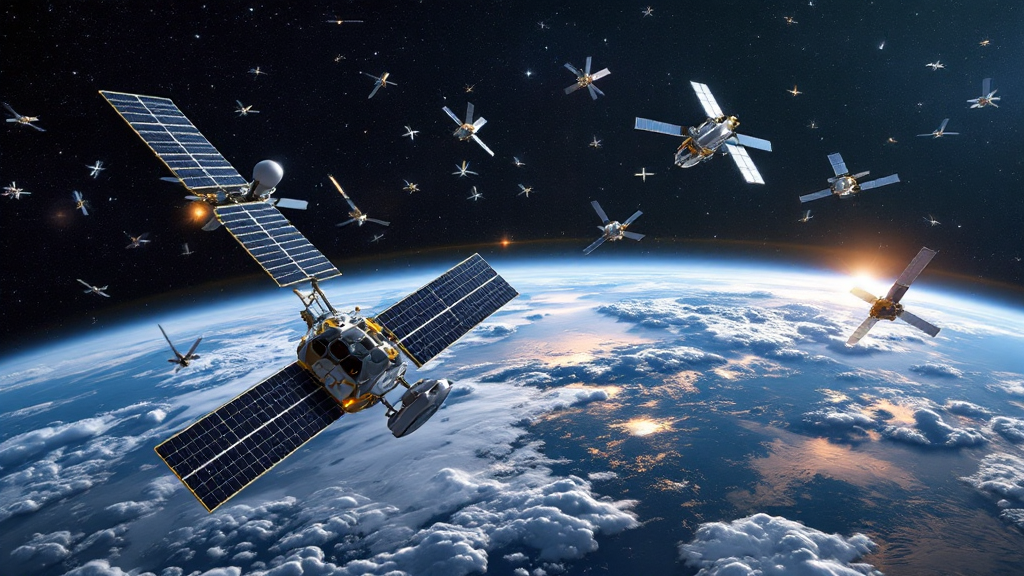
SpaceX has submitted a new application to the US Federal Communications Commission, requesting permission to launch and operate a third-generation V3 (Gen3) satellite constellation, which could include up to 100,000 satellites.
Features of the New Satellite System
The application states that the company plans to create a third-generation system in low Earth orbit. The satellites will be deployed in two closely spaced orbital shells at altitudes of approximately 323–327.5 km and 473–477.5 km. A wide range of orbital inclinations has also been requested—from 26 to 96.9 degrees.
It is expected that each Gen3 satellite will weigh up to two tons, nearly three times heavier than Gen2 satellites. Launching such heavy spacecraft will require the new Starship rocket.
Technical Specifications and Capabilities
The system is expected to see a significant increase in throughput. Download capacity will rise about tenfold to 1 Tbit/s, while upload capacity will increase 22 times. The combined radio frequency and laser communication per satellite will reach around 4 Tbit/s.
The Gen3 system is designed to provide extremely low latency and symmetrical multi-gigabit bandwidth for users, businesses, government agencies, and billions of AI-enabled devices worldwide. To achieve these goals, new frequency bands and spectrum-sharing mechanisms will be used for American users.
Reasons for Scaling Up
The company notes that such high capacity is necessary to support the transmission of large volumes of spatial and audio data required for real-time decision-making and industrial automation. Without this, according to SpaceX, the US will not be able to maintain its competitiveness in the era of artificial intelligence.
Project Scale and Potential Consequences
Currently, there are about 10,700 Starlink satellites in orbit out of the 15,000 authorized for Gen2. Approval for 100,000 V3 satellites would nearly increase the number of active satellites tenfold compared to the current combined fleet of all operators.
Astronomers and orbital safety experts point out that Starlink is already the main source of collision avoidance maneuvers in low Earth orbit. Increasing the number of satellites will lead to more objects requiring daily monitoring. SpaceX’s application is expected to face challenges, including from potential competitors, due to the possible increased burden on orbital traffic.