

Grasshopper wings amplify courtship songs and aid in camouflage
The study found that the large, leaf-like wings of Viadana brunneri katydids both amplify the males' mating calls and help them blend into the surrounding vegetation, aiding their survival and reproductive success.
Cursus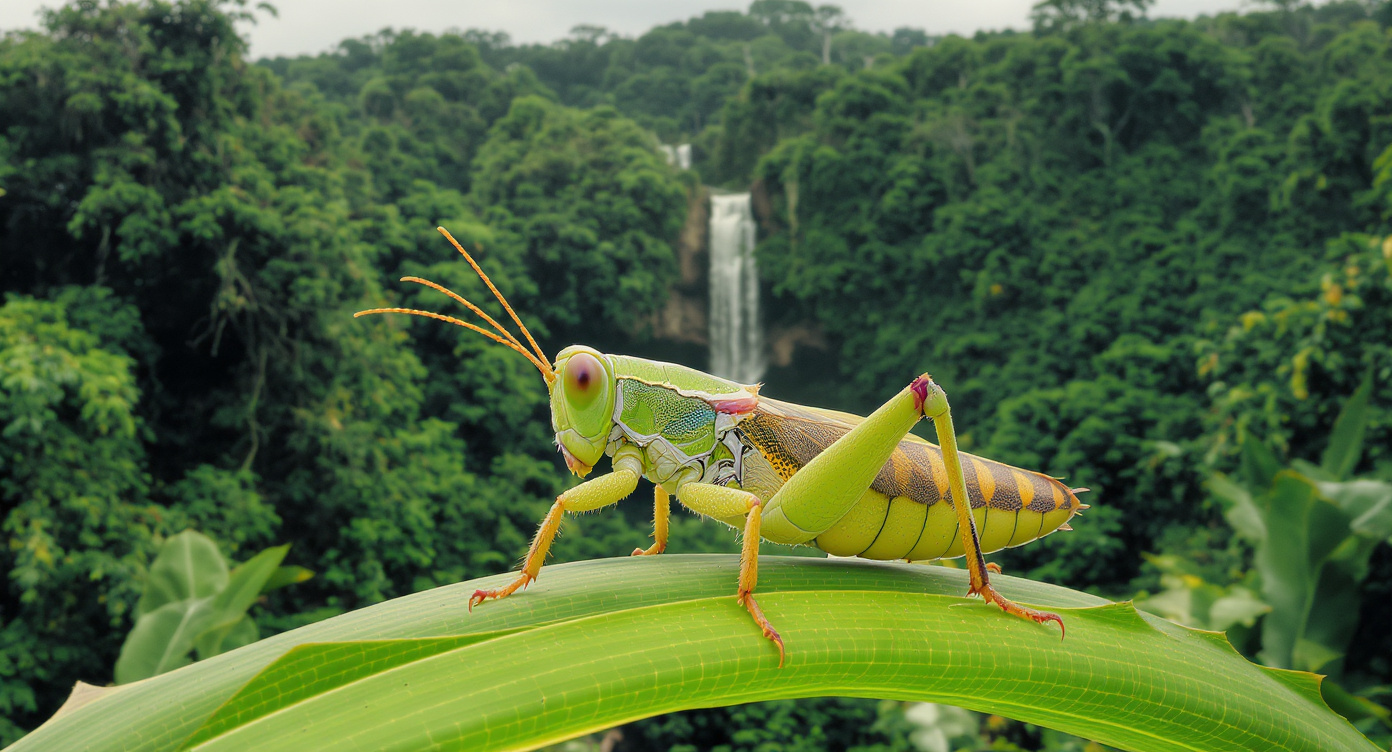
The chirping of grasshoppers is a mating song produced by insects as they rub specialized structures on their wings together. In some species, large, leaf-like wings have evolved for camouflage. These wings do not directly create sound, but they vibrate, altering the tone and amplifying the signals made by males, making them more attractive to females.
Viadana brunneri is a species of grasshopper found on the islands of Panama. Thanks to their large, bright green forewings that mimic not only the color but also the texture of leaves, these insects are well-camouflaged among vegetation. A study conducted on Barro Colorado Island focused on how such camouflage traits, which arose through natural selection, influence the attractiveness of male mating songs in this species.
Traditionally, it is believed that traits developed to improve survival (natural selection) and those that evolved to attract mates (sexual selection) can sometimes be at odds. For example, the peacock’s bright plumage helps attract females but also makes males more visible to predators. However, the results of this study show that these qualities can actually complement each other.
During the experiment, male and female Viadana brunneri were placed in cages with microphones to record their mating songs. Then, the forewings of some grasshoppers were removed and the recordings were repeated. In total, 1,621 songs from 30 individuals were analyzed. Acoustic and resonance analysis revealed that males with intact wings produced louder and lower-frequency sounds, which females preferred.
This research is a rare example of harmonious interaction between natural and sexual selection, where certain traits simultaneously aid survival and reproductive success. Future studies aim to explore how such interactions have evolved in grasshoppers.