

Play among adult primates is linked to equality.
A new study has shown that adult primates’ tendency to engage in play is determined not by their physical characteristics, but by the social structure of their group: play persists where equality and tolerance prevail. In hierarchical societies, such interactions disappear because the risks outweigh the potential benefits.
Cursus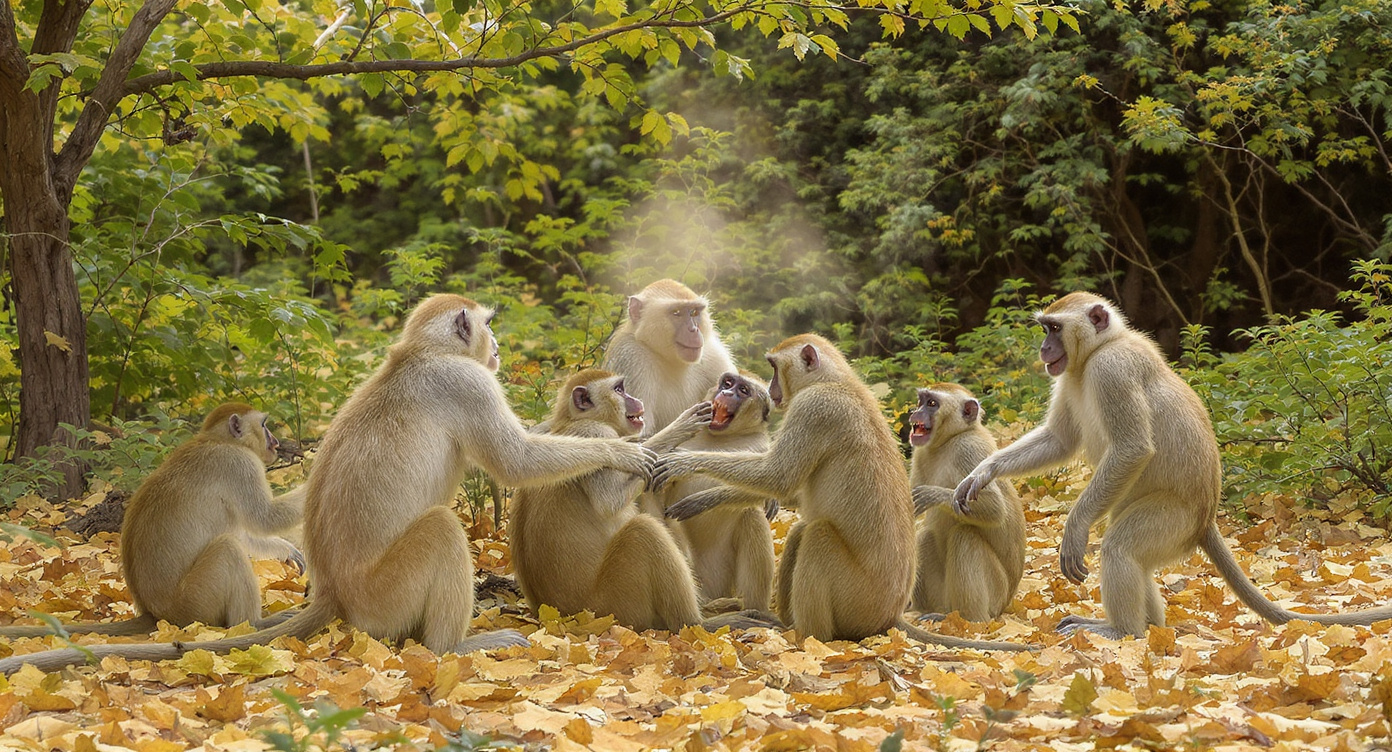
Study of Play Behavior in Adult Primates
Research has shown that adult individuals of some monkey species continue to engage in play with each other, while in other species such activity is absent. The reasons for this phenomenon remained unclear for a long time. Recent scientific analysis has revealed that the tendency for play among adult primates is linked to the internal social structure of the group: playful interactions are mainly preserved in communities where members hold equal positions in the hierarchy.
Features of Play Activity in Adult Animals
The occurrence of play among adult animals is well documented in humans, but its prevalence among other primates and the evolutionary reasons behind it have long been debated. In human societies, a pattern is observed: in groups with low social stratification and high mobility, such as hunter-gatherer communities, adult play is encouraged and helps reduce aggression and strengthen social bonds. In contrast, in agrarian cultures that emphasize conformity, adult play behavior is suppressed.
Early studies indicated that nearly half of primate species display play behavior in adulthood, but the reasons for this were not understood. Attempts to link the presence of play to ecological and life factors, such as diet, habitat, or metabolism, did not yield results.
Methodology and Results of the New Study
In the new study, data on 37 primate species were analyzed regarding the presence or absence of play activity in adults. Each species was classified by social style: despotic, moderately despotic, or tolerant. Additional factors considered included morphological parameters such as female body mass and sexual dimorphism index, as well as the type of group social structure (pair-living, harem, or multi-male). The possibility of kinship among the studied individuals was also excluded.
The analysis showed that morphological characteristics, including body mass, were not associated with the likelihood of play activity in adult primates. The key factor turned out to be social style: the highest probability of observing play was found in tolerant species, the lowest in despotic ones, with moderately despotic species occupying an intermediate position.
Comparative analysis demonstrated that social style is a better predictor of play activity than group structure. Closely related species exhibited similar play patterns, indicating deep evolutionary roots for this behavior.
Conclusions
The study confirmed that the distribution of power within a community, rather than its structure or the physical traits of individuals, explains the phenomenon of play activity in adult primates. Social tolerance and play behavior are seen as interconnected elements of a system: play helps build trust and strengthen social ties, which in turn supports tolerance within the group.
In despotic systems, the risks associated with play behavior outweigh the potential benefits, leading to the disappearance of play among adults. The development of a particular social environment may be a key factor influencing the suppression or encouragement of play activity.