

The mysterious "golden orb" turned out to be part of a sea anemone.
A mysterious object discovered at a depth of 3,250 meters in the Gulf of Alaska turned out to be the remains of the deep-sea anemone Relicanthus daphneae. This finding highlights that the depths of the ocean are still full of secrets.
Cursus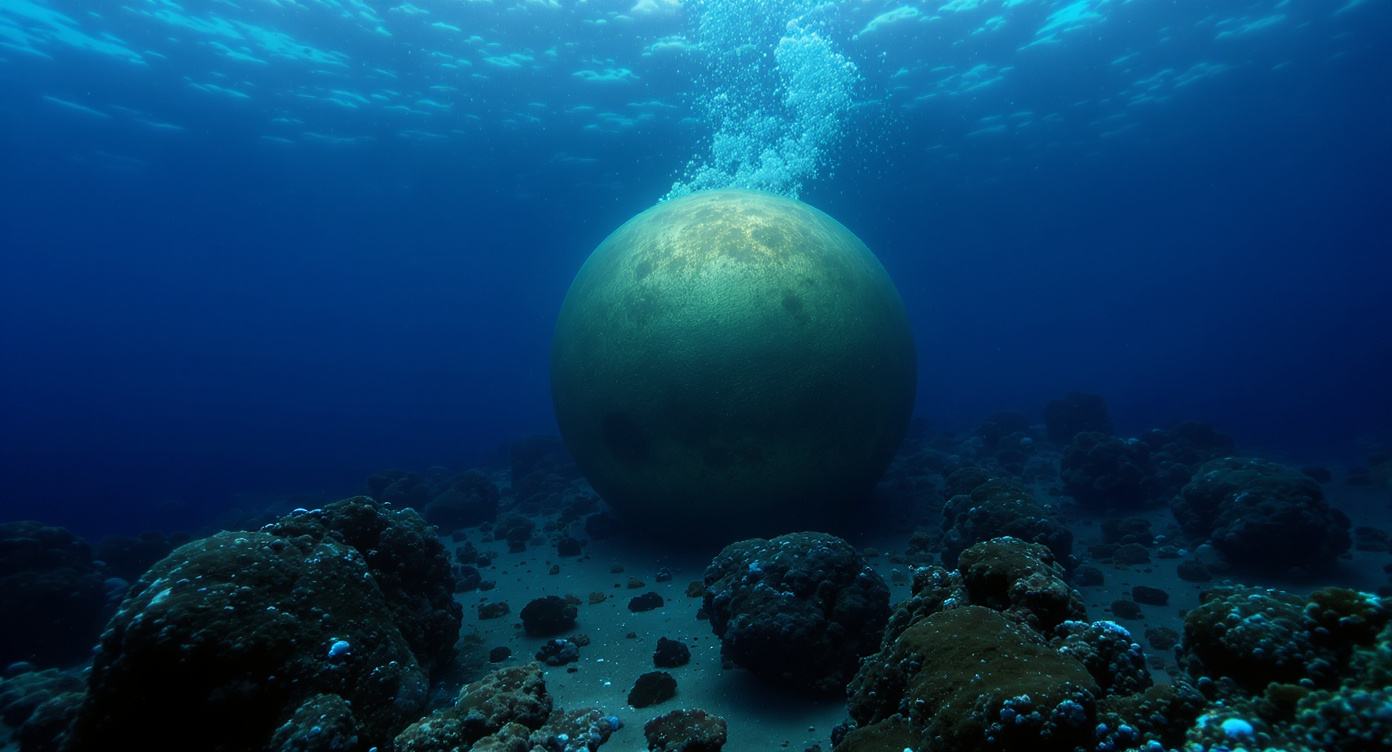
Exploring the "Golden Orb" in the Depths of the Ocean
Inclusion in the Museum Collection
After the discovery and collection of the mysterious object dubbed the "golden orb," the specimen was officially added to the invertebrate collection of the Smithsonian National Museum of Natural History. The museum is responsible for cataloging, preserving, and providing access to biological samples gathered during expeditions aboard the NOAA Okeanos Explorer. The "golden orb" is registered under the number USNM_IZ_1699903.
Discovery and Initial Hypotheses
In 2023, during a NOAA expedition in the Gulf of Alaska at a depth of 3,250 meters, the remotely operated vehicle Deep Discoverer spotted a round, golden-hued object with a small opening on a rock. Its unusual appearance sparked numerous theories about its nature: some speculated it could be an egg, a sponge, or an entirely unknown organism. To enable further study, the object was carefully collected using a vacuum sampler and sent to a laboratory for analysis.
Multi-Stage Investigation
Identifying the object required a range of scientific methods, including microscopy and genetic analysis. Initial examination revealed that the structure consisted of fibrous layers filled with stinging cells (cnidocytes), indicating it belonged to the cnidarians—a group that includes corals and sea anemones. Further study of the cellular structures revealed the presence of spirocysts, which are characteristic of the Hexacorallia subgroup.
The specimen was also compared to a similar object collected in 2021 during an expedition on the Schmidt Ocean Institute’s research vessel Falkor, and matching cellular structures were found.
Genetic Confirmation
Early attempts at DNA barcoding did not yield definitive results, likely due to the presence of genetic material from other microorganisms. To obtain accurate data, a full genome sequencing was conducted. This analysis confirmed the presence of animal DNA and revealed significant genetic similarity to the giant deep-sea anemone Relicanthus daphneae. Sequencing of the mitochondrial genomes of both samples showed they were nearly identical to the reference genome for this species.
Conclusions About the Object’s Nature
Based on all the data collected, it was determined that the "golden orb" is the remnant of the base of the deep-sea anemone Relicanthus daphneae, which the animal once used to anchor itself to the ocean floor. The object is neither an egg, a sponge, nor an unknown organism.
Significance of the Discovery
This research highlights that the deep ocean remains largely unexplored and holds many mysteries. Modern techniques such as DNA sequencing allow scientists to uncover the nature of previously unknown finds, but there are still many discoveries yet to be made in the depths of the sea.