

A flexible eye implant restores vision in mice
Scientists have developed a flexible eye implant that enables blind mice to perceive infrared light without damaging eye tissue. This new technology could expand treatment options for blindness, but its effectiveness and perception in humans remain unknown.
Salus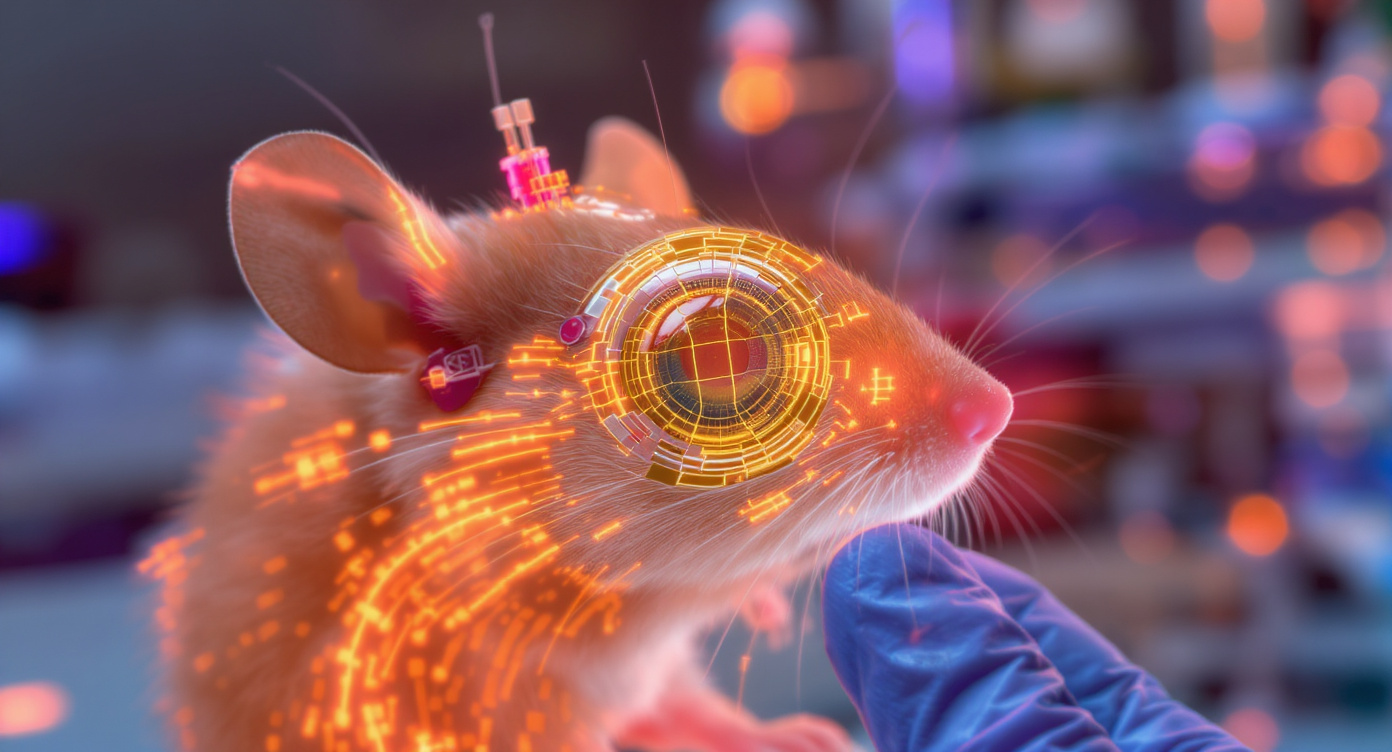
Researchers have developed a flexible eye implant for mice that converts near-infrared light into electrical signals, stimulating the optic nerves. This technology could allow patients to detect light without damaging the remaining eye cells with rigid electrodes. However, it is still unclear how humans would perceive the invisible spectrum.
Causes of Vision Loss and Existing Approaches
Certain genetic and age-related diseases cause degeneration of retinal photoreceptors, leading to blindness. Meanwhile, other cellular layers, such as retinal ganglion cells, often remain intact and can still transmit signals to the brain. To compensate for lost photoreceptor function, engineers are developing microelectronic systems that capture light and deliver microcurrents directly to the ganglion cells. The main drawback of previous generations of prostheses was the rigidity of the materials used: hard electrodes can damage the eye’s soft tissues and cause inflammation.
Features of the New Implant
Unlike traditional implants that respond to visible light, the new development uses near-infrared radiation. These wavelengths are not perceived by the eye, so artificial flashes will not interfere with any remaining natural vision in patients with partial sight.
The implant is based on a liquid metal alloy of gallium and indium, which remains liquid at body temperature. An ultrathin film with an array of silicon transistors and protruding microelectrodes is coated with platinum to improve conductivity, and a filter is placed on top to block visible light, allowing only infrared light to reach the transistors. The alloy is thousands of times softer than conventional conductors and closely matches the elasticity of the eye’s biological tissues.
Testing and Results
The device’s safety was first tested on cultures of human pigment cells and isolated retinas. The implant showed no toxicity and functioned reliably in a moist environment, although this did not guarantee immune tolerance in a living organism.
The artificial retina was then implanted in three healthy mice and three mice with a genetic mutation causing complete photoreceptor degeneration. The animals were exposed to flashes of blue and infrared light, while activity in the visual cortex was recorded. In blind rodents, electrical signals in the brain appeared only in response to infrared radiation when the prosthesis was active. Healthy mice with the implant responded to both types of illumination.
In a behavioral test, mice were trained to lick water from a tube in response to an optical signal. Blind animals learned to respond to infrared flashes as reliably as healthy rodents responded to visible light.
Prospects and Limitations
The technology has demonstrated compatibility with living eye tissue and enabled the transmission of information about infrared illumination to the brain. However, the potential for practical application of such an implant is still limited. Delivering an electrical impulse to neurons does not guarantee the formation of a complete visual image. Subjectively, patients may perceive these stimuli as chaotic white spots rather than thermal vision.
The introduction of liquid metal alloys and the transfer of transistor sensitivity to the invisible spectrum could, in the future, expand medical options in the fight against blindness. To confirm practical applicability, it will be necessary to significantly reduce the device’s energy consumption and conduct long-term trials in large animals.