

Tree branches predict forest water stress
Scientists have discovered that the position of fir branches changes depending on moisture levels: when there is enough moisture, the branches rise, but during drought, they droop. This makes it possible to visually assess water stress in forests using ordinary camera traps, which simplifies ecosystem monitoring in the context of climate change.
Natura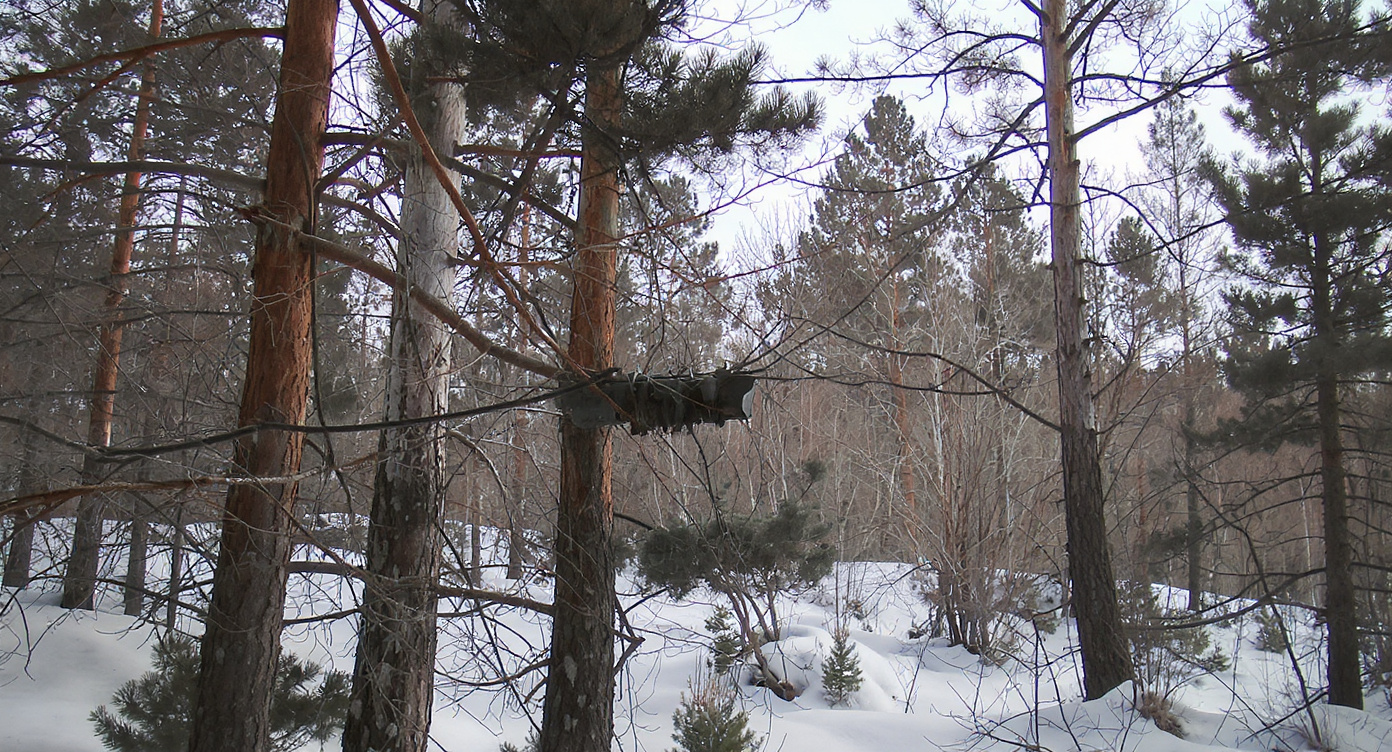
Ecologists from Canada and Germany have discovered that the position of fir branches changes in sync with the tree’s hydration level. Observations revealed that when meltwater or rainwater is available, the branches become more elastic and rise upwards, while during dry periods, they droop down.
Spring Moisture Uptake
The spring period of moisture replenishment plays a crucial role in the recovery of forest ecosystems after winter dormancy and in the onset of photosynthesis. Traditionally, dendrometers—sensors that record microscopic changes in trunk diameter as water is lost or gained—are used to measure plant water stress. In this new study, researchers set out to determine whether it is possible to visually assess a forest’s water needs by observing only the structural changes in the tree crown.
Conducting the Experiment
The experiment took place in a snowy forest in Ontario from early March to mid-May. An electronic dendrometer was installed on the trunk of a Canadian hemlock, recording changes in trunk radius every 15 minutes. Nearby, a camera trap was set up next to a balsam fir (Abies balsamea), taking photos at the same intervals.
The collected images were used to create a time-lapse video. Using video analysis software, researchers digitized the vertical movement of a specific fork on the fir branch. The movement graph was then compared with changes in trunk thickness, air temperature fluctuations, and precipitation data.
Observation Results
The movement of the branches matched the hydration level of the tissues. When snow melted or rain fell, the trunk absorbed water and expanded, while the branches lifted upwards due to increased turgor pressure in the cells. During dry spells, when there was no precipitation for four days or more, water deficit increased: the trunk contracted, and the branches remained drooped.
The data showed that branches respond to moisture faster than the main trunk. They began to rise three to eight hours before the instruments detected wood expansion. It was found that water first reaches the needles at the branch tips, where the water potential gradient is strongest, and only then replenishes reserves in the trunk.
During spring frosts, the trunks contracted sharply due to tissue freezing, but the position of the branches hardly changed. This indicates that branch position depends specifically on the presence of liquid water, not temperature. Additionally, a neighboring broadleaf tree (beech), which had not yet leafed out, remained motionless. The branch-lifting mechanism works only during active transpiration—when moisture evaporates through open stomata—which in evergreen firs begins in early spring.
Practical Significance
The study demonstrated that the availability of moisture for trees can be assessed by observing the position of their branches. Using simple camera traps on branches allows ecologists to monitor the response of forest ecosystems to changes in snowmelt timing and drought periods associated with climate change, without the need for complex electronics.