

AI accelerates the evolution of adaptive robots
Researchers have developed a modular robot that, using artificial intelligence, can independently evolve and adapt to new conditions within minutes, showcasing a new approach to robotics.
Ingenium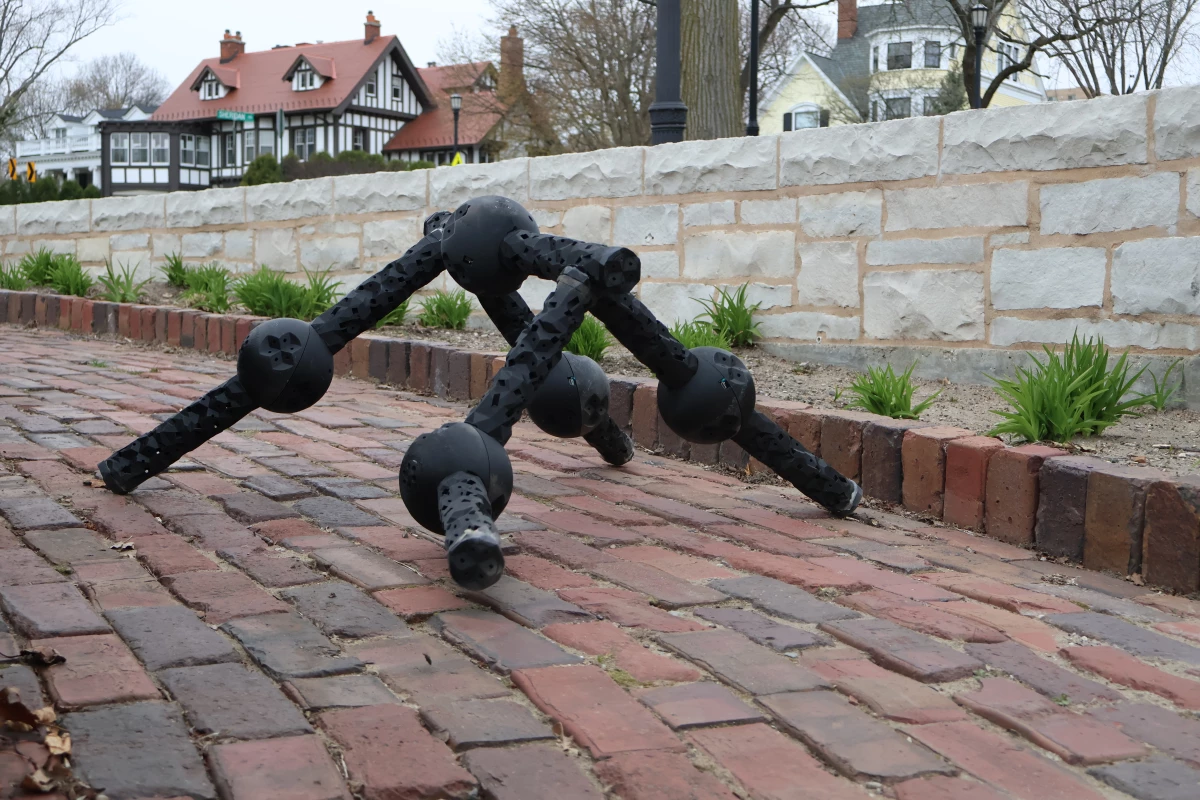
Evolution of Robots with Artificial Intelligence
In nature, the emergence of intelligent and adaptive species took millions of years. Researchers from Northwestern University in Illinois have used artificial intelligence to accelerate this process, creating a robot capable of remarkable adaptability and resilience in just a few minutes.
Challenges of Traditional Robotics
Typically, robots are designed to perform tasks under strictly defined conditions. For example, warehouse robots move efficiently on flat surfaces, while dog-like robots can climb stairs. However, such devices often become ineffective outside of their pre-programmed scenarios. Even robots intended for outdoor use may struggle when faced with unexpected obstacles or the loss of a component.
A New Approach to Adaptation
Instead of designing robots for specific tasks, the researchers developed a modular system that can reconfigure itself and adjust its movements depending on the situation. The resulting robot consists of several modules reminiscent of construction set pieces, each equipped with its own battery, motor, and computing unit. These modules can be combined in various configurations, and each individual module can roll, rotate, or hop independently.
Operating Principle and Design Features
The connected modules exchange data via built-in computers, allowing the entire structure to perform complex movements: jumping, crawling, rolling, and bending. The robot can continue moving even if one of its modules is damaged or disconnected, ensuring its robustness against breakdowns.
The Role of Artificial Intelligence in Design
Unlike the traditional approach, where engineers mimic the movements of living creatures or existing technologies, this project gave artificial intelligence a set of building blocks and the task of finding the most effective way to move. In computer simulations, the AI generated thousands of configuration options, testing them in various virtual environments. The most successful designs were retained, while less effective ones were discarded. After several generations of evolution, the most efficient variants were selected and then implemented in real robots.
Testing and Prospects
During field trials, the robot successfully navigated challenging surfaces such as grass, gravel, and mud. Losing one of its modules did not lead to a complete stop—the remaining parts continued to perform the main task. Each module, when separated, can function as an independent agent.
Researchers note that this is the first evolved robot to be realized outside of simulation and tested in real-world conditions.
Current State and Future Development
At present, the technology is still in its early stages. The robot lacks external sensors, cannot detect obstacles, and does not map its surroundings. Its movements are currently slow and clumsy. The main intellectual function is focused on determining its own position and the status of its modules. Nevertheless, the project demonstrates a new approach to creating robots capable of survival and adaptation.
Evolutionary Robots: Definition
Evolutionary robotics is a field where evolutionary algorithms based on artificial intelligence, simulating natural selection, are used to design machines. Instead of direct engineering, researchers set the rules of evolution, turning the process of creating a robot into a digital evolution.
Conclusion
Although the robot created so far does not have high practical utility, the project aims to change the approach to engineering and demonstrates the potential of technologies based on evolutionary principles. The study was published in the journal Proceedings of the National Academy of Sciences.