

Astronomers have discovered a new super-Earth orbiting a red dwarf star.
Astronomers have discovered a new super-Earth class exoplanet, TOI-1080 b, orbiting a red dwarf star 83 light-years from Earth. The planet is larger and more massive than Earth, but it lies outside the habitable zone of its star.
Cursus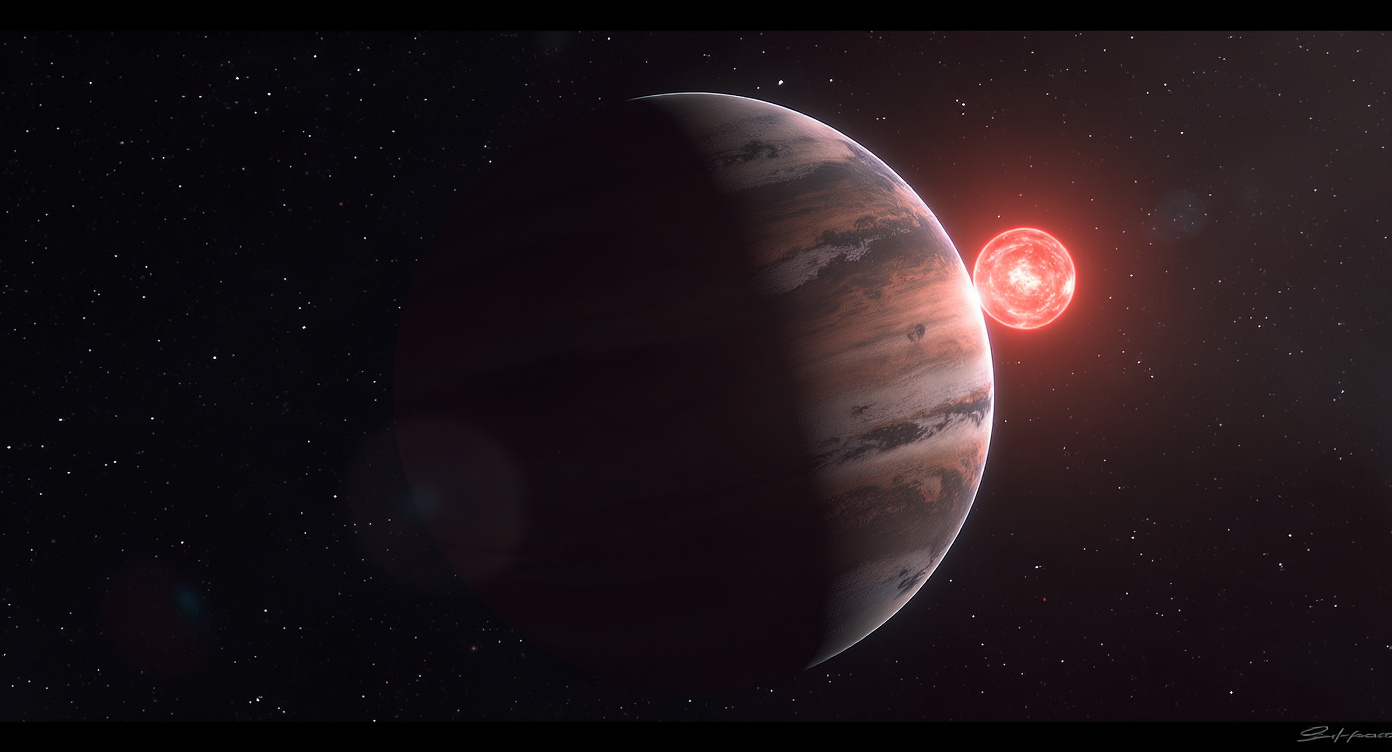
Using data from the TESS satellite, astronomers have discovered a new super-Earth exoplanet located about 83 light-years from Earth. This planet orbits the star TOI-1080, which has a mass of approximately 0.16 times that of the Sun and belongs to the class of red dwarfs. The star is estimated to be between 5 and 7 billion years old.
The exoplanet was detected using the transit observation method, which records a dip in the star’s brightness as the planet passes across its disk. This technique has previously helped identify other exoplanets, such as TOI-1452 b.
The newly found planet has been designated TOI-1080 b. Its radius is about 1.2 times that of Earth, and its mass is roughly 1.75 times greater. The planet completes an orbit in just 3.97 days, indicating it is very close to its star. Scientists believe its surface may be rocky, but it lies outside the habitable zone of its star. Preliminary estimates suggest that TOI-1080 b’s atmosphere could be composed of carbon dioxide. Currently, there is no evidence of life on this celestial body.
Astronomers note that there may be other planets orbiting TOI-1080, which will require further observations with the TESS satellite to detect. To date, this instrument has identified more than 7,900 potential exoplanets.