

Samoyeds can adjust their howling to match music.
A new study has shown that Samoyed dogs are able to change the pitch of their howling depending on the tonality of music, indicating a basic form of vocal adaptation. This discovery is important for understanding the evolution of musicality in both animals and humans.
Cursus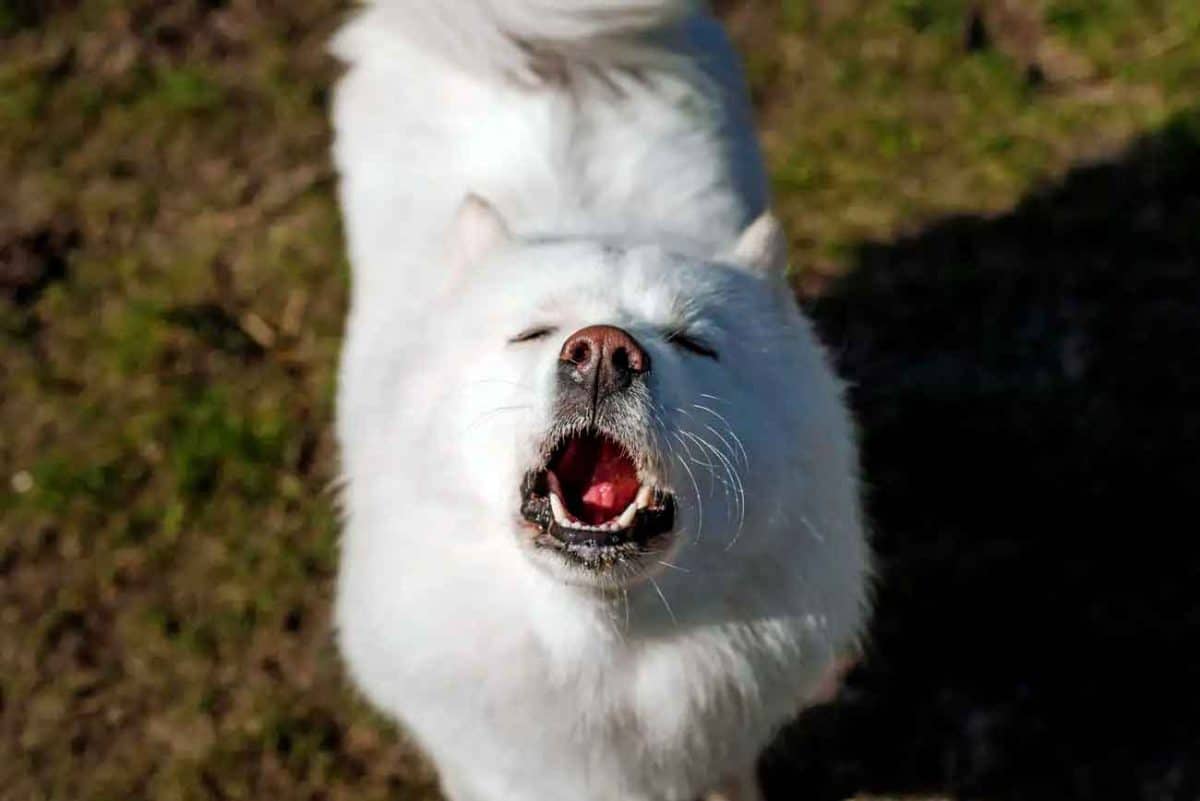
Videos of dogs howling along to music have long been popular on social media. Some people see this behavior as a random reaction to sound, while others believe it’s linked to vocal abilities inherited from their ancestors—the ancient wolves. A research team from the United States conducted an experiment to find out whether domestic dogs can distinguish pitch and adjust their howling accordingly, or if it’s simply an instinctive response to melody.
Howling in Wolves: Unique Features
Biologists note that a wolf pack’s collective howl is made up of individually distinct voices, each with its own pitch and structure—meaning the animals don’t howl in unison. Every wolf has unique vocal frequency characteristics, so the group chorus contains a variety of “notes.” It’s believed that this diversity can create the illusion of a larger group, which helps deter rivals and predators.
To achieve this effect, wolves likely adjust the tone of their howls in response to the sounds of their packmates, though there is not yet direct evidence to confirm this.
The Experiment with Domestic Dogs
Testing this hypothesis in the wild is difficult, so the study was conducted with domestic dogs—the closest relatives of the gray wolf (Canis lupus), whose behavior is easier to record and analyze. Domestic dogs and modern wolves share a common ancient ancestor, and their DNA matches by almost 99%.
If dogs are able to change the pitch of their voice in response to external sounds, it would indicate a basic ability for vocal adjustment.
How the Experiment Was Conducted
The study involved two ancient breeds: four Samoyeds and two Shiba Inu. These breeds have been isolated for a long time and have retained more genetic traits in common with ancient wolf populations than, for example, shepherds or poodles.
Dog owners were asked to play their pets’ favorite musical piece and record their howling. First, the track was played in its original form, then its pitch was shifted three semitones higher and three semitones lower to observe the animals’ reactions to changes in pitch.
Data was considered reliable if a dog howled at least 30 times, with each howl lasting at least one second. The researchers analyzed whether the animals changed the pitch of their howls in response to the changes in the music.
Study Results
All four Samoyeds demonstrated the ability to adjust the pitch of their howling depending on the melody’s tone. When the music’s pitch was raised, the dogs tried to howl higher; when it was lowered, they switched to deeper notes. While they didn’t precisely copy the notes, the trend was clear.
The two Shiba Inu did not respond to changes in pitch and howled in their usual manner. This may be due to individual or genetic differences, as even among ancient breeds, the ability to mimic sounds can vary.
The Significance of the Discovery
The experiment showed that Samoyeds can perceive pitch and adjust their voices to match a melody. This finding is important not only for dog experts but also for anthropologists studying the origins of music and singing in humans.
Previously, there was a theory that singing emerged as a byproduct of speech development. However, the results of this experiment suggest that the ability to coordinate vocal pitch can arise independently of complex speech and may serve as an evolutionary mechanism for strengthening social bonds or coordinating group actions.
The Social Function of Howling
During the experiment, the dogs did not expect rewards from their owners and behaved as if they were communicating with someone unseen, lifting their heads and gazing into the distance. For dogs, music may act as a substitute for wolf howling, putting them in a special social state where vocalizing helps maintain group cohesion.
Study Limitations
The results should be interpreted with caution due to the small sample size—only six dogs participated. Additionally, it’s impossible to directly test wolf behavior, so conclusions about the ancient roots of musicality in animals are drawn by analogy with domestic pets. In the experiment, the Shiba Inu barely responded to the music, suggesting that individual differences may also play a role.
The scientific article detailing the study’s findings was published in the journal Current Biology.