

Why Scotch Tape Screeches: The Mystery of the Sound Unveiled
Recent studies have revealed that the characteristic squeal heard when peeling off tape is caused by a series of microscopic shock waves generated as cracks move at supersonic speeds along the tape. These processes repeat rapidly, producing the continuous screeching sound.
Cursus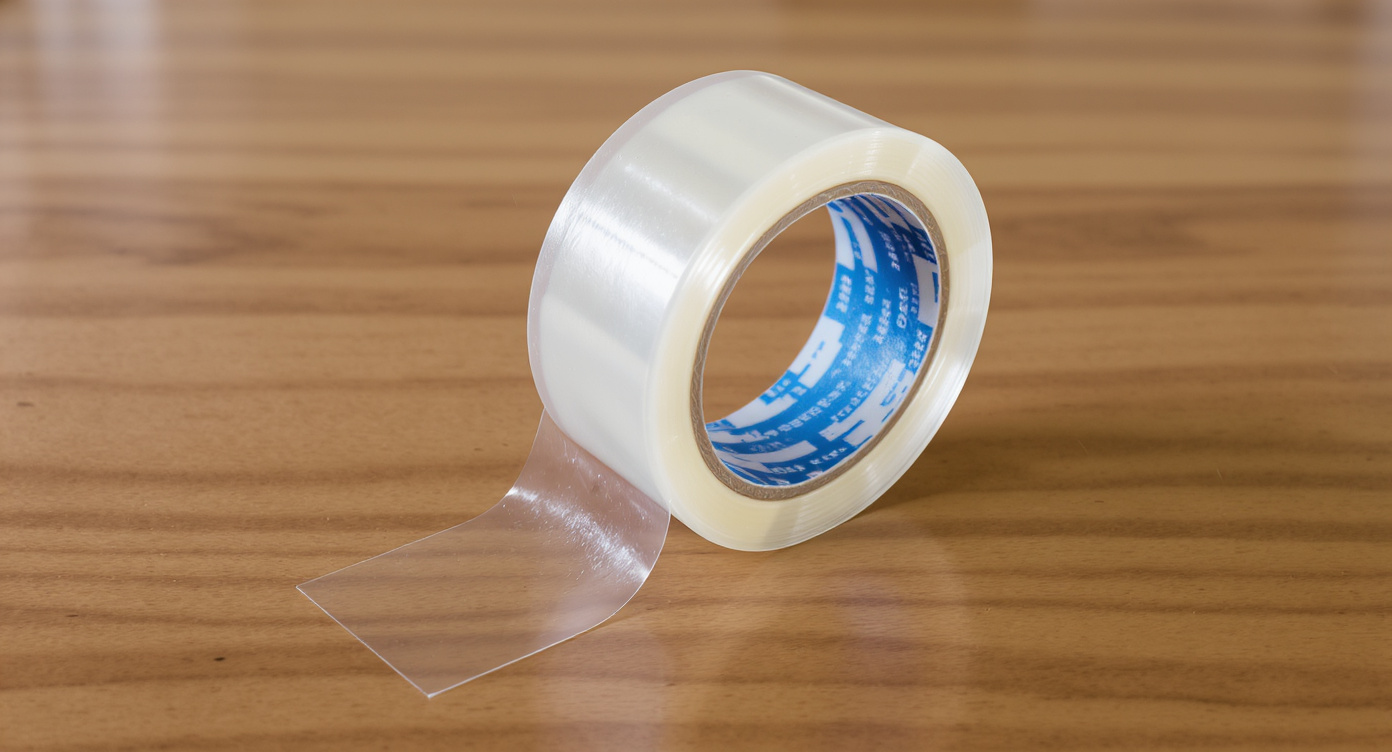
If you’ve ever used adhesive tape, you’re probably familiar with the sharp, distinctive sound it makes when peeled off a surface. Recent studies have shown that this noise is caused by a series of microscopic shock waves that form as transverse cracks in the tape move at supersonic speeds toward its edge.
The Mechanism Behind the Sound
Despite extensive experimental research, physicists struggled for a long time to fully explain the nature of this acoustic phenomenon—the squeal of tape as it’s pulled away. The detailed mechanism was first uncovered by a team of scientists from Saudi Arabia, China, and India.
It was previously established that the process of peeling tape is not uniform but follows a “stick-slip” pattern. When the edge of the tape is pulled, it remains stuck for a brief moment, then the pulling force overcomes the adhesive force, causing a sudden release, and the cycle repeats.
Experimental Observations
During their experiment, the researchers studied the process of peeling a strip of tape from a glass plate using two high-speed video cameras and two microphones placed on either side of the tape. One camera recorded the process through the glass, providing a view of the adhesive layer from below, while the other used schlieren imaging to capture tiny changes in air density caused by shock waves.
Observed Processes
By synchronizing the video and audio recordings, the team was able to closely examine what happens as the tape is pulled away. They found that when the free end of the tape is stretched near the boundary between the peeled and unpeeled areas, a narrow transverse crack forms. During the slip phase, the tip of this crack moves toward the tape’s edge at a speed exceeding the speed of sound in air—up to 600 meters per second (for comparison, the speed of sound in air at room temperature is 343 meters per second).
When the crack reaches the edge of the tape, a shock wave is released into the air. This occurs because the process happens so quickly that air cannot fill the microscopic vacuum bubbles created as the crack moves through the adhesive layer. When these vacuum regions reach the edge, they collapse, generating a shock wave.
Repeating Cycles
Almost immediately, a new crack forms further up the tape, and the “stick-slip” cycle repeats until the strip is completely peeled off. Since these cycles occur at a very high frequency, the audible squeal is actually a series of shock waves following one another too rapidly for the human ear to distinguish individually. As a result, we hear a continuous, grating sound.