

Volunteers and NASA have created a unique eclipse archive
During the 2024 solar eclipse, volunteers across the United States collected tens of thousands of images for NASA's Eclipse Megamovie project. This data will help scientists gain deeper insights into the dynamics of the solar corona and improve space weather forecasting.
Cursus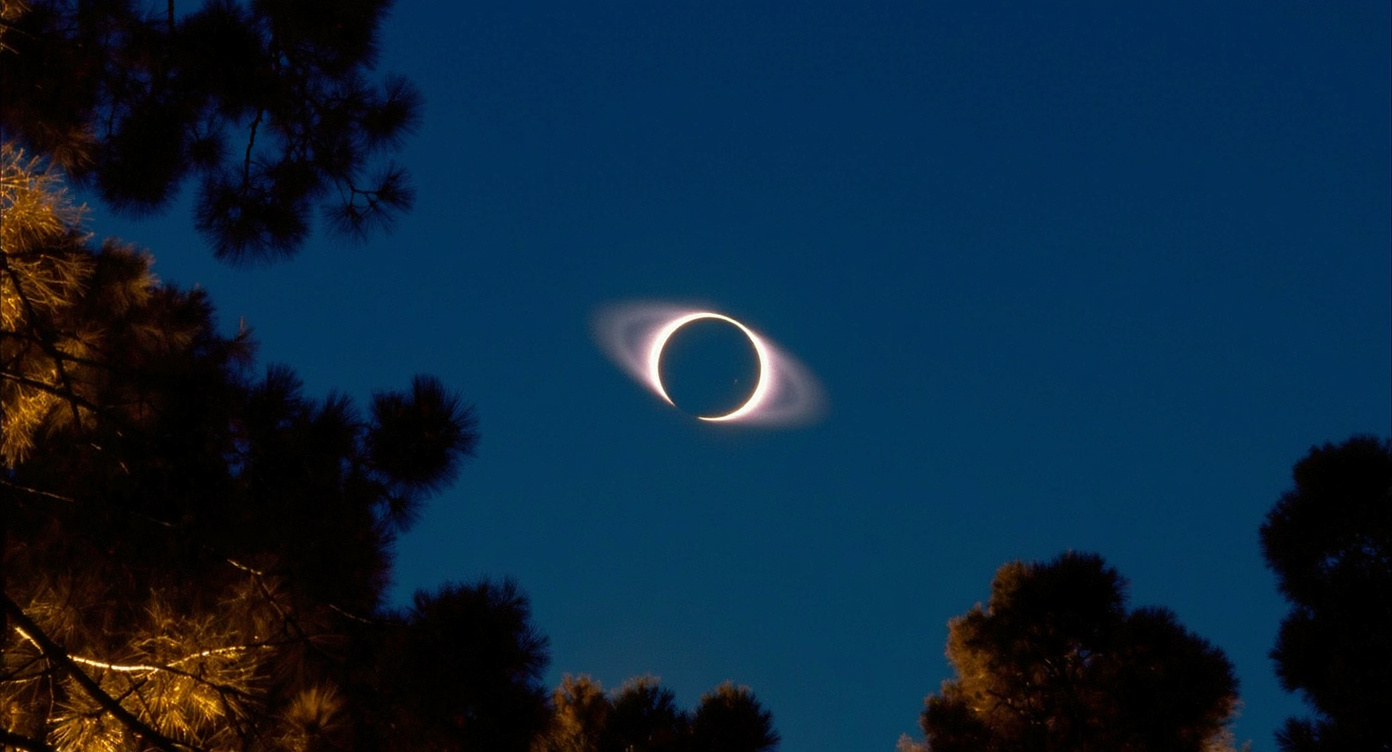
On April 8, 2024, a total solar eclipse crossed the United States. As part of NASA's Eclipse Megamovie project, volunteers from across the country documented this event using modern equipment. The collected images were assembled for further study of the evolution of the solar corona.
About the NASA Eclipse Megamovie Project
The NASA Eclipse Megamovie project aims to combine amateur photographs of the eclipse, taken in different regions, into a single continuous composite time-lapse sequence. To achieve this, volunteers captured images of the total eclipse from various locations across the USA. A total solar eclipse occurs when the Moon completely covers the Sun’s bright surface, revealing its corona—the outer atmosphere, which is usually hidden by the Sun’s intense light.
Data Collection and Processing
At any given location, the eclipse typically lasts 2–4 minutes and moves across the country, so observers record it at different times. During the project, 58,837 photographs were taken at 143 observatories operated by volunteers. Only 28 of these observatories had the capability to produce fully calibrated third-level images. These images were combined, resulting in over an hour and a half of continuous observations of the solar corona. This is the first dataset in history of a white-light eclipse with calibration frames, marking a significant milestone in solar eclipse research.
Data Availability and Significance
The compiled dataset includes images at three levels of processing—from raw to calibrated—presented in the Flexible Image Transport System (FITS) format. All images are available in a centralized searchable database. The materials collected by volunteers represent a new model of distributed observational astronomy. This dataset enables a deeper understanding of the dynamics of the solar corona and helps predict phenomena such as solar storms and geomagnetic disturbances.