

The oldest mule in Europe discovered in an unusual burial
Archaeologists have discovered the oldest remains of a mule in the Western Mediterranean on the northeastern Iberian Peninsula, buried together with a woman. Genetic analysis confirmed the uniqueness of the find and the high social value of the animal during that era. The reasons for their joint burial remain a mystery.
Cursus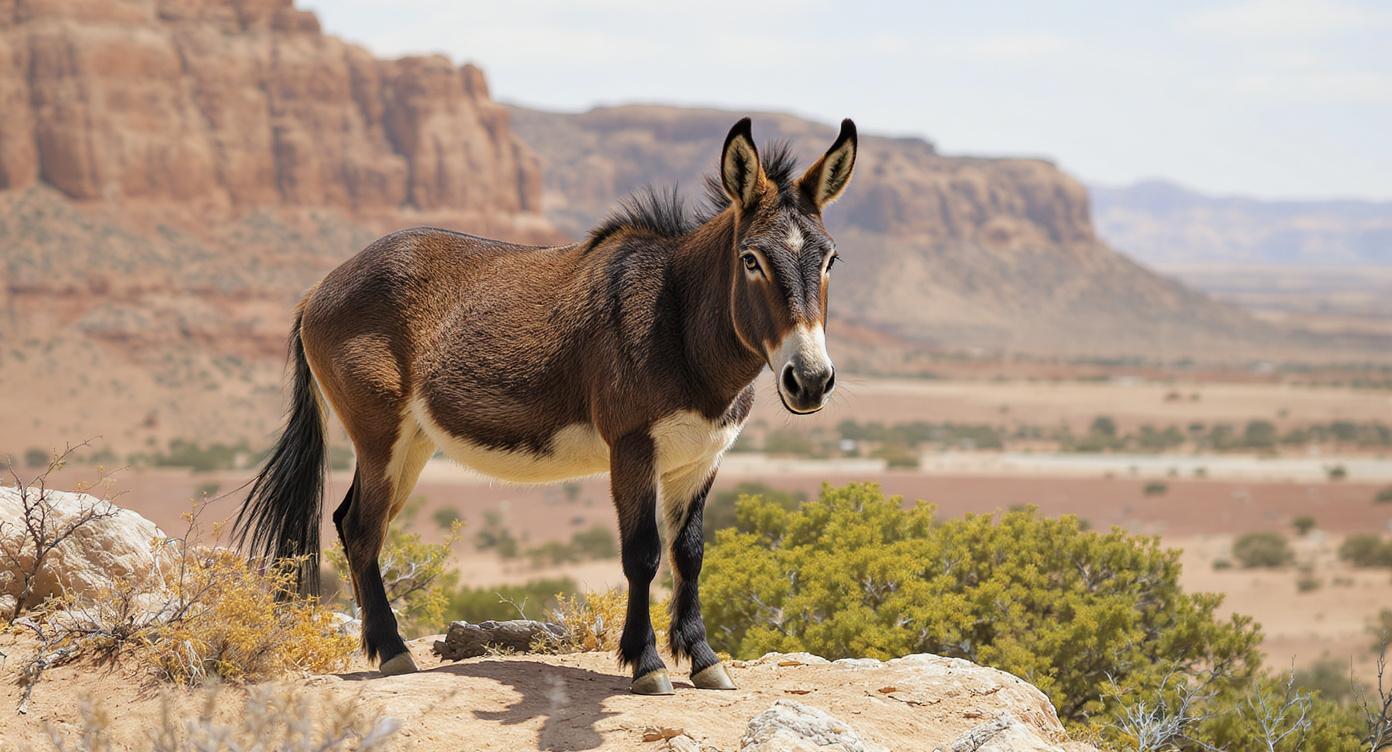
In the northeast of the Iberian Peninsula, around 2,700 years ago, an unusual discovery was made: a woman, whose remains were partially cremated, was buried together with a mule. According to new research, these are the oldest remains of a hybrid animal ever found in the Western Mediterranean and continental Europe.
Mules: Hybrids with Unique Qualities
A mule is a hybrid animal produced by crossing a donkey and a mare. In size, it is comparable to a horse, combining the horse’s physical strength with the endurance and hardiness of a donkey. Breeding mules requires specialized knowledge, as these animals are typically sterile. To regularly produce mules, it is necessary to keep herds of both horses and donkeys, which made them highly valuable throughout history, especially in ancient times when they were used as pack and draft animals.
The Historical Spread of Mules
By the second millennium BCE, mules were already widespread in Egypt and the Near East, but in the Western Mediterranean they remained rare until Roman times. In the early Iron Age, at the beginning of the first millennium BCE, the Phoenicians introduced donkeys to the Iberian Peninsula. Since domestic horses and donkeys had existed in the region for at least a thousand years, scholars speculated that the local population could have bred mules, but until recently there was no direct evidence of this.
Archaeological Finds and Genetic Analysis
A team of Spanish researchers, whose article was published in the Journal of Archaeological Science: Reports, extracted ancient DNA from the skeleton of a hoofed animal buried alongside the partially burned bones of a woman. These remains were first discovered in 1986 at the early Iron Age archaeological site of Hort d’en Grimau, southwest of Barcelona. The bones were found in a stone pit originally intended for grain storage.
Genetic analysis revealed that the remains belonged to a small, elderly female mule. This is the earliest genetically confirmed case of a mule in the Western Mediterranean and continental Europe.
The Social Value of the Animal
An anatomical study of the mule’s upper and lower jaw bones showed clear signs of frequent riding. Isotopic analysis of carbon and nitrogen in the bones indicated that the animal was well-fed, with a diet rich in cultivated grains. All this, according to the researchers, points to the high social value of the mule at that time.
The Mystery of the Joint Burial
As for the woman buried with the mule, she died at the age of 20 to 25. The poor condition of her skeletal remains made it impossible to determine the cause of her death. It also remains unclear why the woman was buried together with the animal and why her remains were partially cremated.