

The complexity of vertebrates is linked to the diversity of their proteins.
A new study has shown that the complexity of vertebrate animals did not arise from an increase in the number of genes, but rather from the diversity of proteins produced from existing genes through alternative splicing. This mechanism allowed cells to respond differently to the same signals, enabling the formation of complex tissues and organs.
Cursus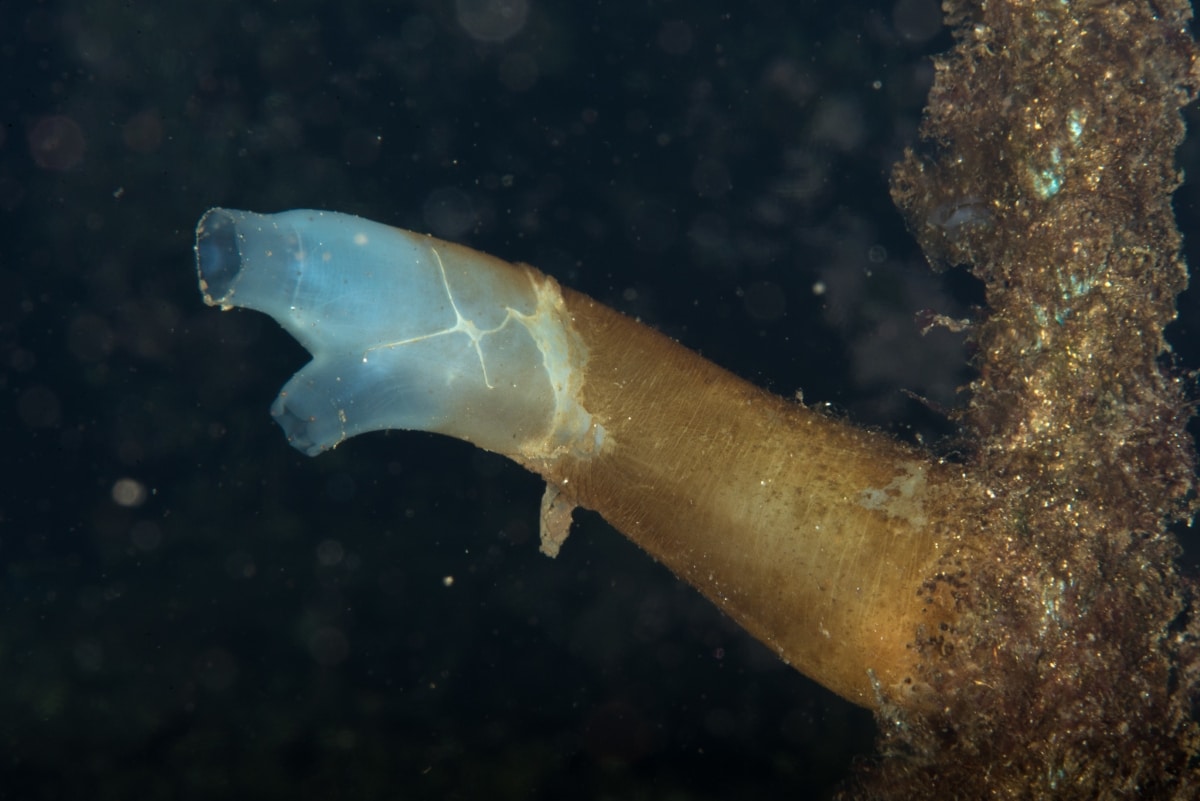
British and Spanish geneticists have discovered that the anatomical complexity of vertebrates arose not so much from the emergence of new genes, but rather from an increase in the diversity of proteins produced from existing genetic information. The key changes occurred in the signaling pathways that control embryonic development, enabling the formation of more complex organisms.
A Biological Paradox: Number of Genes vs. Organism Complexity
It has long been known in biology that the number of genes in a genome does not always correlate with the complexity of an organism. For example, humans and microscopic roundworms have roughly the same number of genes.
The Role of Signaling Pathways in Development
Embryonic development is regulated by the same signaling pathways—Wnt, Hedgehog, and BMP. These are chains of information transfer from the cell membrane to its nucleus, culminating in the action of special proteins called transcription factors. Upon receiving a signal, these proteins enter the nucleus and switch specific DNA regions on or off.
Alternative Splicing as a Source of Diversity
The researchers proposed that the increased complexity of organisms is linked to alternative splicing—a mechanism that allows a single gene to produce several different protein versions (isoforms) by combining coding segments in various orders. This process works like a construction set: from one DNA instruction, a cell can assemble different proteins.
Comparing Transcriptomes Across Species
The scientists compared the transcriptomes (the complete set of active RNA molecules) of three species representing an evolutionary ladder from invertebrates to vertebrates: the tunicate Ciona intestinalis (an invertebrate, the closest relative of vertebrates), the lamprey Lampetra planeri (a primitive jawless vertebrate), and the frog Xenopus tropicalis (a modern jawed vertebrate).
For their analysis, they used long-read sequencing, which allowed them to accurately determine how many splicing variants each gene produces.
Analysis Results
The analysis showed that the overall number of splicing variants in vertebrates did not increase uniformly, but selectively—in particular, within gene families that encode transcription factors. In the TCF/LEF (Wnt pathway), GLI (Hedgehog pathway), and SMAD (BMP pathway) families, vertebrates exhibited a much greater diversity of isoforms. While in tunicates these genes operate on a "one gene—one protein" principle, in frogs each of these genes produces two or three functional variants.
An Unexpected Discovery
An interesting finding emerged from the most primitive species in the comparison. In the TCF gene of the tunicate, researchers discovered a unique isoform that appeared due to the insertion of a transposon (a mobile genetic element). This demonstrates how so-called "junk DNA" can spontaneously create new functional protein segments.
Study Conclusions
This research proves that the complexity of organisms increased through the fine-tuning of existing signaling pathways, rather than the invention of new ones. Vertebrates expanded their repertoire of regulatory proteins by increasing the number of isoforms. This allowed cells to respond differently to the same signals, forming complex tissues and organs based on the old genetic toolkit.