

The largest hydrothermal field of Milos has been discovered
Scientists have discovered an extensive field of hydrothermal vents near the island of Milos, making it one of the largest such systems in the Mediterranean Sea. This discovery changes our understanding of hydrothermal activity in the region and highlights the influence of tectonic processes on the formation of the seafloor.
Cursus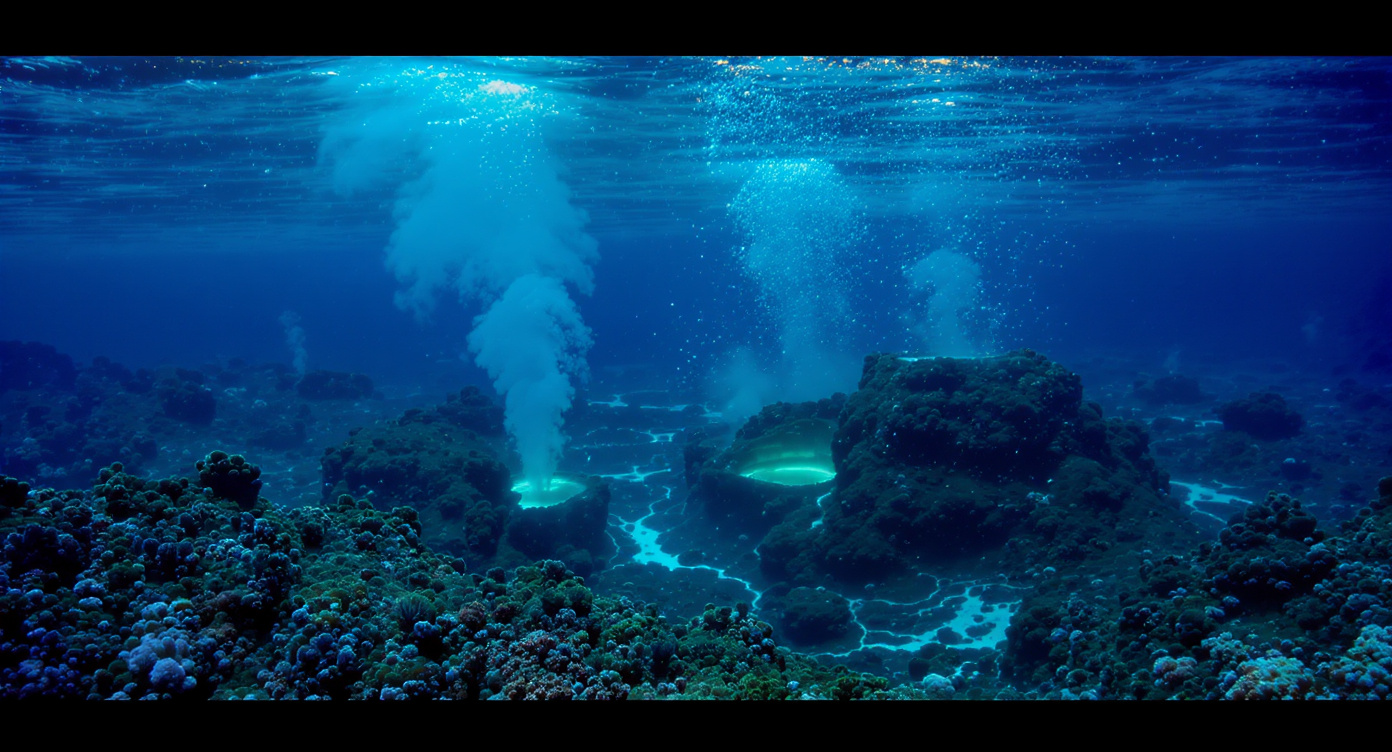
A new study published in the journal Scientific Reports reports the discovery of an unusually large field of hydrothermal vents on the shallow seafloor near the Greek island of Milos. These vents were identified during the METEOR M192 expedition, where scientists used various methods, including underwater mapping as well as autonomous and remotely operated vehicles, allowing for a detailed exploration of the seafloor.
Discovery of New Hydrothermal Vents
The research revealed previously unknown hydrothermal activity at depths ranging from 100 to 230 meters. Thanks to this discovery, Milos is now considered one of the largest shallow and mid-depth hydrothermal systems in the Mediterranean, significantly changing scientific understanding of hydrothermal activity in this region.
Main Vent Areas
Scientists identified three main vent clusters: Agia Kyriaki, Paleochori-Tiorichia, and Vani. All are located along active faults that cross the Milos shelf. These faults are part of the broader geological structure known as the Milos Firiplaka Graben, a tectonic depression that has caused sections of the seafloor to sink to depths of up to 230 meters. The alignment of the vents with these faults highlights the significant influence of tectonic processes on the pathways of hydrothermal fluids to the seafloor.
Researchers’ Impressions
Solveig I. Bühring, lead author of the study and a scientist at MARUM – Center for Marine Environmental Sciences at the University of Bremen, noted: “We did not expect to find such a large field of gas emissions near Milos. When we first saw the vents through the cameras of the remotely operated vehicle, we were amazed by their diversity and beauty—from shimmering, boiling fluids to dense microbial mats covering the vent pipes.”
The Impact of Tectonics on Hydrothermal Processes
Paraskevi Nomikou from the National and Kapodistrian University of Athens explains that the location of the vent clusters is closely linked to the island’s subsurface fault structure. “Our data clearly show that gas emissions follow the main faults around Milos. Different fault zones influence the various vent clusters, especially where several faults intersect. These tectonic structures play a crucial role in determining how and where hydrothermal fluids reach the seafloor,” Nomikou notes.
Significance of the Discovery and Future Research
Overall, the results demonstrate how ongoing fault movement and long-term geological activity have shaped and developed these vent fields. Thanks to this discovery, Milos has become one of the most important natural sites in the Mediterranean for studying the interactions between tectonics, volcanism, and hydrothermal processes beneath the sea.
The findings are also highly significant for MARUM and the Cluster of Excellence “The Ocean Floor – Earth’s Uncharted Interface.” Building on this work, researchers are planning a follow-up expedition to Milos, as well as to the Kolumbo underwater volcano near Santorini and the island of Nisyros. This study is the result of close collaboration between Greek and German scientific institutions, including the National and Kapodistrian University of Athens, MARUM – University of Bremen, the University of Erlangen-Nuremberg, the Institute for Chemistry and Biology of the Marine Environment in Oldenburg, and Constructor University Bremen.