

Positive emotions are quickly transmitted between bumblebees
A new study has shown that bumblebees are able to quickly pick up positive emotional states from one another through visual contact, challenging previous ideas about the social lives of insects.
Cursus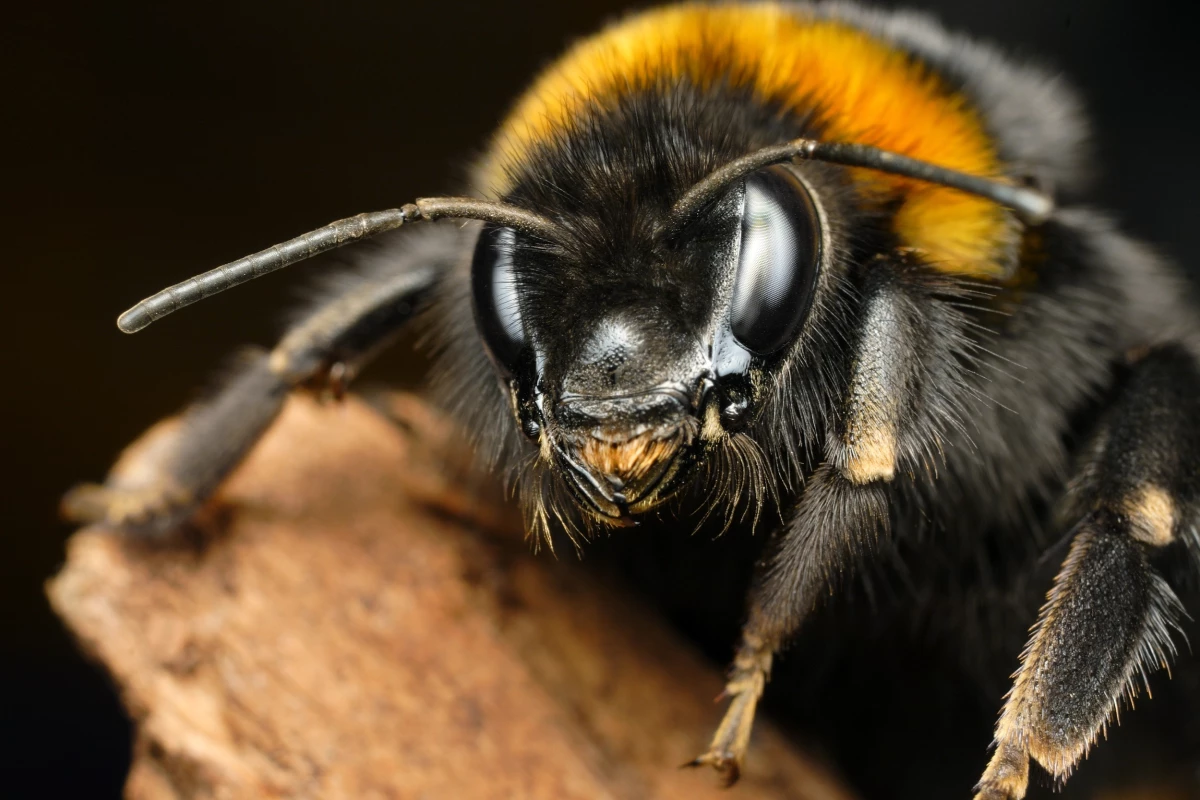
Thanks to their fluffy appearance and somewhat clumsy flight, bumblebees often seem like simple, carefree creatures. However, new research reveals that there is much more hidden behind their tiny wings than we usually imagine—and it’s not what we typically associate with bees.
How Bumblebees Respond to Positive Events
In a recent study, scientists from the Southern Medical University in Guangzhou set out to discover how bumblebees react to positive events within their nests. Instead of focusing on the behavior of individual insects, the researchers aimed to understand the overall atmosphere of the colony and how the mood of one bee might influence the behavior of the entire group.
To do this, they observed colonies of the buff-tailed bumblebee (Bombus terrestris) and designed an experiment to detect even the slightest changes in the insects’ responses to ambiguous signals. First, the bees were trained to distinguish between colors: one color signaled a sugary reward, while another meant no reward. After this association was established, the researchers introduced intermediate, ambiguous colors that fell between the two learned signals.
The Judgment Bias Test
This approach, known as the judgment bias test, helps determine how optimistically or cautiously an animal perceives uncertainty. Bees in a good mood quickly approached the ambiguous colors, as if expecting good news, while less positive individuals did so more slowly or avoided them altogether. This test is ideal for detecting subtle internal changes in the bees being observed.
Transferring Mood Between Bumblebees
After training and recording the bees’ initial reactions, the researchers conducted a key experiment. One bee was given a drop of sucrose and allowed to briefly interact—just 30 seconds—with another bee, the “observer,” who received no reward. The interaction took place without scents, color cues, or training signals, so the observer could not directly copy or learn anything—she could only witness the rewarded bee’s behavior.
In the subsequent test, the observer bees showed a remarkable result: they approached the ambiguous colors just as quickly and confidently as those that had received the sugar reward themselves. This indicates an internal change, not just excitement or social imitation.
The Role of Visual Signals
A control experiment showed that the effect disappeared if the interaction took place in complete darkness, where the bees could only touch but not see each other. Without visual cues from the rewarded bee’s lively movements, the observers showed no change in optimism. This proves that it was vision—not scent or touch—that transmitted the state.
The Speed of State Transmission
Lead author Fei Peng noted that the speed of this state transfer was one of the biggest surprises. After just a brief, 30-second social contact, the observer bees changed their behavior in the same way as the rewarded demonstrators, even though they themselves had received no reward. This discovery was unexpected and very exciting for the research team.
Social Transmission of Emotions in Bumblebees
The rapid transfer of state supports a broader conclusion: internal states in bumblebees are not limited to individuals. Previous studies have shown that bees can independently enter positive or negative states, but this research demonstrates that such states can also spread socially.
Rather than being strictly independent foragers, bumblebees appear to be influenced by the emotional atmosphere of their peers. This offers new insight into how this species interacts and adapts.
The Importance of Colony Atmosphere
The results also raise deeper questions about what happens inside the observing bee during these brief moments of contact. The behavioral pattern recorded by the researchers resembles effects seen when dopamine levels are artificially increased in insects. While this is still just a hypothesis, such a mechanism opens up promising avenues for understanding how internal states arise and how quickly they can be transmitted between individuals.
This also raises an important question: can negative states spread just as easily? If positive affective states can be transmitted, then stress or anxiety may also quickly sweep through the group.
This perspective suggests that well-being in managed or agricultural settings involves more than just nutrition and disease control. A calmer, low-stress atmosphere may be just as important—especially if the mood of a few bees can subtly influence the entire colony.
A New Understanding of Insect Social Life
Overall, the results show that a positive state can be transmitted between bees through a brief moment of visual contact, adding nuance to our understanding of insect social life. As scientists delve deeper into how these changes form and spread, it becomes clear: even small animals can influence each other in ways we are only beginning to comprehend.
The team’s next step will be to study the underlying mechanisms of these changes, including the neural pathways that might enable such transmission. Understanding these circuits could explain why such brief interactions leave a lasting impact.
Although the researchers are cautious in their definitions and do not call this effect “happiness,” the finding is still impressive. If the internal state of one bee can influence another in just 30 seconds, it suggests their moment-to-moment experience may be far richer than the simple search for food we usually imagine.
The study does not claim that bees have emotions in the human sense, but it does hint that there is more to their behavior than mere instinct. Even tiny creatures may carry traces of an inner life—quiet, fleeting, but significant enough to affect those around them.