

Frogs are immune to the venom of giant hornets.
Japanese pond frogs can safely eat giant hornets, whose sting is deadly to many animals. Studying this phenomenon could help develop new painkillers and anti-inflammatory drugs.
Cursus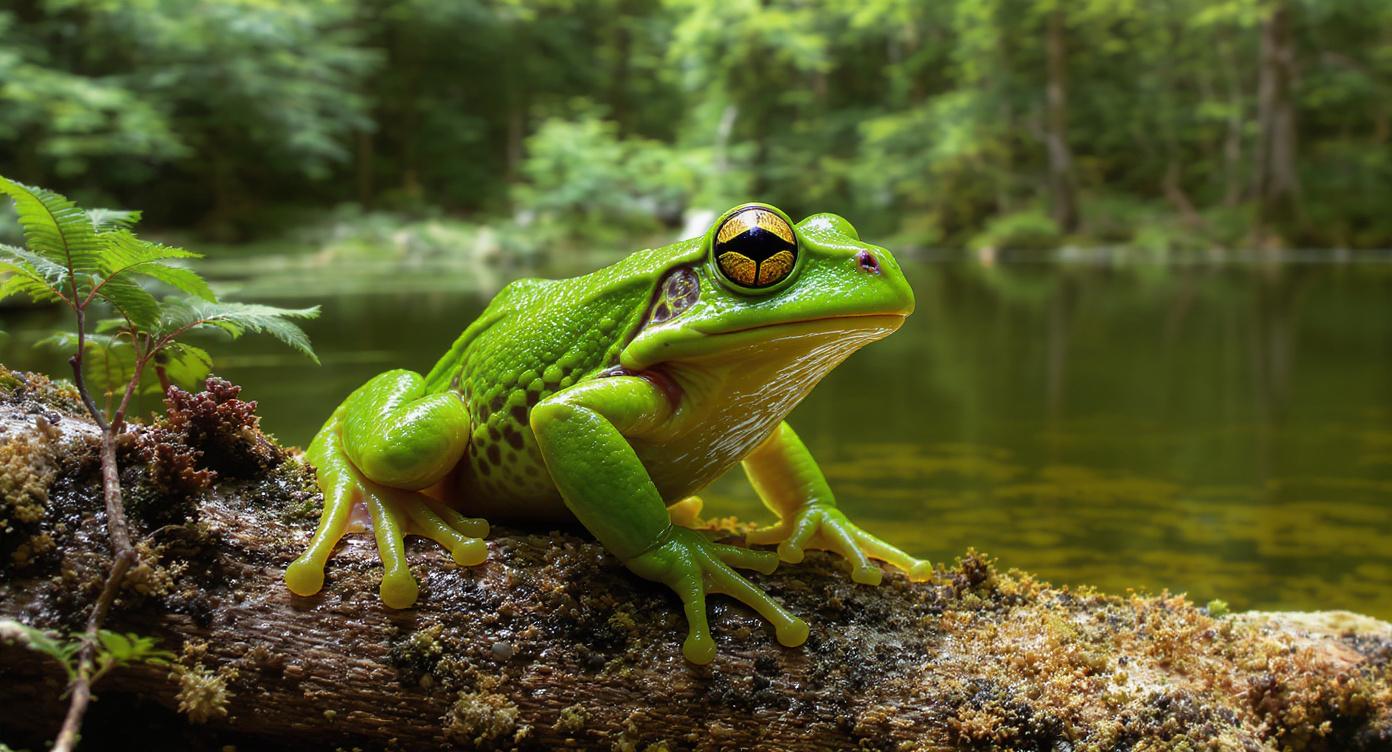
The Asian giant hornet is considered the largest member of its kind and strikes fear into many animals. Its venom not only causes intense, burning pain but is also so toxic that it can kill small animals. However, in nature, there is a hero for whom this dangerous predator is nothing more than a nutritious snack. We’re talking about the Japanese pond frog.
Showdown in the Animal Kingdom
In the animal world, there is a constant evolutionary “arms race”: predators refine their hunting techniques, while prey develop new defenses. This is especially evident in the relationship between amphibians and insects. Frogs and toads are voracious hunters, ready to snatch up anything that moves and fits in their mouths. But their prey isn’t always defenseless: many insects have developed powerful weapons—stingers and venom capable of paralyzing or even killing larger opponents. It would seem such defenses should guarantee safety, but nature is full of surprises.
Frogs vs. Venomous Insects
Scientists have long known that some amphibians can eat poisonous or stinging creatures, such as ants or scorpions. However, the details of this process remained a mystery for a long time. Researchers are only beginning to understand what physiological and behavioral traits allow frogs to turn dangerous enemies into easy prey.
Japanese biologist Shinji Sugiura from Kobe University made an important discovery while studying the interactions between local amphibians and insects. During his observations, he noticed that pond frogs often eat female wasps, ignoring their venomous stingers. Later, he found the remains of giant hornets (Vespa mandarinia) in the stomachs of black-spotted pond frogs (Pelophylax nigromaculatus), a species common in East Asia. However, no one had ever witnessed the actual hunting process.
Experiment: Frog vs. Hornet
To fill this gap, Sugiura conducted a series of experiments. He placed black-spotted frogs in an aquarium with worker Vespa mandarinia hornets—often called “murder hornets.” Their stingers can reach six millimeters, and their venom causes intense pain and can kill small vertebrates.
Worker hornets are sterile females that use a modified ovipositor, which through evolution has become a perfect weapon for injecting toxins and paralyzing prey. This adaptation allows the hornet to take down even large animals.
However, in Sugiura’s experiment, the ovipositor proved ineffective. The scientist recorded the events on video and analyzed the footage in slow motion. It turned out that the frogs, without hesitation, grabbed the hornets with their tongues and swallowed them whole. During this, the hornets managed to sting the frogs several times—in the tongue, mouth, and even the eyes.
Despite being stung, the frogs showed no signs of poisoning or pain. During the experiment, it was found that nearly 80% of the frogs offered Vespa mandarinia ate them without difficulty.
Why Aren’t Frogs Afraid of Venom?
Based on these observations, Sugiura proposed a hypothesis: large frog species, such as the black-spotted pond frog, possess a natural resistance to hornet venom. The scientist suggested that the venom of these insects has evolved to target their main enemies—birds and mammals—while frogs rarely pose a threat, making the venom less effective against amphibians. This is a vivid example of how evolutionary adaptation works against some species but leaves loopholes for others.
Amphibians and Other Dangerous Insects
The Japanese scientist’s discovery is not unique among amphibians. Biologist Brian Gall from Hanover College (USA) noted that amphibians are well adapted to hunting dangerous prey. In his research, he found that two species of American toads easily handle velvet ants (family Mutillidae)—insects with a tough exoskeleton and a painful sting that most predators avoid. Another group of scientists discovered that the South American toad Rhinella icterica eats the Brazilian yellow scorpion (Tityus serrulatus) and is immune to its venom.
Gall points out that many amphibians produce their own toxins, which likely gives them innate resistance to certain poisons. Additionally, their hunting method—grabbing and swallowing prey whole—and the copious mucus that covers the prey in their mouths provide extra protection.
Medical Prospects
According to experts, further study of frogs’ resistance to venom could have practical applications. If pond frogs truly possess physiological mechanisms that suppress pain or neutralize hornet venom, researching them could help develop entirely new painkillers and anti-inflammatory drugs for humans.