

Huawei Watch D3: A New Standard in Vascular Monitoring
Huawei Watch D3 offers advanced vascular health monitoring by measuring arterial stiffness using ECG and optical sensors. This feature helps assess cardiovascular risk, but it does not have medical certification.
Salus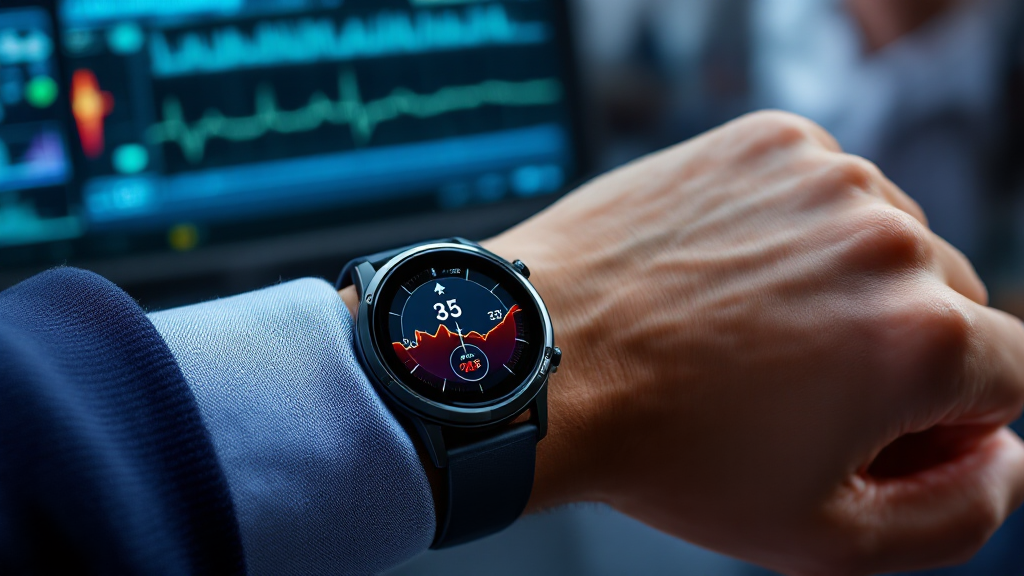
The Huawei Watch D3 is a wearable device primarily designed for health monitoring rather than multisport or outdoor activities. Previous reviews have covered its ECG capabilities and certified blood pressure measurement; this article focuses on its ability to assess arterial stiffness.
Features of Arterial Stiffness Measurement
Unlike most smartwatches that use standard optical PPG methods to analyze vascular stiffness, the Watch D3 utilizes a built-in ECG sensor during the measurement process. This approach allows for more accurate data on the condition of the vascular system.
How It Works
To understand vascular stiffness, imagine a garden or cooling hose: each time you open or close the valve—just like each heartbeat—a pressure wave travels through the hose. Since liquids are nearly incompressible, their volume under pressure remains constant, so the hose walls must absorb the resulting force. Without elasticity, the vascular system loses its ability to smooth out pressure surges (the Windkessel effect), which increases the strain on organs and vessel walls and raises resistance for the heart. Additionally, pressure waves reflected from peripheral vessels return to the heart, reducing its efficiency and increasing workload.
Measurement Technology in the Watch D3
The Watch D3 detects pressure surges using two different sensors: the electrocardiograph records the heart’s electrical activity, while optical sensors capture the mechanical pulse at the wrist. By determining the time delay between the heartbeat and the arrival of the pressure wave at the wrist, the watch calculates the pulse wave velocity (PWV). This value is displayed in meters per second (m/s) along with a risk classification: readings below 8 m/s indicate normal vascular elasticity, while values above 10 m/s suggest an increased cardiovascular risk.
Limitations and Medical Relevance
PWV measurement and assessment are available directly on the device and worked reliably during testing. However, unlike the ECG and certified blood pressure measurement, the arterial stiffness feature does not have medical certification. In clinical practice, the gold standard is measuring pulse wave velocity between the carotid artery in the neck and the femoral artery in the groin (cfPWV). The Watch D3 method differs by tracking the pressure wave from the heart to the radial artery at the wrist.