

A new material speeds up 3D printing of houses by 10 times
Scientists have developed an eco-friendly material for 3D-printed houses that reaches construction-grade strength in just three days, compared to the usual 28 days required for conventional concrete. This innovation speeds up building processes and reduces CO₂ emissions.
Ingenium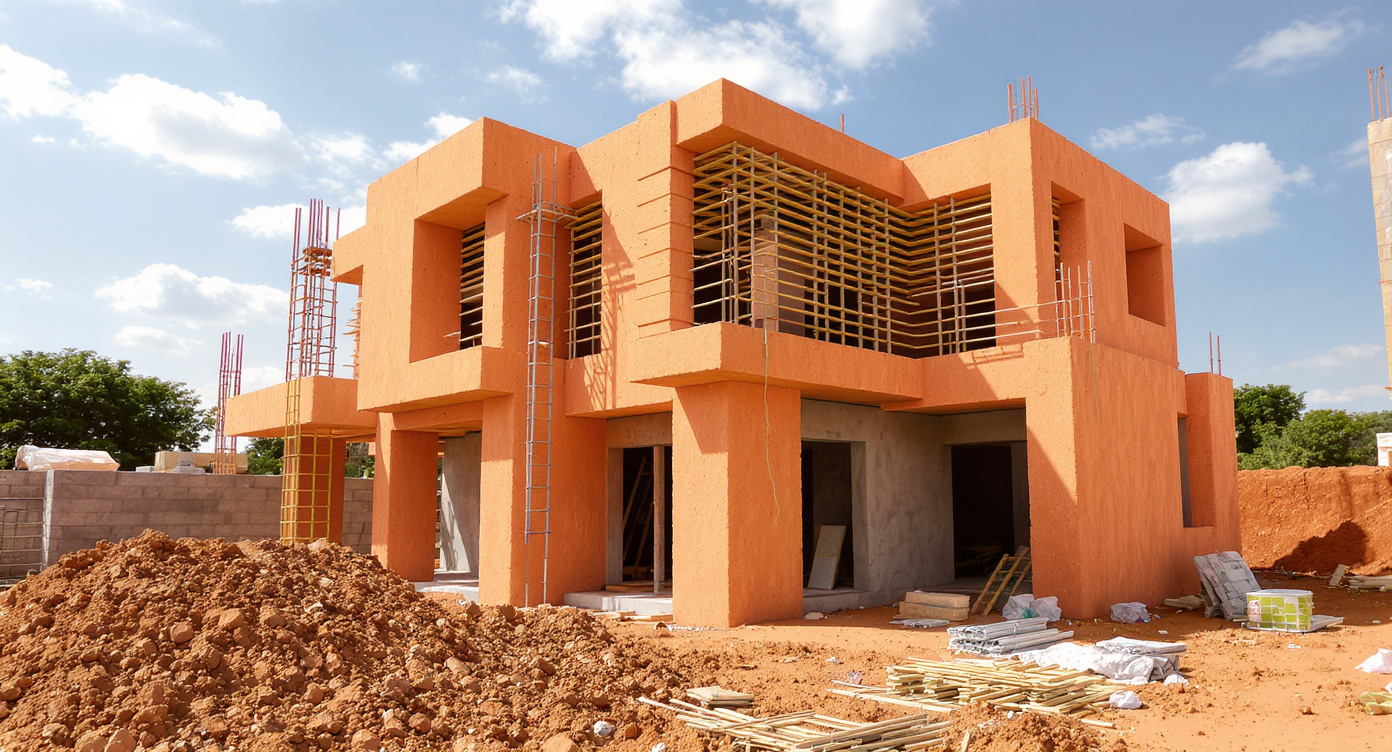
While 3D printing of concrete houses significantly speeds up construction, traditional concrete still requires up to 28 days to fully cure. However, a recently developed 3D printing material is ready for use in just three days.
Problems with Traditional Concrete
Concrete is made from water, aggregate (such as sand or gravel), and cement, which binds all the components together. It is the cement that typically needs about a month to reach the required strength after pouring. In addition to the lengthy curing time, cement has other drawbacks.
The production of Portland cement involves grinding limestone and other raw materials, then heating the resulting powder to temperatures around 1450 °C. This process generates significant carbon dioxide emissions, as large amounts of fuel are burned to produce such heat. Moreover, during calcination—the transformation of heated limestone into cement—bound CO₂ is released as a byproduct. Altogether, these emissions account for 5–8% of all anthropogenic greenhouse gases.
A New Material for 3D Printing
In response to these issues, researchers from Oregon State University, led by Associate Professor Devin Rausch and graduate student Nicholas Gonçalves, have created an alternative to cement. Their material is based on clay-rich soil, enriched with hemp fibers, sand, and biochar. Biochar is a substance similar to charcoal, produced by pyrolysis (the decomposition of organic materials such as wood chips under heat in the absence of oxygen).
Instead of Portland cement, the new mixture uses a thermally activated binding agent based on acrylamide. During a chemical reaction known as frontal polymerization, this agent triggers the hardening process immediately after the mixture exits the printing nozzle. As a result, the material quickly becomes strong enough to print over unsupported gaps, such as window openings.
Advantages and Prospects
“The printed material achieves a structural strength of 3 megapascals immediately after printing, which allows for the construction of multilayered walls and free-standing overhangs like roofs,” notes Rausch. “After three days, its strength exceeds 17 megapascals, meeting the requirements for residential structural concrete, whereas traditional concrete needs 28 days to reach this level.”
The new material fully cures in 8–10 days, reaching a strength of over 40 megapascals. Currently, researchers are working to reduce the cost of the material, as it is still more expensive than conventional concrete. The study’s results were recently published in the journal Advanced Composites and Hybrid Materials.