

Batteries of the Future: Energy from Sugar and Vitamins
Scientists have developed a biofuel cell that uses glucose and riboflavin instead of expensive metals, making batteries more affordable and environmentally friendly. This new technology delivers record-breaking power and opens up promising opportunities for industrial applications.
Vigor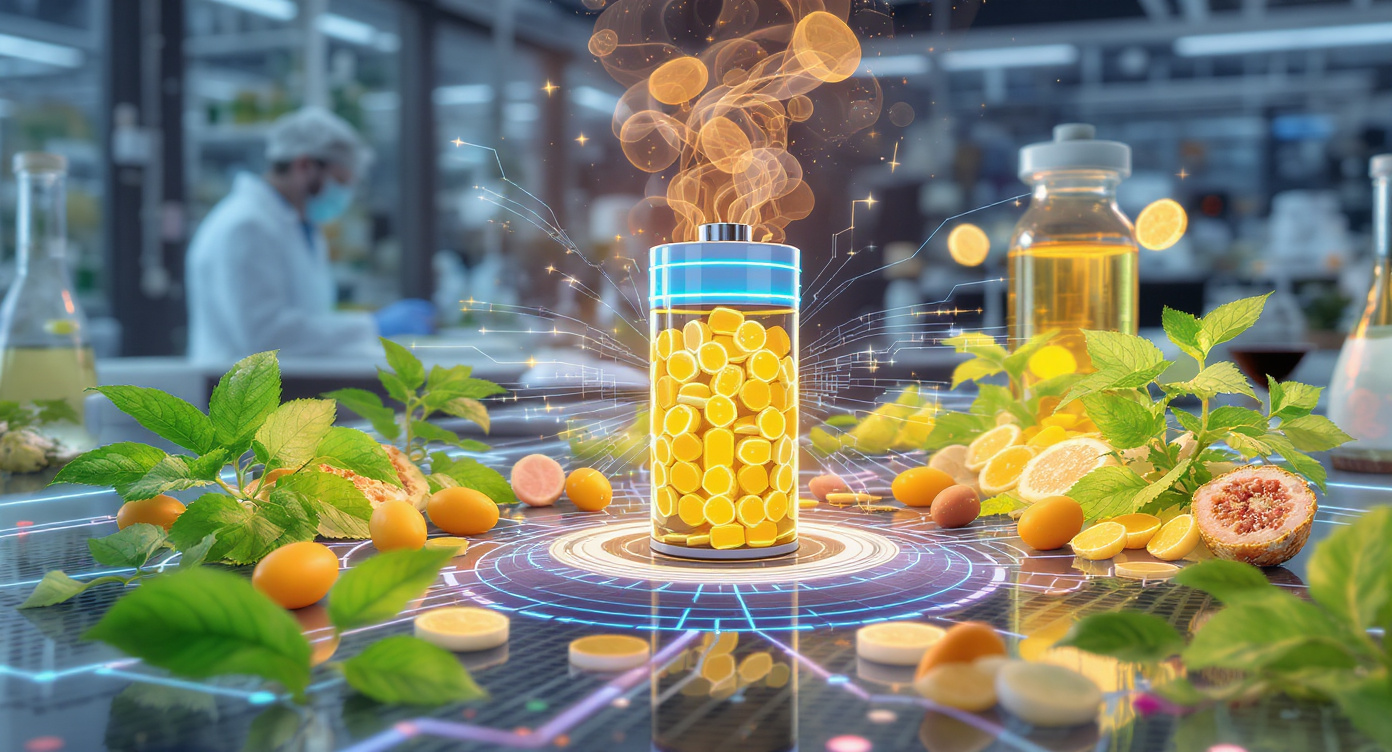
In the cult film "The Matrix," humans serve as both a literal and metaphorical energy source for artificial intelligence, providing bioelectricity to power the machines. Fortunately, in reality, modern devices don’t require human biochemistry for energy—sugar and vitamins are enough.
Breakthrough in Biofuel Cells
Recently, the journal American Chemical Society Energy Letters published an article in which lead author Chong-Hwa Shon and his colleagues from Pacific Northwest and Argonne National Laboratories introduced an innovative approach to creating a biofuel flow cell. Their design uses glucose and riboflavin (vitamin B2) to generate energy in a way similar to how human cells work. Instead of relying on expensive and environmentally harmful noble metal catalysts like gold and platinum, the researchers used accessible and safe riboflavin.
Cost-Effectiveness and Environmental Friendliness
Comparing the price of a kilogram of glucose powder (about $20 USD) to a kilogram of platinum (around $52,000) clearly demonstrates the economic advantage of this new method. This approach eliminates the need for mining rare metals or complex logistics, making it both eco-friendly and accessible. While these batteries contain no gold, their benefits for the economy and the environment are significant.
Other Advances in "Green" Energy
There have already been reports of other innovations in renewable energy storage. For example, at the Berkeley Lab, scientists managed to engineer bacteria to produce biofuel with an energy density far exceeding that of aviation kerosene. At Joseph Fourier University (Grenoble, France), a glucose biofuel cell was developed that can power artificial organs, eliminating the need for inconvenient and unhygienic external batteries.
The Advantages of Glucose and Riboflavin
Glucose has already proven itself as an effective biofuel due to its ability to generate electricity at low temperatures, its availability, low storage cost, and the possibility of on-demand energy production. Riboflavin, in turn, is a key cofactor for enzymes in many metabolic reactions. The new battery developed by Shon's team is significantly more powerful than previous versions, which struggled with the high cost and environmental impact of traditional catalysts.
Record Power and Industrial Potential
In an alkaline environment and using an oxygen electrode, the new flow cell achieves a peak power density of 13 mW/cm². This is 20 times higher than previous comparable devices at room temperature and atmospheric pressure. For a world striving to transition to renewable energy sources, such batteries—based on abundant natural materials—represent a major step forward.
How Does the New Battery Work?
Human and animal cells use enzymes to speed up chemical reactions and lower activation energy. In the biofuel cell, riboflavin acts as a mediator, transferring electrons between the electrodes and the glucose electrolyte, creating an electrochemical current from the energy in sugar. Since glucose is easily produced by nature in plants, there’s no need to mine and transport metals from across the globe.
Prospects and Applications
Instead of complex and costly processes, the necessary materials for new glucose-riboflavin biofuel cells can simply be sourced from a farm. Thanks to riboflavin’s stability in the alkaline pH required for such batteries’ electrolytes, their power is 20 times greater than previous versions. This opens up vast opportunities for use in energy-intensive industrial applications.
The Future of Energy
In the near future, when your electronic devices start to "run low" on energy, there’s no need to worry about costs. Just power them with electrons from sugar–vitamin B2 batteries and connect as many TVs, computers, refrigerators, and chargers as you need. The biosphere will thank you.