

Bacteria have learned to move without flagella
Scientists have discovered that bacteria can move across surfaces without flagella by creating an osmotic "wave" through the processing of sugars. This finding is important for combating bacterial infections.
Cursus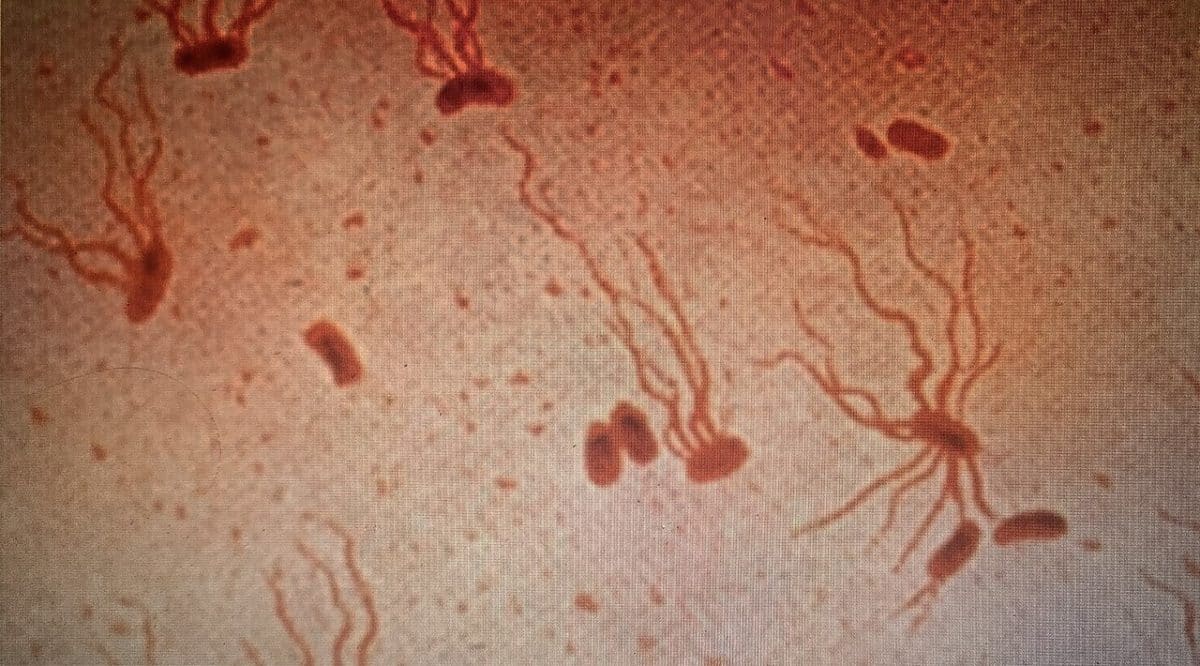
Scientists have discovered a previously unknown mechanism by which bacteria move across surfaces without the need for flagella. At the edge of a bacterial colony, the microbes break down sugars, release metabolites, and create osmotic pressure. This pressure generates a microscopic "wave" that propels the bacteria forward.
Known Methods of Bacterial Movement
In liquid environments, bacteria typically move by rotating their flagella. However, they can also travel across solid surfaces. For example, some use pili—tiny projections on their membrane that latch onto a substrate and pull the bacterium forward—or proteins that allow them to glide along surfaces, much like caterpillars. Despite this, the mechanisms behind movement on solid surfaces are not yet fully understood.
A New Mechanism: Movement Without Flagella
In a study published in the Journal of Bacteriology, researchers examined the phenomenon of swarming—slow spreading of bacterial colonies across the surface of nutrient media. Until now, it was unclear exactly how this movement occurred: perhaps through flagellar rotation or other mechanisms.
To investigate, the scientists disabled the genes responsible for flagella formation in Salmonella and E. coli, then placed the bacteria on dry agar plates. It was expected that without flagella, the bacteria would be unable to spread, but surprisingly, they continued to move.
Searching for an Explanation
The researchers hypothesized that bacteria might secrete surface-active substances that lubricate the environment and enable sliding. To test this, they added the surfactant Tween-80 to Petri dishes, expecting it to enhance movement. However, the bacteria almost completely stopped spreading, indicating that the surfactant not only failed to help but actually hindered the process.
Further observations revealed that movement only occurred in the presence of sugars, such as glucose. This suggested that the key was not mechanical movement, but rather byproducts of sugar metabolism.
The Role of Fermentation and Osmotic Pressure
Experiments showed that movement was observed only with sugars that bacteria could ferment. A pH indicator was added to the nutrient medium, which changes color in acidic conditions. As the colony spread, it left behind a bright yellow acidic trail—a direct sign of fermentation. Analysis revealed the presence of acetate and formate, both products of sugar metabolism.
When scientists used genetic engineering to disable a key gene required for fermentation, bacterial movement stopped entirely.
How the New Mechanism Works
Fermentation products—salts—accumulate at the colony's edge, creating high osmotic pressure and drawing water from the gel-like nutrient medium. This influx of water forms a microscopic wave at the colony's leading edge, which pushes the bacteria forward.
Using optical profilometry, researchers observed a distinct water ridge about 60 micrometers high—thinner than a human hair.
"Swashing": Bacteria Ride Their Own Wave
As bacteria consume sugars, they release salty metabolites that draw water from the medium. This water forms a wave at the colony's edge, and the bacteria spread further along it. In this way, the bacteria literally ride a wave they create themselves. Scientists have called this phenomenon "swashing," drawing an analogy to a wave breaking on the shore.
The Significance of the Discovery
Bacterial movement across surfaces is a key step in the formation of biofilms on catheters, implants, and wounds. Traditional methods to prevent the spread of colonies often focus on blocking flagella. This new research shows that even when flagella are disabled, bacteria retain a backup, purely physical way to colonize surfaces. This is important to consider when developing new strategies to combat infections.