

Denmark has built the largest 3D-printed residential complex.
Construction of the largest residential complex in Europe built using 3D printing has been completed in Denmark. The project features 36 independent student apartments and demonstrates the potential for widespread adoption of 3D technologies in construction.
Aedis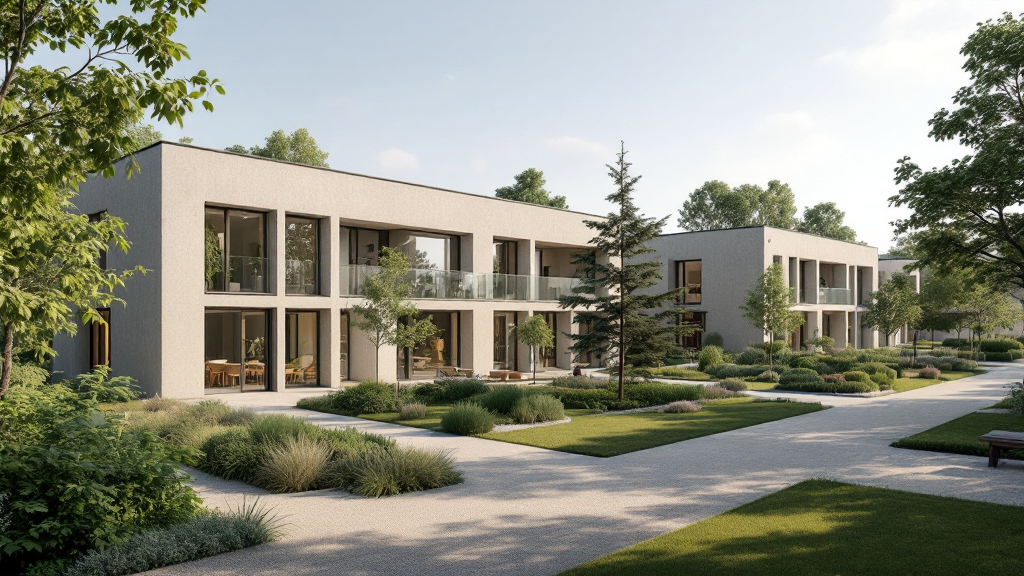
3D printing in construction continues to evolve and is moving closer to widespread adoption. In Denmark, a major project has been completed, resulting in a residential complex of 36 autonomous student apartments, considered the largest of its kind in Europe.
Project Overview
The Skovsporet complex, designed by the architectural firm SAGA Space Architects in collaboration with 3DCP and COBOD, is located in the city of Holstebro. The project was commissioned by an organization dedicated to providing affordable housing for a university campus.
The apartments are housed in six single-story buildings, connected by internal courtyards, green gardens, pedestrian paths, and bicycle parking. During construction, 90% of the trees previously growing on the site were preserved.
Construction Technologies
The main structures of the buildings were created using the COBOD BOD3 3D printer, which applied a cement-like mixture layer by layer to form the load-bearing walls of the apartments. Only three people were needed on site to oversee the process. The time required to print a single building was reduced from several weeks for the first structure to just five days for the last one.
After the printing was completed, roofs, windows, doors, furniture, and other essential elements were installed manually to transform the concrete shells into fully functional living spaces.
Architectural Features
Each apartment ranges from 40 to 50 square meters. All units are designed as independent living spaces with their own kitchen, workspace, living room, bathroom, and sleeping area. The interiors feature numerous windows and skylights, ensuring ample natural light. Finishes include wood, cork, and possibly drywall, which help soften the textured concrete walls typical of 3D-printed buildings.
In some apartments, the sleeping area is elevated, allowing for a workspace to be arranged underneath.
Timeline and Prospects
The construction of the complex took 12 months, including all building work. Students will soon begin moving into their new homes. While the project budget has not been disclosed, it is noted that the cost meets the standards for social housing.
In the future, the company plans to use the experience gained from the Skovsporet project to implement 3D printing in large-scale construction.