

Artificial neurons powered by brain-like energy have been created
Engineers from the United States have developed an artificial neuron that operates at low voltage and closely mimics biological cells. This innovation paves the way for energy-efficient computers and new biointerfaces.
Ingenium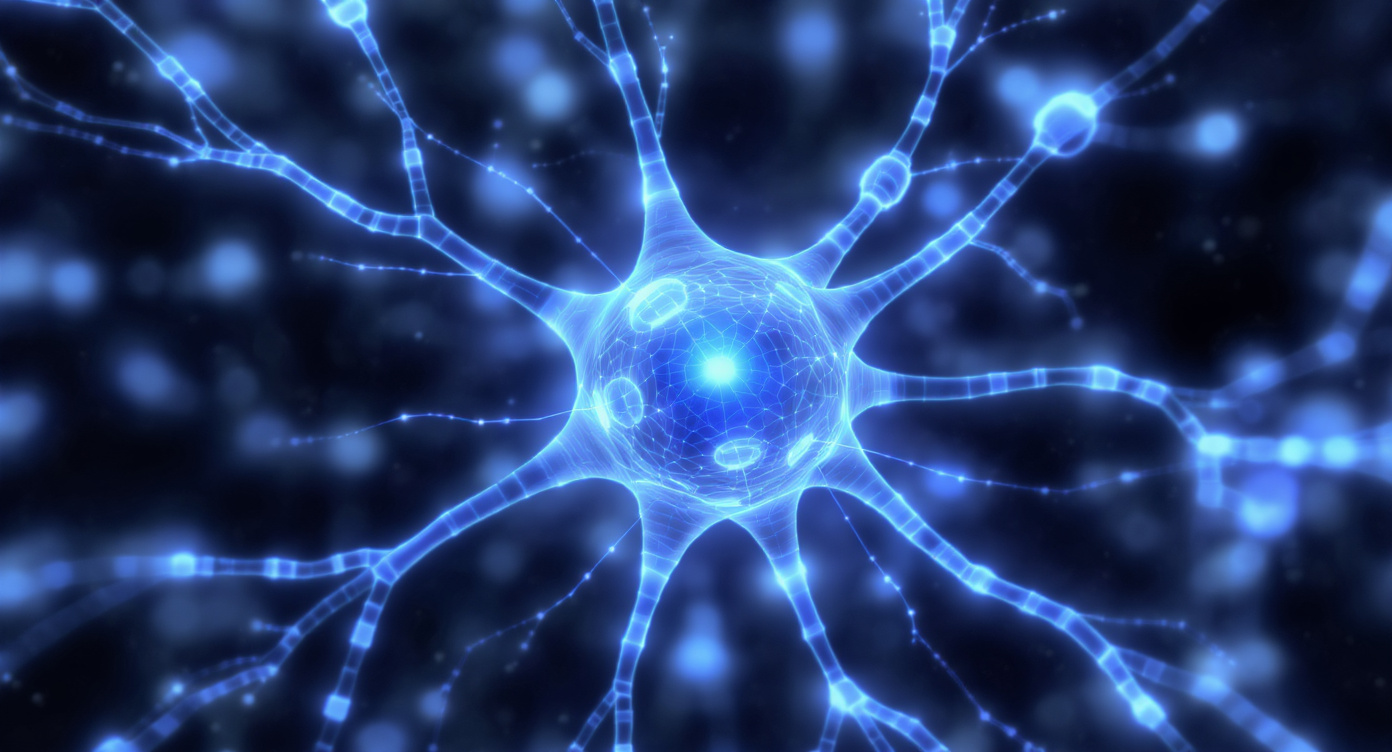
Engineers from the University of Massachusetts Amherst have developed an artificial neuron whose electrical activity closely mimics that of real brain cells. This innovation builds on the team's previous research, where they used protein nanowires derived from bacteria capable of generating electricity. The new approach opens up possibilities for creating computers that operate with efficiency comparable to living systems, as well as for directly connecting electronic devices with biological tissues.
Energy Efficiency of the Brain and Artificial Neurons
The human brain can process vast amounts of information while consuming minimal energy—it is over 100 times more efficient than traditional computer circuits. For example, writing a text requires the brain to use about 20 watts, whereas large language models may consume more than a megawatt. Engineers have long aimed to create artificial neurons for more energy-efficient computing, but achieving the low voltage levels found in biological systems has remained a challenge. Previous artificial neurons required ten times more voltage and a hundred times more energy compared to this new development. The new neurons operate at just 0.1 volts, which is comparable to the neurons in the human body.
Potential Applications
Artificial neurons could be used to build computers that function according to biological principles, as well as in electronic devices capable of directly interacting with the human body. Modern wearable electronic systems require signal amplification for computer analysis, which increases energy consumption and complicates circuit design. Sensors built on these new low-voltage neurons can operate without additional amplification.
Technological Foundation
The key component of the new neurons is a protein nanowire synthesized from the bacterium Geobacter sulfurreducens, which can produce electricity. Previously, nanowires from this bacterium were used to create bioelectrical films powered by sweat, an "electronic nose" for disease diagnostics, and devices for harvesting electricity from the air.
Research Support
The project was supported by the Army Research Office, the U.S. National Science Foundation, the National Institutes of Health, and the Alfred P. Sloan Foundation.