

AI conducted real aerial dogfights on the X-62A for the first time
The experimental X-62A aircraft has successfully conducted autonomous air combat missions for the first time, utilizing artificial intelligence and real sensor data. During these tests, it completed 27 interceptions against a real opponent. This milestone is considered a significant achievement in the advancement of AI-powered combat systems.
Ingenium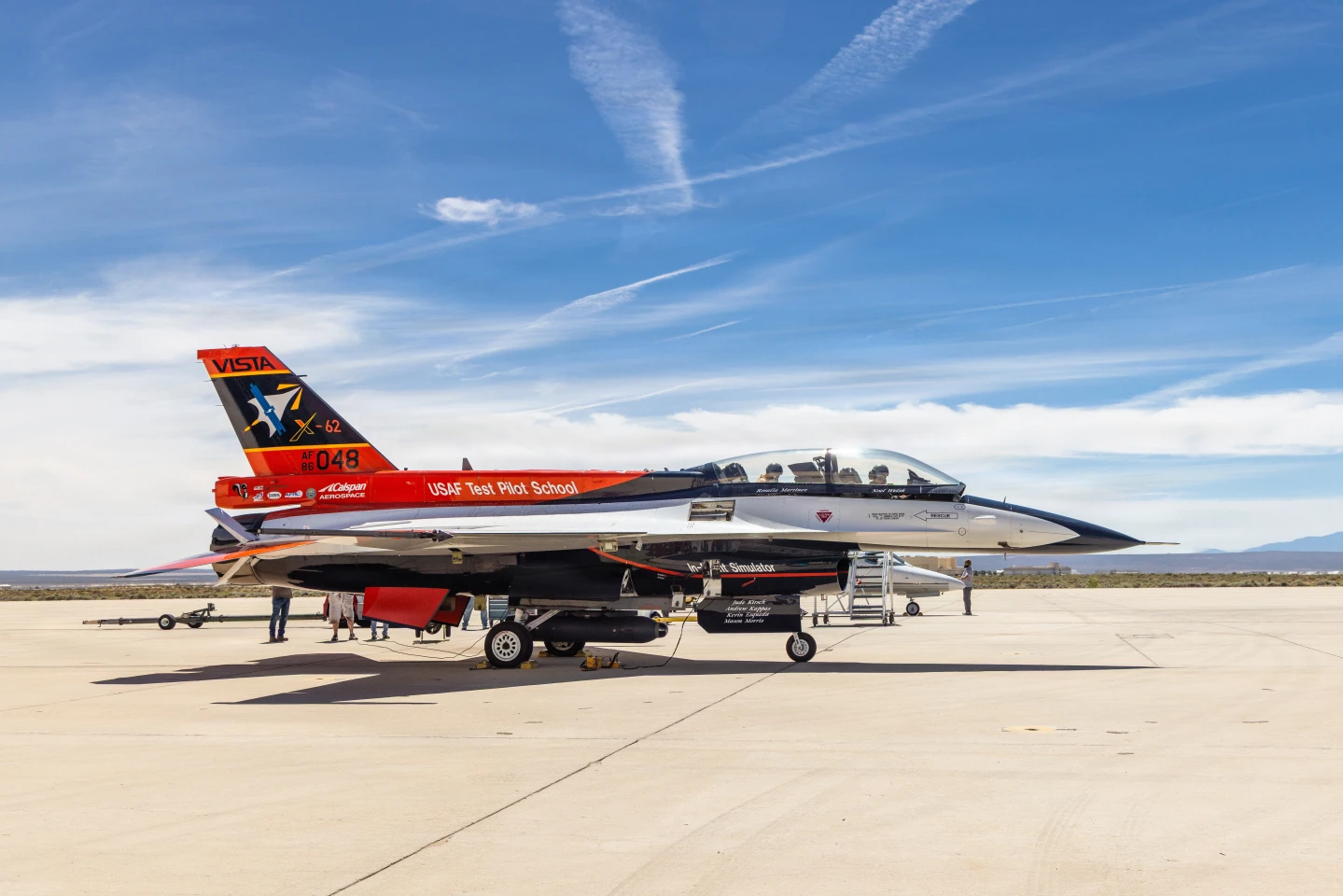
Autonomous aerial combat has reached a new milestone at Edwards Air Force Base in California, where the experimental X-62A VISTA aircraft successfully completed full-scale interception missions using artificial intelligence, relying on real sensor data instead of simulated streams.
Features of Testing New Technologies
When testing new, especially military, technologies, confusion often arises if one relies solely on limited and superficial reports. For example, the results of laser weapon tests may be questioned if the target’s trajectory is pre-programmed into the guidance system. However, engineering tests are typically designed to isolate and solve one problem at a time, with all other variables strictly controlled. In the case of laser weapons, engineers might only evaluate the focusing mechanism, excluding the influence of the guidance system.
A similar approach is used in developing autonomous control systems for combat aircraft. Executing a full mission in autonomous mode is far more complex than simply flying between points: it requires accounting for intricate aerodynamic processes, calculating task execution, and processing large streams of real-time data from numerous onboard and external sensors. Real sensor data is often ambiguous, incomplete, and noisy, making its processing especially challenging.
Utilizing Real Sensor Data
Experimental aircraft like the X-62A typically use digital modeling of various sensor inputs to simplify flight testing. The target aircraft, radar signals, ground station data, or obstacles may exist only as simulated files. A test pilot is always present on all test flights to comply with US Air Force protocols and to take manual control if necessary.
During a recent series of HAVE HEAT tests, the X-62A for the first time received real, noisy target data from the Legion Pod IRST (Infrared Search and Track) optical sensor system. The artificial intelligence processed this data and executed 27 tactical interceptions against a real T-38 Talon adversary aircraft over eight flights. This accomplished a complex “sensor-to-action” chain, enabling a shift from automatic navigation to dynamic autonomous combat maneuvering.
Technologies and Architecture
To achieve these tasks, the Supermassive artificial intelligence architecture developed by Lockheed Martin Skunk Works was used. According to the company, ground testing and full software integration on the X-62A took only three months.
The Legion Pod system allowed the X-62A to perform interceptions without using active radar, maintaining stealth through passive tracking of the Talon’s heat signature and remaining electronically undetectable.
The Significance of the Achievement
The tests demonstrated that artificial intelligence can effectively and reliably close the “sensor-to-action” loop onboard a combat aircraft, processing real infrared data and executing critical combat maneuvers in real time. This achievement is seen as an important step toward establishing air superiority supported by artificial intelligence.