

Innovative methods reveal the secrets of invertebrate immunity
The article discusses the scientific journey of a researcher, the introduction of new molecular methods, and the study of invertebrate immunity using the sea anemone as a model organism. It highlights achievements, publications, and future prospects for research in the fields of RNA biology and antiviral immunity.
Cursus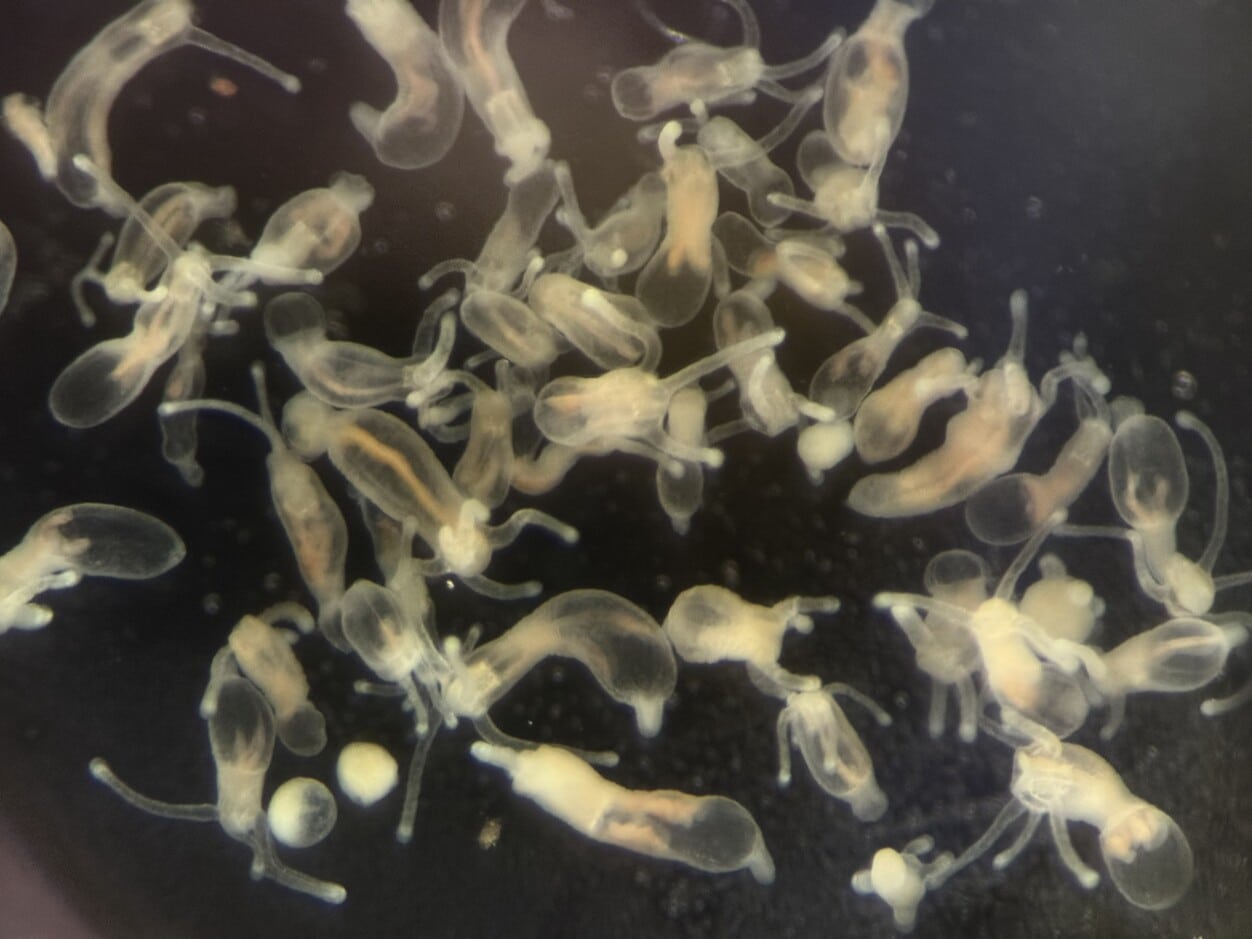
### Career Path and Research Interests

My research journey began in the field of human cytogenetics at Saint Petersburg State University. During my master's studies, I continued my work focusing on the karyology of marine mollusks, after which I pursued additional education in bioinformatics. In 2018, I started my doctoral studies at Charles University in Prague, specializing in developmental biology and cell biology, where I investigated non-coding RNAs in mammalian oocytes and early embryos.

In 2022, I defended my dissertation and earned a PhD, followed by a year as a postdoctoral researcher at the Czech Academy of Sciences. In 2023, I began working in Jerusalem, studying the molecular mechanisms of antiviral defense, with a particular focus on RNA-associated processes. At each stage, both the model systems and countries changed, but my core interest remained: understanding how cells organize molecular processes to perform essential functions such as division, development, and defense.

### Research Using the Nematostella vectensis Model

The sea anemone Nematostella vectensis is used as a model organism for studying immunity. In our laboratory, we introduced microinjection techniques, which accelerated the work of the entire research group. Using this model, we were the first to demonstrate the spatial proximity of two ancient immune proteins, with results published in Nature Ecology & Evolution in 2026. Nematostella is considered not only as a research subject but also as a tool for precise molecular investigations.

### Implementation of New Methods

PLA methods were introduced in the laboratory, enabling the study of the molecular response of Nematostella vectensis embryos to infection. Applying PLA to N. vectensis planulae revealed a close spatial association between two ancient key immune proteins, which contributed to publications in the Nature group journals. Additionally, I train other colleagues in microinjection techniques for Nematostella embryos.

### Description of RNA-PLA and RNA-puro-PLA Methods

RNA-PLA and RNA-puro-PLA methods allow the detection of close associations between specific RNAs and proteins within cells, as well as individual translation events of specific mRNAs. Unlike polysome profiling, these methods do not average signals across cell populations, and unlike smFISH, they reveal not only RNA distribution but also the translation process itself. Both approaches were developed and adapted during my doctoral work and are now used by other research groups to analyze RNA-protein interactions, including viral RNAs in EBV-infected B cells and for studying local translation of specific mRNAs. Importantly, these methods are reproducible and applied in multiple laboratories.

### Scientific Publications and Research Directions

My publications span three main areas: RNA biology, early development, and invertebrate immunity. My interdisciplinary work is recognized by invitations to review articles for leading scientific journals, reflecting the demand for expertise across several fields.

### Funding and Scientific Recognition

I have received two grants: one from GA UK at Charles University and another from IGA at the Institute of Physiology and Genetics of Animals, Czech Academy of Sciences. These grants enabled the research and provided experience in independently managing projects and developing experimental strategies. Since 2024, I have been awarded a Lady Davis Trust fellowship. That same year, I received invitations to review articles for The ISME Journal and Nature Reviews Immunology, as well as to present at international conferences and symposia.

### Experience Working in Different Countries and with Various Model Organisms

Each relocation was driven not so much by a change of country as by a transition to a new scientific challenge. In Saint Petersburg, I mastered the basics of cytogenetics and karyology; in Prague, I shifted to molecular biology and developed new methods (RNA-PLA and Puro-PLA); in Jerusalem, I returned to marine organisms with new tools to address previously inaccessible questions. Each stage was a step toward not only observing but also intervening in processes and uncovering causal relationships.

### Prospects for Future Research

The immediate goal is to develop an independent research program and publish key studies on antiviral immunity in cnidarians. In the future, I plan to apply for start-up grants and establish my own research group, uniting studies in RNA biology and the evolution of antiviral immunity. Investigating simple immune systems and their functioning lays the groundwork for experiments that manipulate individual components, enabling a shift from descriptive to causal analysis of intracellular interactions. Such fundamental research forms the basis for future applied developments.