

Container ships continue to operate through the Red Sea.
Despite restrictions and ongoing instability in the Middle East, container ships continue to pass through the Red Sea, and demand for charter vessels remains high. Carriers are seeking alternative routes to keep trade flowing in the region.
Vector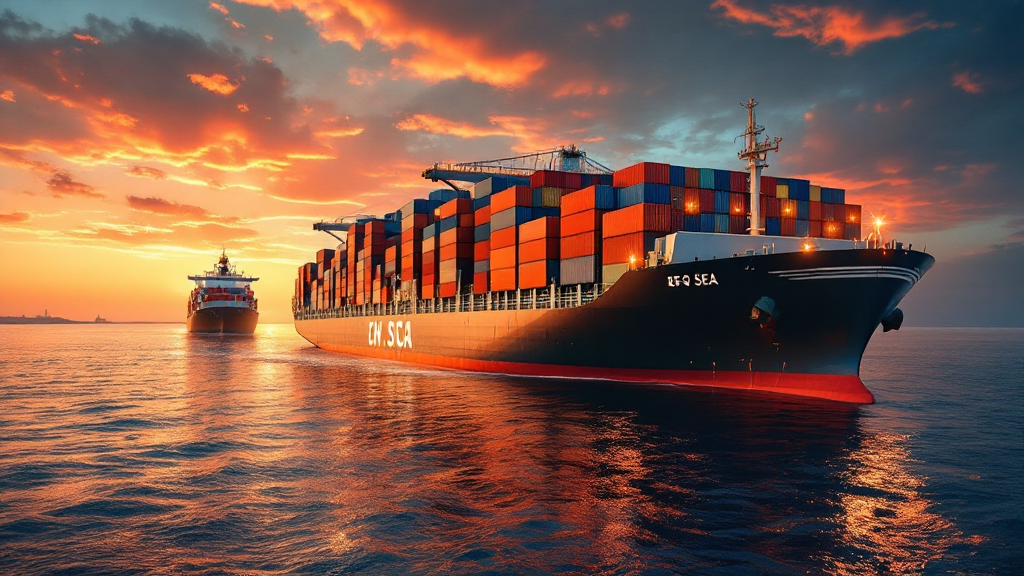
Despite the restrictions imposed by the Houthis on Saudi Arabia, shipping companies continue to send their vessels through the Bab-el-Mandeb Strait to deliver containers to Jeddah and other Red Sea ports.
Analytical data shows that several carriers, including Maersk, CMA CGM, and Wan Hai, are still using updated routes via the Suez Canal. Over the past seven days, 54 container ships have passed through the Bab-el-Mandeb Strait, with vessel schedules remaining unchanged.
Currently, the pause in military operations has not brought clarity to the future direction of the market. Container shipping futures suggest a possible decrease in freight rates from recent peaks, even as fuel prices continue to rise.
Last week, the container ship Ane Maersk, with a capacity of 16,592 TEU, entered the Red Sea from the Mediterranean and carried out commercial operations in Jeddah. Typically, this vessel operates on Maersk’s Asia–Europe AE19 route, but instead of heading to Port Said, it sailed to Mundra via the Bab-el-Mandeb Strait for additional loading.
The AE19 route was established by Maersk and the Gemini Cooperation joint venture (Maersk and Hapag-Lloyd) in March, at the onset of the US/Israel–Iran conflict, to maintain access to the Saudi Arabian market through Jeddah for large vessels from Asia, bypassing the Cape of Good Hope, the Mediterranean, and Suez, ensuring safe entry into the Red Sea.
The situation remains unstable, and further escalation of the conflict in the Middle East could force vessels to leave the Red Sea, leading to an additional shortage of fleet capacity as carriers seek alternative routes.
Demand for charter vessels among operators running services through the Red Sea remains high. In the past two months, companies such as Global Feeder Shipping, China United Lines, and GT Lines have signed more than 12 new charter agreements for trade in the Middle East.
GT Lines’ partner on the West India–Middle East KIX1 route, Samudera Shipping, is increasing capacity by deploying the chartered container ship Kuo Lung (1,471 TEU) alongside the Guo Fu Min Qiang (1,128 TEU), which is managed by GT Lines.