

Origami Capsule: Medications Now Last Longer
American researchers have developed a capsule inspired by origami that gradually releases medication over several days. This technology could improve the effectiveness of treatment and make it easier for patients with chronic illnesses to take their medications.
Salus
When patients take their medications irregularly, the effectiveness of therapy decreases, and healthcare institutions face additional costs. Researchers in the United States have developed a way to extend the action of a single capsule, drawing inspiration from the traditional Japanese art of origami.
New Approaches to Drug Delivery
In recent years, alternative treatment methods have emerged in medicine. For example, in the United States, liver transplants have been avoided using injections of mini-organs, while in Slovenia, scientists have learned to create 3D objects inside living cells for more effective drug delivery.
Development of the "Origami Pill"
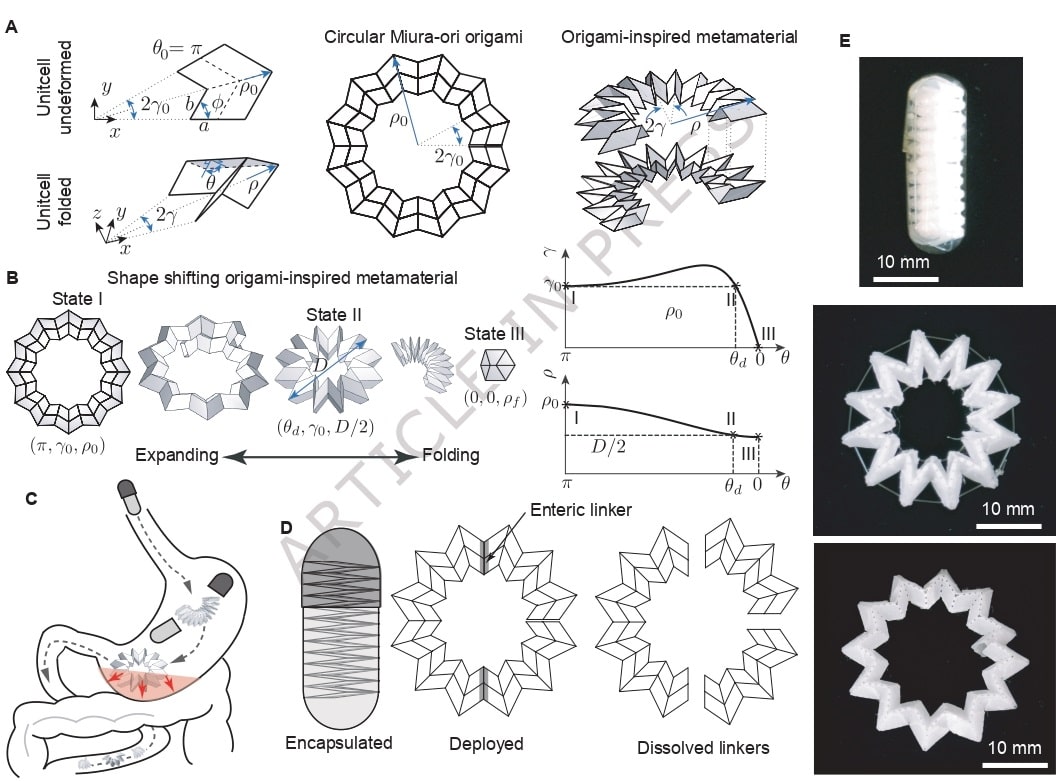
Experts at the Massachusetts Institute of Technology have created a capsule capable of remaining in the stomach for one to three weeks, providing a continuous release of medication into the body for three to four days. The results of their experiments have been published in the scientific journal Nature Communications.
The capsule contains a complex structure inside, resembling a paper figure made using origami techniques—without scissors, glue, or other auxiliary materials. Once in the stomach, the capsule's shell dissolves, and the contents unfold, taking the shape of a sheet with several folds.
Advantages of the Design
The surface area of the "sheet" inside the capsule is significantly greater than its thickness and volume, allowing for an increased amount of medication to be delivered from a single tablet, as well as control over the rate of drug release. In studies on pigs, the medication was released evenly and continuously for up to four days after taking the capsule, and the structure itself remained in the stomach for one to three weeks.
The material composition allows the structure to dissolve in the neutral sections of the gastrointestinal tract, enabling it to be safely excreted from the body without causing blockages or injuries.
Potential Applications and Limitations
Such capsules can be used to deliver antibiotics, antiparasitic agents, and medications for treating chronic diseases that require regular intake over several consecutive days. Irregular drug delivery can lead to a lack of effect or the development of resistance to therapy.
Currently, the innovative capsule can deliver no more than 400 mg of active substance, making it suitable only for medications with low dosages.