

What Orangutans Teach Us: Secrets of Nutrition and Balance
Orangutans display flexible strategies for eating and maintaining their energy balance, which help them avoid obesity and stay healthy even when food is scarce. Their experience can offer valuable insights for people seeking to better manage their diet and physical activity in today’s world.
Cursus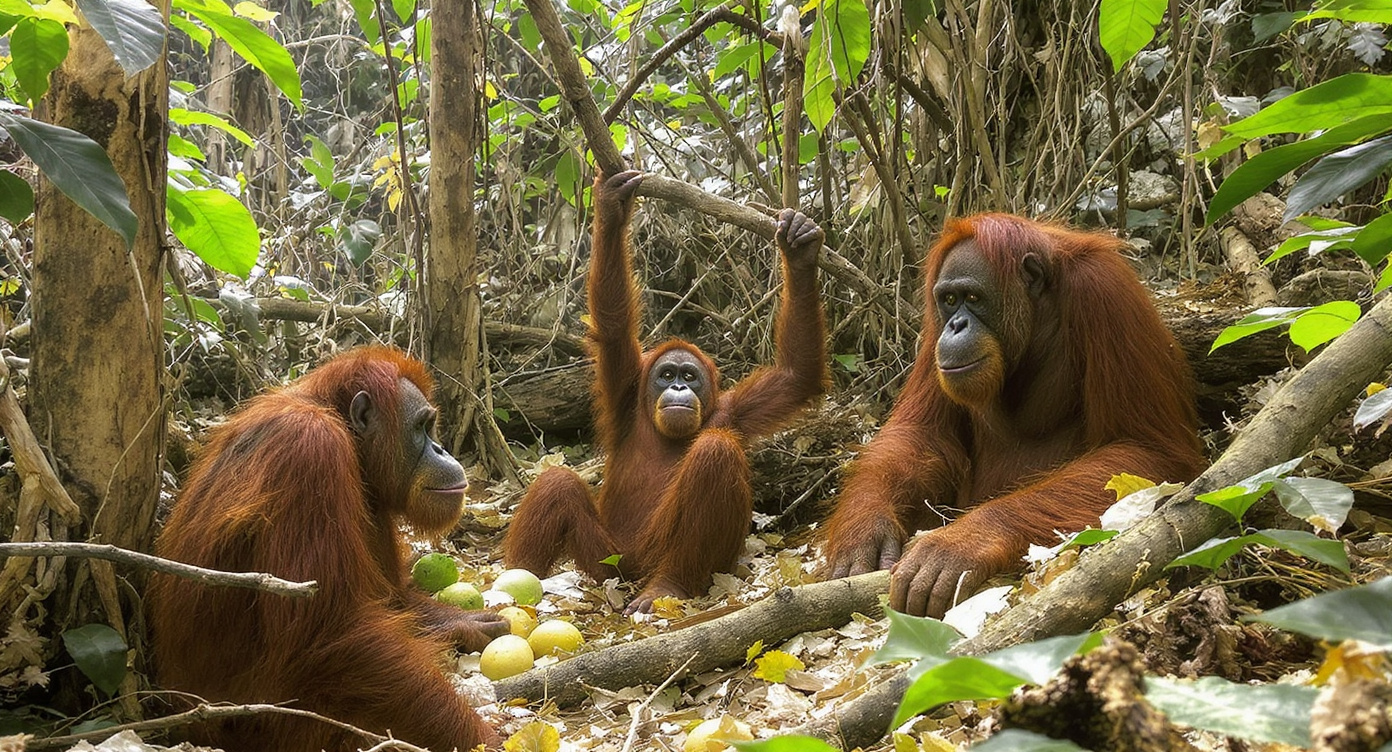
Orangutans display remarkable abilities in maintaining their energy balance and healthy nutrition, using flexible strategies to survive during food shortages and to preserve their health.
What Humans Can Learn from Orangutans
Orangutans, the large apes native to the tropical forests of Indonesia and Malaysia, are a striking example of adaptation to changing food availability. Research conducted by an international team of scientists over 15 years in the jungles of Borneo has shown that these endangered primates surpass modern humans in preventing obesity, thanks to their balanced food choices and physical activity.
Humans could benefit from adopting the orangutans’ approach to maintaining a balanced, protein-rich diet—especially relevant today, when many diets are high in processed foods.
Flexibility in Diet and Behavior
Wild Bornean orangutans adapt to environmental changes by adjusting their intake of nutrients, behavior, and energy expenditure. This highlights the importance of understanding natural eating habits and their impact on health, both for animals and for people.
Orangutans are among our closest living relatives, sharing a common ancestor with humans. The similarities in physiological and metabolic processes, as well as nutritional needs and behavioral adaptations, allow us to use orangutan experience to better understand evolutionary mechanisms that are also relevant to humans.
Modern Challenges for Humans
Although humans also possess metabolic flexibility, modern diets rich in processed foods can disrupt this balance, leading to metabolic disorders such as diabetes. Unlike orangutans, who reduce their physical activity during fruit shortages to conserve energy, many people—especially those with sedentary lifestyles—do not adjust their energy expenditure to match their caloric intake, which contributes to weight gain and related health issues.
Orangutan Adaptations: Lessons for People
Understanding how orangutans adapt can help people better manage their nutrition and health, and also underscores the importance of preserving the habitats of these primates for their survival.
The research was conducted at the Tuanan Research Station in the Mawas Reserve on the island of Borneo, Indonesia. This peat swamp forest, covering about 309,000 hectares, is notable for its rich biodiversity and unique ecosystem.
Feeding Strategies and Energy Balance
Orangutans prefer fruits because of their high carbohydrate content, but during fruit shortages, they switch to leaves, bark, and other foods rich in protein and low in sugars. When fruits are abundant, they continue to get protein, but most of their energy comes from the carbohydrates and fats found in fruit.
Scientists studied how orangutans’ bodies cope with these changes, examining the impact of fruit availability on their diet and how their bodies adapt to prevent energy imbalance. Special attention was paid to how orangutans switch between different energy sources—fats and proteins—when their favorite foods become scarce.
Key Findings of the Study
- Orangutans avoid obesity by responding to significant fluctuations in fruit availability. Unlike people in Western countries, who have constant access to high-calorie foods, orangutans experience both periods of abundance and scarcity. These cycles, similar to intermittent fasting in humans, may help reduce oxidative stress and support overall health.
- During fruit shortages, orangutans show metabolic flexibility, using fat and muscle protein reserves for energy, which allows them to survive when food is scarce.
- In these times, they also reduce physical activity, rest more, go to sleep earlier, move less, and spend less time with others. This flexibility allows them to efficiently use fat and protein stores as fuel when needed. When fruit becomes plentiful again, they restore their fat and muscle reserves.
- The orangutan diet maintains a stable protein level, which contrasts with modern Western diets that are often high in cheap, calorie-dense but protein-poor foods. Such eating habits in humans contribute to obesity and metabolic diseases.
Significance for Science and Health
Understanding orangutans’ feeding strategies can help shape better nutritional principles for humans. The research highlights the importance of dietary balance and metabolic flexibility for maintaining health in both orangutans and people. Modern eating habits, with high consumption of processed foods, sugars, and fats, can lead to metabolic disorders and health problems.
Previous studies have shown that orangutans at the Tuanan station get most of their protein from the leaves and seeds of just one of nearly 200 plant species in their diet—Bowringia callicarpa vines. The protein from this plant supports orangutans during fruit shortages and likely contributes to their survival and population growth in the region.