

Genetics has revealed the dynasties of Scythian nobility
A new study has shown that members of the Scythian nobility buried in burial mounds were related by blood. This confirms the existence of hereditary dynasties and social inequality among ancient nomads.
Cursus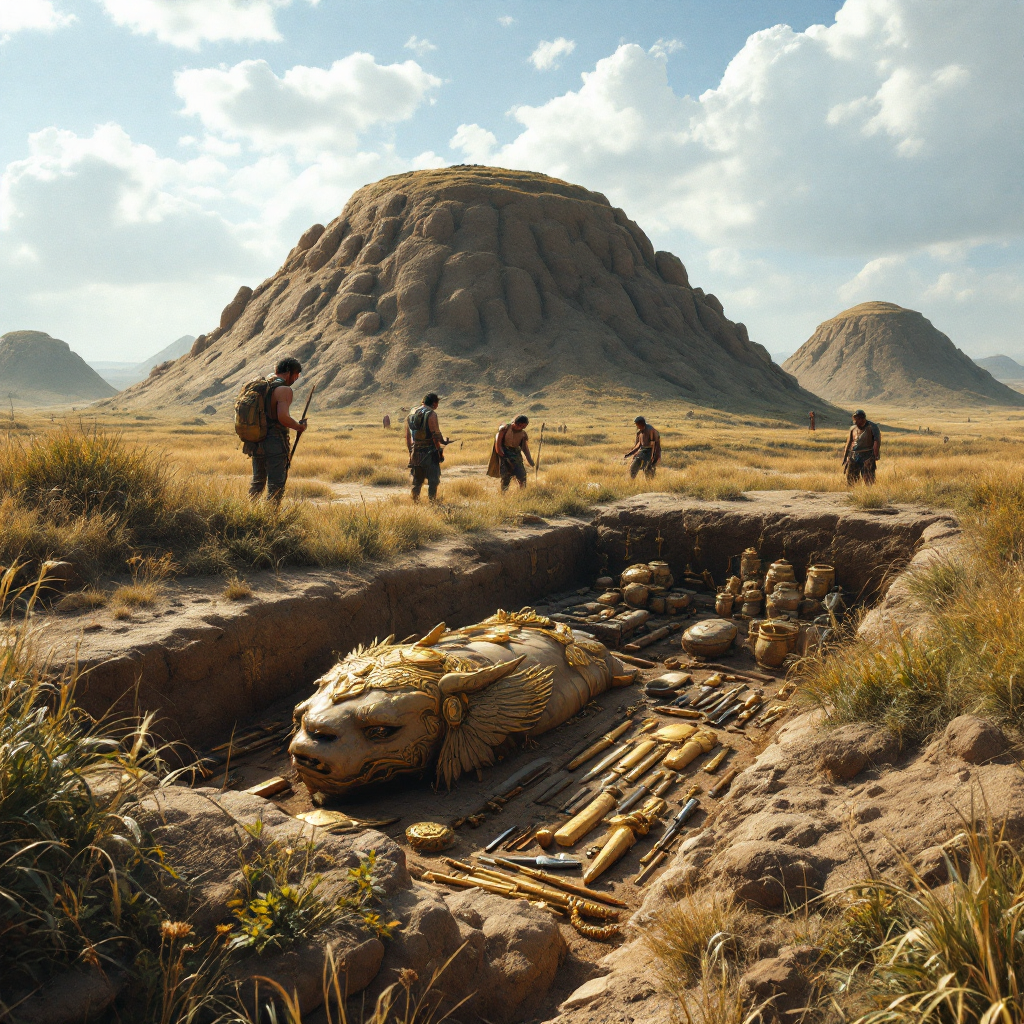
A new study has revealed that members of the Scythian nobility, buried in kurgans scattered across the steppes of Central Eurasia, were connected by familial ties. This evidence points to the existence of dynasties among ancient nomads, where power was inherited.
Scythian Tribes and Their Distinctive Features
During the first millennium BCE, warlike, horse-riding pastoral tribes roamed the vast steppes from the Altai and the territories of modern Kazakhstan and China to the Black Sea region. In ancient Greek sources, these peoples were called Scythians, while Persian and Indian sources referred to them as Saka. Historically, the term "Scythians" is more often applied to the western tribes (Black Sea area), and "Saka" to the eastern ones (Central Asia, Altai).
These tribes shared similar methods of warfare, types of weapons and horse-riding equipment, as well as a distinctive Scytho-Saka animal style in art, depicting animals in motion. The Scythians and related peoples did not have a written language, but they left behind kurgans—earthen mounds over graves.
Social Structure and Burial Rites
The height of Scythian kurgans depended on the social status of the person buried. The burial mounds of the nobility could reach 20–25 meters in height, with diameters exceeding 20 meters. Archaeologists find ceramics, weapons, remains of sacrificed animals (including horses), and finely crafted gold ornaments in such burials. Ordinary people were buried in smaller kurgans with few or no grave goods.
These differences indicate the presence of social stratification in Scythian society. Until recently, it remained unclear how elite status was achieved and passed on—whether through individual merit or inheritance.
Genetic Analysis and Dynasties
As part of the new research, ancient DNA was analyzed from the bones of 85 individuals buried in Scythian kurgans. Based on the wealth of the burial and the size of the kurgan, 38 individuals were classified as nobility and 47 as non-elite.
Among the elite burials was the so-called "Issyk Golden Man," discovered in 1969–1970 in Kazakhstan in a royal burial complex dating to the 6th–5th centuries BCE. His costume was covered with gold plates depicting animals, and his headdress was also adorned with gold. More than four thousand gold ornaments, weapons, and a silver cup with an inscription in an unknown language were found in the burial chamber. For the first time, a genomic analysis was conducted on the remains of this individual, confirming his affiliation with the Iron Age Saka and determining that he was likely male.
Kinship Among the Nobility
Comparing the genomes of people from elite and non-elite burials showed that there were close family ties among the nobility. High-status individuals buried in different kurgan complexes, sometimes far apart, were often blood relatives—grandparents, grandchildren, nephews, and so on.
The low genetic diversity among the elite suggests frequent close-kin marriages within the aristocracy. These findings confirm that social inequality already existed in ancient nomadic societies: Scythians were ruled by royal dynasties, and high status was inherited.