

Yeast-based biomaterial for eco-friendly 3D printing
Researchers from Sweden have developed a fully biodegradable material based on yeast for 3D printing architectural and interior components. This new material produces no waste, can be easily customized in terms of color and texture, and completely decomposes in the environment after use.
Aedis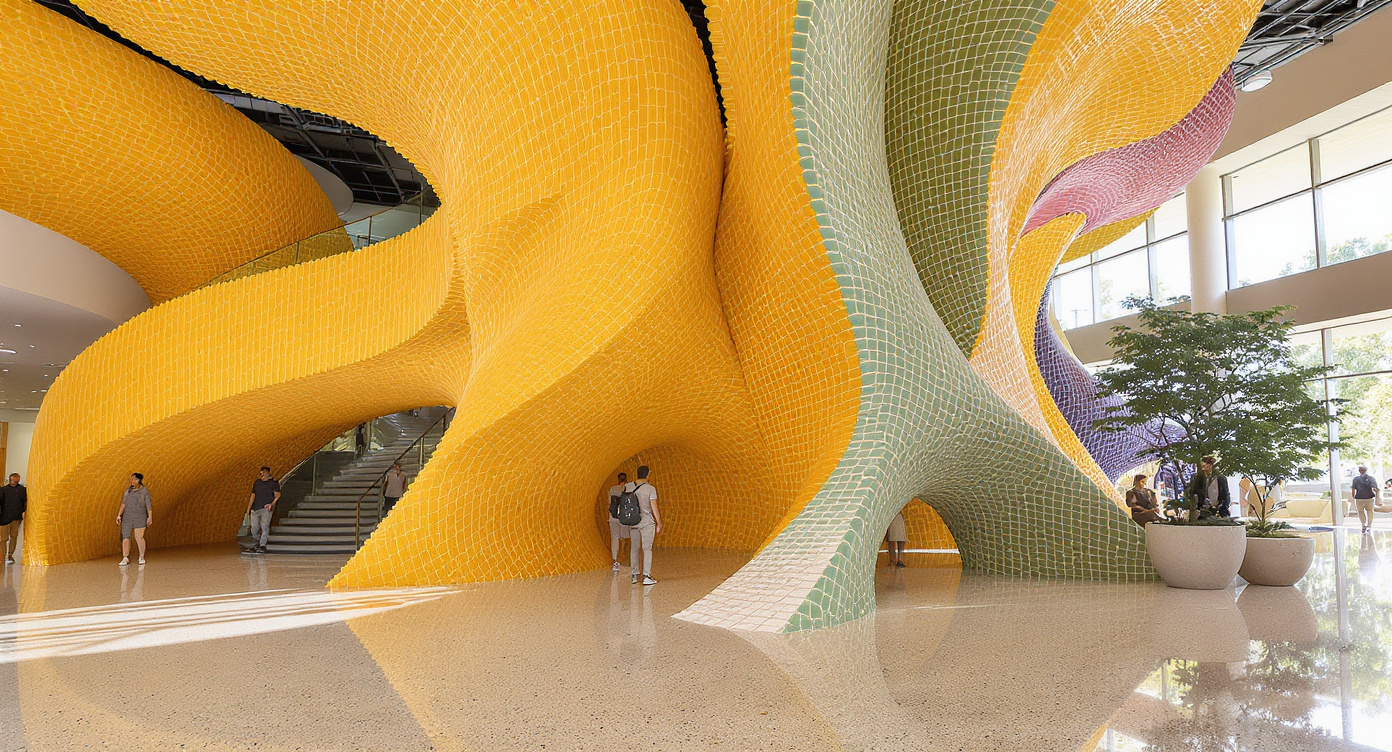
A research team from Chalmers University of Technology (Sweden) has developed a new biodegradable material based on yeast, which can be used in 3D printing to create building components tailored for architectural and interior design applications.
Features and Advantages of the Material
Unlike traditional building materials such as gypsum, plastic, and synthetic fabrics, which are typically produced from non-renewable or fossil resources, the new material is fully biodegradable and generates no waste. It can be specially modified for various architectural and design solutions.
Composition and Production Technology
The material is composed of yeast, cellulose fibers from wood for strength, alginate from brown algae to stabilize the shape, plant-based glycerin for flexibility, and water. Before mixing, the yeast is deactivated by heating to stabilize the material and is used as a binder rather than for fermentation. The resulting viscous mass is formed into a hydrogel suitable for 3D printing.
3D printing enables the creation of complex shapes without waste, providing a high degree of control over form, texture, and material distribution. After printing, the mass dries at room temperature, taking its final shape without the need for additional heating or tools.
Customization Options
By adjusting the formula, it is possible to produce components in a range of colors—from yellow to brown—by adding natural pigments or colored yeast strains. The degree of transparency can also be controlled, and patterns or textured surfaces can be created.
Prospects and Further Research
Before the material can be widely adopted in construction, further studies are needed to assess its strength, fire safety, and moisture resistance. There is also a need to explore the scalability of production and the design of more robust structures.
The yeast used in production can be sourced as a byproduct from the brewing and agricultural industries. After use, the material fully decomposes in the environment.
In the future, engineered living materials (ELM) could be customized for various functions, including self-repair or air purification. The development of this material is seen as a first step toward creating new types of architectural solutions that combine sustainability, functionality, and innovative design.