

Urban waste is changing the mating rituals of birds
Ornithologists have discovered that Australian city birds actively use trash to decorate their mating structures, making them more colorful and impressive. However, the impact of these changes on their breeding success remains unclear.
Cursus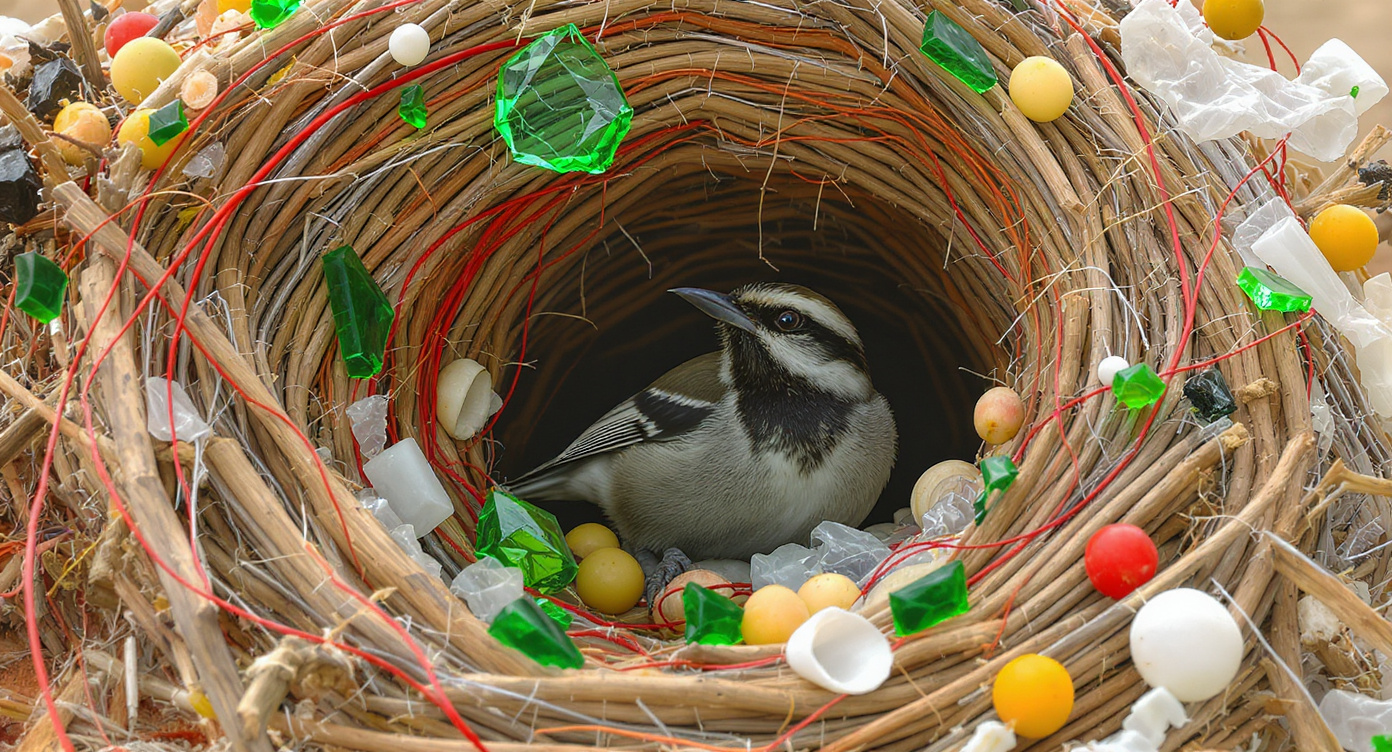
Ornithologists conducted field studies and behavioral experiments to compare the courtship structures of Australian birds in urban and natural environments. They found that the presence of litter significantly altered the appearance of these constructions: males deliberately selected artificial objects for decoration, but the impact of this choice on reproductive success remained unclear.
Features of Courtship Behavior
Animals use various visual signals to attract mates. Male great bowerbirds (Chlamydera nuchalis) build elaborate tunnels from twigs on the ground and decorate them with contrasting objects, investing considerable effort in finding items that appeal to females. Biologists classify such constructions as an extended phenotype, as they represent a continuation of the male’s courtship behavior.
In the wild, birds typically use bright berries, dry leaves, and snail shells. However, urban growth has changed their habitats, introducing many artificial objects. While birds’ tendency to use waste for decoration had been noted before, reliable data on this phenomenon was lacking.
Comparative Analysis of Urban and Rural Structures
The study analyzed the constructions of 61 males in the Australian state of Queensland. Researchers photographed the twig tunnels of both urban and rural birds, counted the number of decorations, and measured their area. The colors of the objects were analyzed using a computer model simulating bowerbird vision, including ultraviolet receptors. Based on this data, the visual stimuli of different bowers were assessed.
The results revealed significant differences depending on habitat. Urban males placed an average of about 90 objects at the entrance, while rural males used around 20. Nearly all decorations in urban bowers were made from artificial materials: green glass shards, pieces of plastic, and red wire, with the objects themselves being larger. As a result, urbanization made the birds’ courtship displays more extensive and vivid.
Material Selection Experiment
In the experiment, mixed piles of objects—10 urban and 10 natural items previously chosen by other males—were placed near bowers. These sets were offered to both wild and urban birds. It turned out that both groups chose artificial objects ten times more often than natural ones, even if they lived far from humans. This suggests a strong innate preference for such materials among bowerbirds.
Impact on Mating Success
Male great bowerbirds have changed their status criteria, actively using plastic and glass, and the availability of waste encouraged them to collect large assortments. However, the researchers did not measure the final reproductive success. Without further observation, it is impossible to determine whether the use of litter decorations increased attractiveness to females or simply created a visual illusion for the collectors themselves.