

Microbial batteries: an eco-friendly power source for soil sensors
Researchers have developed a fuel cell that generates electricity using soil microbes, providing an eco-friendly way to power underground sensors for agriculture and environmental monitoring. This new technology operates in various conditions and could serve as an alternative to traditional batteries, helping to reduce electronic waste.
Ingenium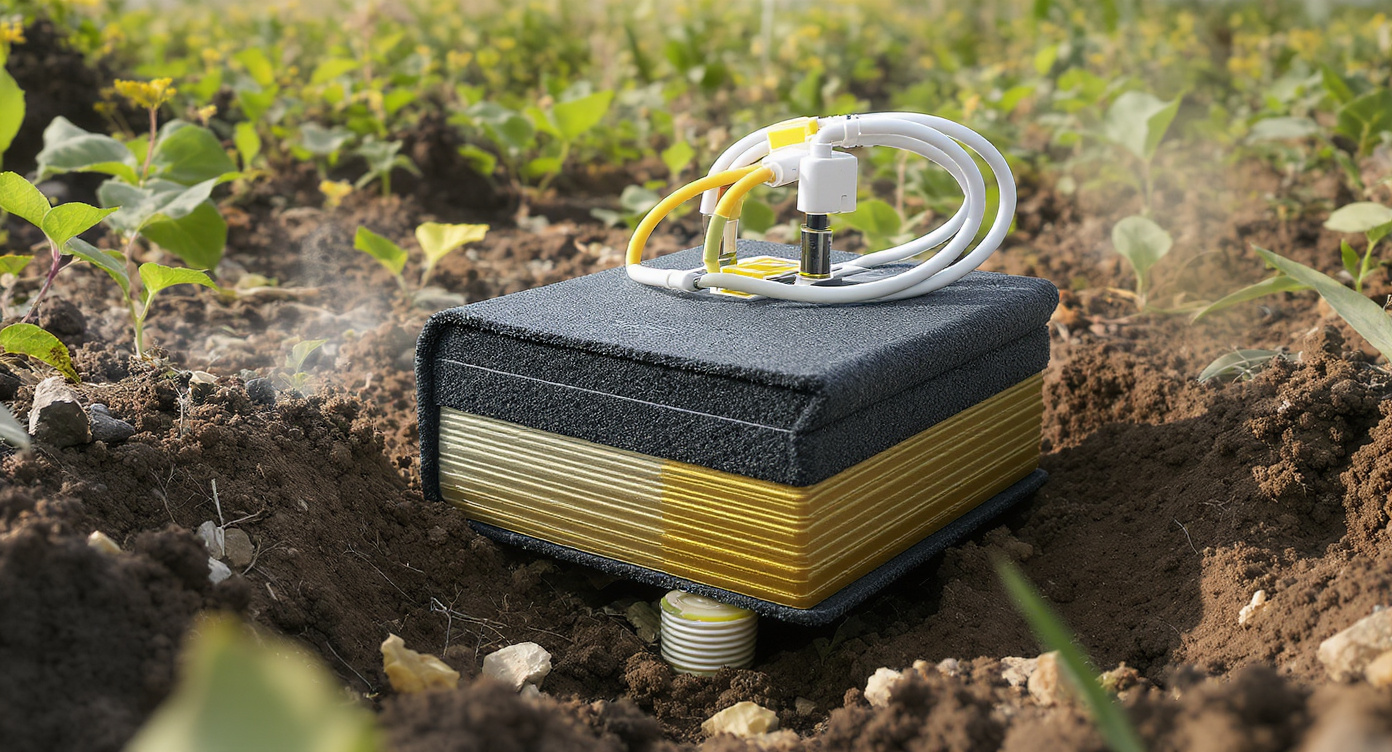
Researchers from Northwestern University have developed a fuel cell that generates electricity using soil microbes. The device, about the size of a paperback book, produces a small amount of energy by harnessing the decomposition of organic matter in the soil by microorganisms.
Applications and Advantages
This system is designed to power underground sensors used in precision agriculture and environmental monitoring. It offers an alternative to traditional batteries, which contain toxic and flammable materials, rely on complex supply chains, and contribute to the growing problem of electronic waste.
During testing, the fuel cell successfully powered sensors that measure soil moisture and detect touch, which can be useful for tracking animal movement in fields. The device uses a small antenna to wirelessly transmit data, reflecting existing radio frequency signals and minimizing energy consumption.
Reliability and Efficiency
The device demonstrated stable performance in various conditions—from dry to flooded soil—and provided a longer energy supply compared to similar systems, operating about 120% longer.
Technological Features
Microbial fuel cells (MFCs) work similarly to batteries, but instead of chemical reactions, they use bacteria that naturally release electrons. As electrons move through the system, they generate an electric current. These microbes are abundant in soil, allowing for simple engineering solutions to generate electricity for low-power applications.
Precision agriculture requires large networks of sensors for continuous soil monitoring, including moisture, nutrient content, and pollutants. However, powering such sensors is challenging: batteries need regular replacement, and solar panels can be unreliable due to dirt and the need for sunlight.
Design and Innovations
To address reliability and power issues, the research team spent two years testing different designs. The breakthrough came with a change in geometry: a carbon felt anode is placed horizontally under the soil, while a conductive metal cathode is positioned vertically toward the surface. This structure ensures a constant oxygen supply and maintains hydration even in dry conditions. A waterproof coating allows the cathode to keep working when flooded, and the vertical orientation helps it dry out after water recedes.
The final prototype performed well in various environments, generating 68 times more energy than needed to power the sensors.
Outlook and Future Development
Since the publication of the research, interest in microbial fuel cells has continued to grow. Efforts are underway to improve efficiency, stability, and materials, including the development of biodegradable designs to reduce environmental impact. All system components can be made from common materials available at hardware stores. Work is ongoing to create fully biodegradable versions to eliminate complex supply chains and the use of conflict minerals.
This technology is not intended to power large systems, but it can play a vital role in supporting low-power devices in agriculture, environmental monitoring, and the expanding Internet of Things.
Key Points:
- A new fuel cell has been developed that uses soil microbes to generate electricity.
- The system can power underground sensors that monitor soil moisture and detect movement or touch.
- The device continues to operate in a range of conditions—from dry soil to fully flooded environments.
- This technology could become a more eco-friendly alternative to batteries for sensors used in precision agriculture.