

Norwegian lobsters are capable of feeling pain, a study has shown.
A new study has shown that Norwegian lobsters respond to painful stimuli not only reflexively, but also with the involvement of painkillers, confirming their ability to feel pain. This highlights the importance of implementing humane treatment standards for these animals in aquaculture and fisheries.
Cursus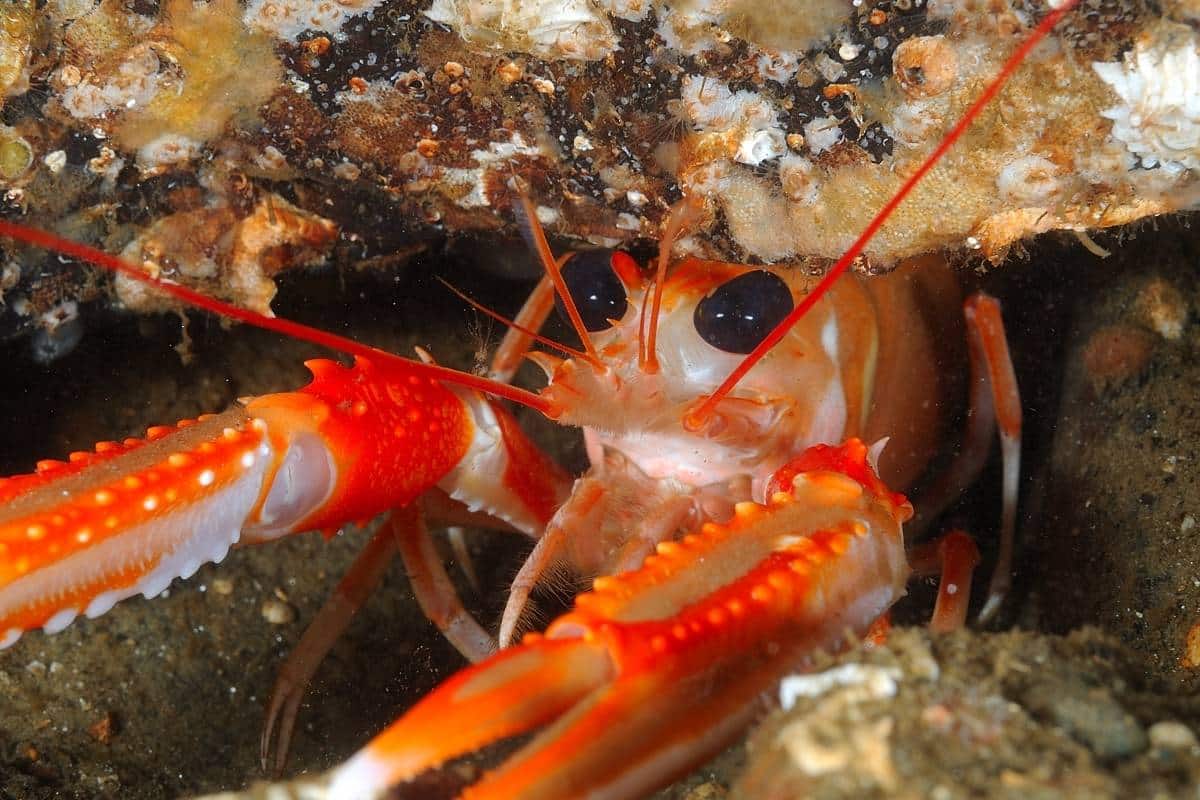
Study of Pain Response in Norwegian Lobsters
Experimental Conditions
Groups of biologists from Sweden and Spain conducted a study on pain sensitivity in Norwegian lobsters (Nephrops norvegicus). During the experiment, 105 individuals were divided into three groups: a control group, a handling group (lobsters were transferred with a net to assess stress from manipulation), and a "shock" group, which received an electric shock in water for ten seconds.
Before exposure, some lobsters were given painkillers: either lidocaine was dissolved in the aquarium water, or aspirin was injected into the membrane at the base of a leg.
Observations and Analysis
The animals' behavior was recorded on video, after which hemolymph samples were taken to analyze lactate and glucose levels. Researchers also examined nerve ganglia to assess the expression of stress-related genes.
Lobsters subjected to electric shock without anesthesia showed a pronounced escape response—on average, about ten rapid tail flips in an attempt to swim away from the source of pain. No such reaction was observed in the control group.
Effect of Painkillers
Both drugs proved effective: lobsters that received lidocaine or aspirin tolerated the shock calmly, and the number of tail flips dropped to nearly zero. However, aspirin injections caused strong local irritation, which manifested as active grooming of the injection site and a sharp increase in lactate levels in the hemolymph. Lidocaine dissolved in water did not cause any side effects.
Additional Results
It was found that transferring lobsters with a net also caused stress: after the procedure, the animals moved actively around the tank, and the expression of the stress hormone gene (CHH) changed in the thoracic ganglia.
Conclusions
The study results showed that the response of Norwegian lobsters to a painful stimulus is not a simple reflex and can be suppressed by analgesics, which meets one of the key criteria for the presence of pain. These findings highlight the need to implement humane stunning methods and animal welfare standards not only in laboratory procedures but also in commercial aquaculture and fisheries.