

Laser technology will replace plastic in packaging
German scientists have developed a laser technology that enables the creation of airtight paper packaging without the use of plastic or glue. This new method makes packaging more environmentally friendly and simplifies its recycling.
Ingenium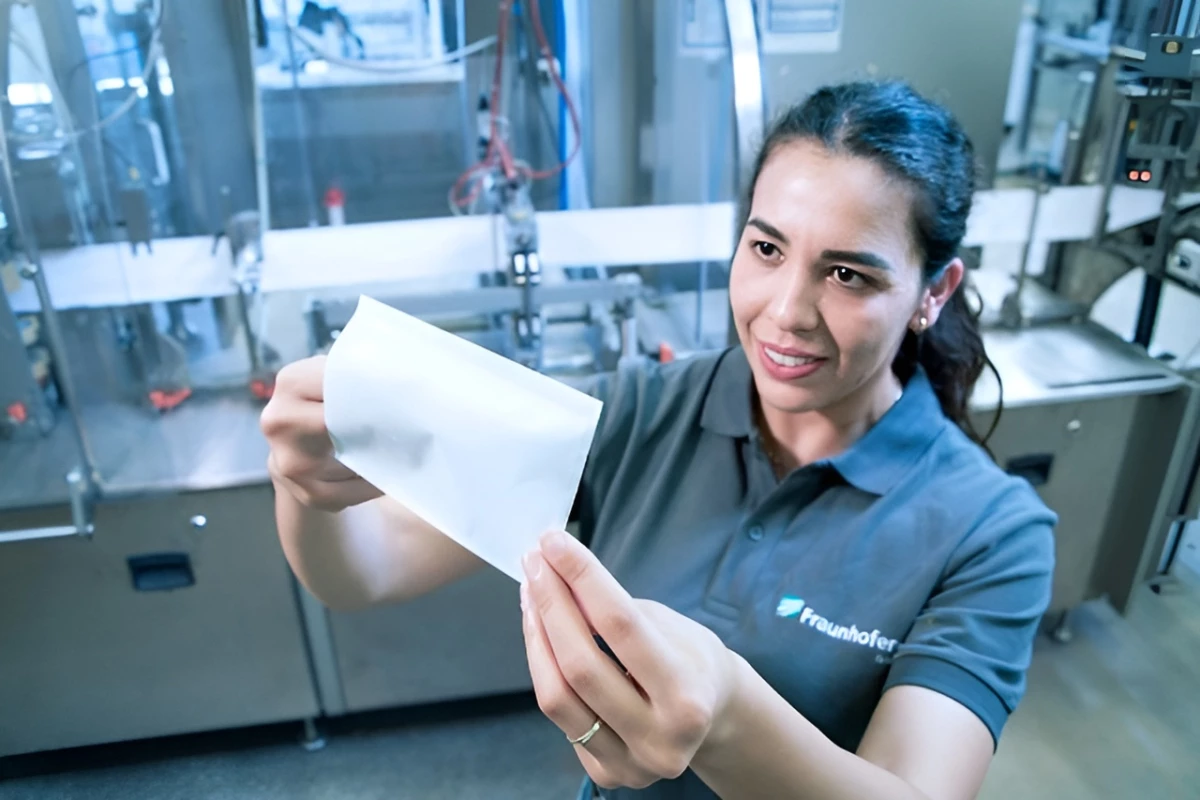
For a long time, plastic has remained an irreplaceable material for packaging due to its ability to provide airtight seals, even in paper products. Traditionally, adhesives or plastic layers have been used to reliably seal paper. However, scientists have now developed a technology that allows these components to be eliminated.
The Challenge of Sealing Paper Packaging
Despite efforts to reduce plastic use by switching to paper packaging, plastic is still necessary to ensure airtightness. Paper has a porous structure, allowing air to pass through and liquids to leak, making it insufficiently reliable for storing food and chemicals without additional protection.
As a result, most paper packaging for food and household chemicals contains plastic elements. Examples include milk and juice cartons with polyethylene coatings, paper bags for cookies and chips with heat-sealable plastic films, as well as coffee cups and takeout boxes with plastic seams or linings. The presence of plastic complicates recycling and reduces the biodegradability of such packaging.
A New Approach to Creating Airtight Packaging
To address this issue, research institutes of the Fraunhofer Society (Germany) have joined forces in the PAPURE project. The project's goal is to develop a laser heating process that enables the creation of packaging without adhesives and completely eliminates the need for plastic.
A Multi-Stage Process
The process begins with analyzing different types of paper to determine their suitability for thermal processing. The content of biocellulose, including hemicellulose, cellulose, and lignin, is assessed, as these components affect the adhesive properties of paper. The presence of inorganic compounds, such as talc and calcium carbonate, is also studied, as they can negatively impact seam strength.
Laser Treatment
The main innovation lies in using a CO-laser to treat the paper surface. The laser rapidly heats the paper, transforming lignin, hemicellulose, and cellulose into short-chain compounds. As a result, a fusible decomposition product forms on the surface, which, when exposed to heat and pressure, creates an airtight seal.
This technology makes it possible to use the paper's own biocomponents to create a glue-like substance suitable for heat sealing, without adding synthetic materials.
Developing Sealing Systems
Alongside laser treatment, sealing systems for the processed paper are being developed. The properties of the material, laser parameters, and characteristics of the fusible products are analyzed to optimize the strength and airtightness of the seams. Key parameters include time, temperature, pressure, and the geometry of the tool.
Results and Prospects
Research has already demonstrated the high strength of the new bonds: a seam 2 cm long and 3 mm wide can withstand loads of up to 20 kg. A laboratory modular production unit has been developed, capable of manufacturing flat four-sided pouches used for packaging. This unit can be integrated into existing production lines, allowing companies to easily switch to eco-friendly, plastic-free packaging.