

Vivid dreams enhance the sensation of deep sleep.
A new study has shown that vivid and immersive dreams can actually enhance the feeling of deep, restorative sleep rather than disrupt it. This discovery helps to better understand the subjective perception of sleep quality and its connection to mental well-being.
Cursus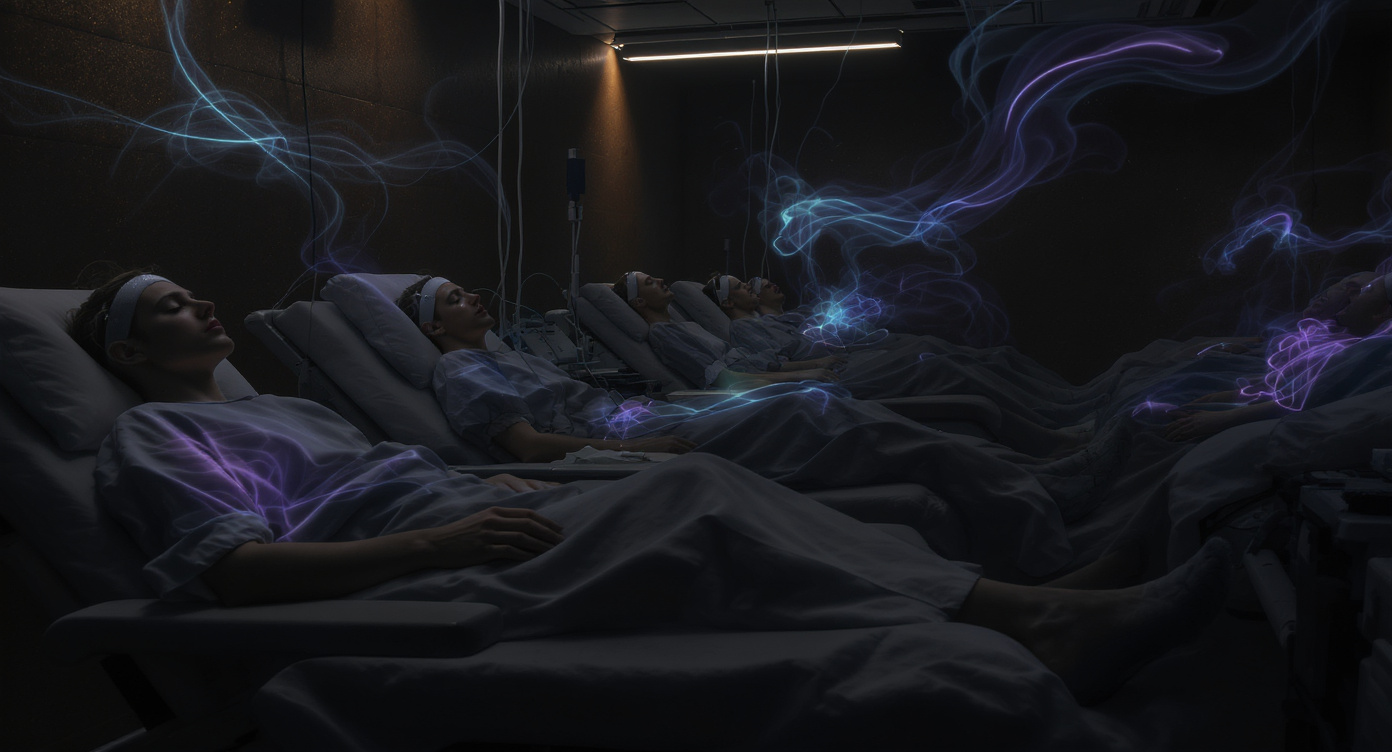
The feeling of having had a truly restful night's sleep is determined not only by its duration, but also by how deeply and uninterruptedly a person believes they have slept. The mechanisms that create this sense of deep and restorative rest are still not fully understood.
A recent study conducted at the IMT School for Advanced Studies Lucca and published in PLOS Biology has revealed an unexpected factor: vivid and immersive dreams can actually enhance the sensation of deep, restorative sleep, rather than disrupt it.
Traditionally, deep sleep has been viewed as a state dominated by slow brain waves, minimal brain activity, and an almost complete lack of consciousness. Dreams were mostly associated with the rapid eye movement (REM) phase of sleep and considered a sign of partial brain awakening. However, there is a paradox: despite the intense dreaming and brain activity similar to wakefulness, REM sleep is often perceived as deep sleep.
In the study, researchers analyzed 196 nights of sleep recordings from 44 healthy adults who slept in laboratory conditions under high-density electroencephalography (EEG) monitoring. Over four nights, participants were awakened more than 1,000 times and asked to describe their sensations just before waking, as well as to rate the depth of their sleep and their level of drowsiness.
The results showed that the feeling of the deepest sleep arose not only in the absence of conscious experiences, but also after vivid, immersive dreams. In contrast, light sleep was associated with minimal or fragmented experiences, such as a vague sense of presence without clear dream content. The key factor was not all mental activity during sleep, but the quality and depth of immersion in those experiences.
Throughout the night, even as physiological signs of sleepiness decreased, participants reported that their sleep felt deeper as the night went on. This subjective deepening of sleep closely correlated with how immersive their dreams became. The data suggest that dreams may help maintain the sensation of deep sleep even as the biological need for sleep diminishes. Immersive dreams also contribute to a sense of detachment from the outside world—a crucial feature of restorative sleep—even if parts of the brain remain active.
Understanding how dreams contribute to the perception of deep sleep opens new perspectives for studying sleep health and mental well-being. If dreams help sustain the feeling of deep sleep, changes in dream characteristics might partly explain why some people feel they sleep poorly despite normal objective measures. Immersive dreams may smooth out fluctuations in brain activity and support the subjective sense of sleep depth, echoing the hypothesis of dreams as "guardians of sleep."
The study was carried out as part of a broad collaboration between the IMT School, Scuola Superiore Sant'Anna in Pisa, and the Fondazione Gabriele Monasterio, where a new sleep laboratory has been established to combine neuroscience and medical expertise. The laboratory supports a multidisciplinary approach to studying sleep and sleep-wake cycles, allowing for a deeper understanding of how brain activity interacts with bodily processes. These findings represent a first step toward further research into how brain-body dynamics shape sleep in both healthy individuals and those with sleep disorders.