

Platypuses have amazed scientists with their unique pigment structures.
Platypuses have acquired yet another unique feature: their fur contains hollow spherical melanosomes, a type previously unseen in any other vertebrate. This discovery highlights the extraordinary nature of platypuses and, in several ways, brings them closer to birds.
Cursus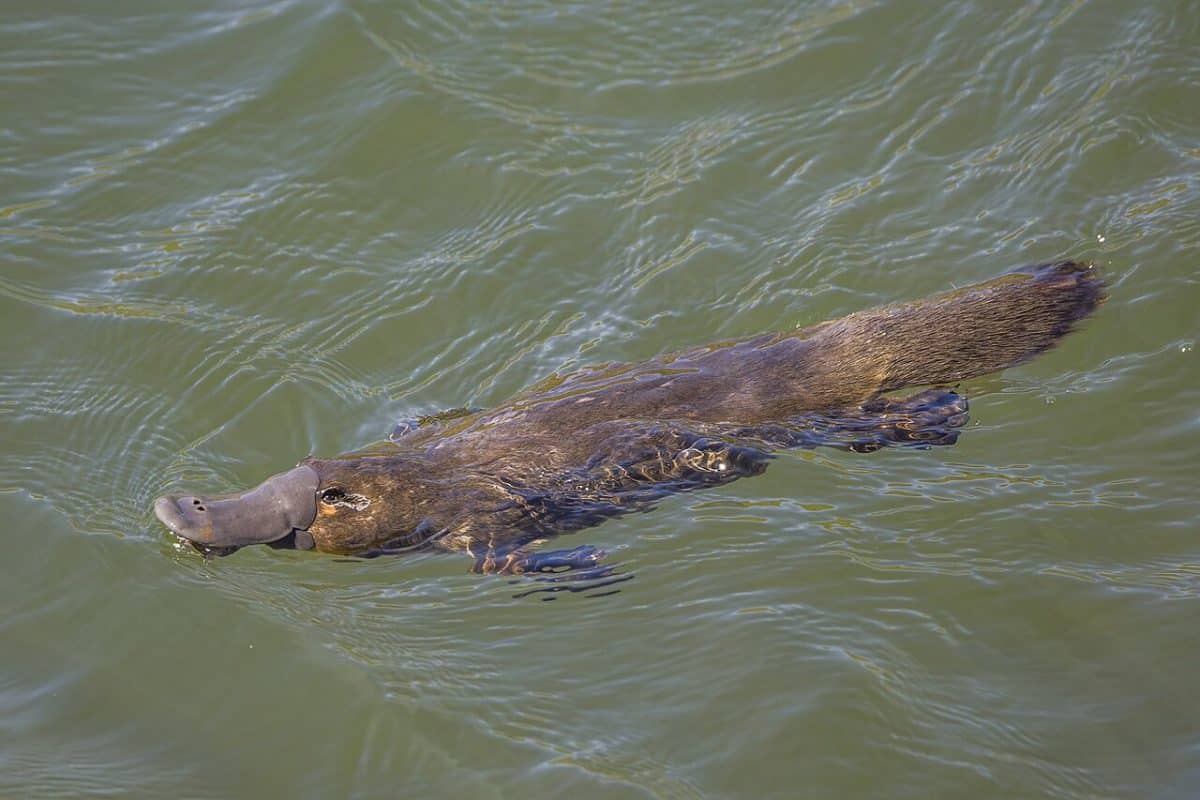
The already long list of unique features of the platypus has grown by one more. Researchers have discovered melanosomes—cellular structures responsible for synthesizing the pigment melanin—in the cells of their fur, with a structure never before seen in any other vertebrate animal.
Unique Features of the Platypus
The platypus (Ornithorhynchus anatinus) is a semi-aquatic mammal with a body resembling a beaver and a bill similar to that of a duck. In addition to their unusual appearance, these Australian animals possess several other distinctive traits: they lay eggs, have venomous spurs, can sense electrical impulses, glow under ultraviolet light, and have five times more sex chromosomes than most other animals.
A New Discovery in Melanosome Structure
A recent study published in the journal Biology Letters revealed that the dense, dark brown fur of platypuses contains melanosomes with a unique structure not previously found in other vertebrates. Melanosomes are organelles present in melanocytes, specialized skin cells that produce melanin. This pigment determines the color of skin, eyes, hair, fur, and feathers. The main functions of melanosomes are the synthesis, storage, and transport of melanin to other skin cells—keratinocytes.
Diversity of Melanosome Forms
The structure of melanosomes varies among different species. They can be spherical, elongated, rod-shaped, or flattened, and may be solid or hollow inside. In mammals, melanosomes are typically solid, while hollow melanosomes have only been observed in certain bird species with bright colors and iridescent feathers. In birds, hollow melanosomes always have an elongated or flattened shape and are organized into nanostructures that create an iridescent effect.
Peculiarities of Platypus Melanosomes
During the creation of a database of mammalian melanosomes, it was found that platypuses have hollow melanosomes, like some birds, but with a spherical shape. This combination has not been observed in any of the 126 studied vertebrate species, including other egg-laying mammals such as echidnas.
Melanosomes produce two main types of melanin: eumelanin (black, gray, and dark brown shades) and pheomelanin (reddish, red, orange, and yellow shades). In mammals, the shape of melanosomes is closely linked to color and is determined by the chemical composition of melanin: red and orange hair contains more spherical melanosomes than black and dark brown hair.
In platypuses, the hollow spherical melanosomes do not give the fur an iridescent glow, bright colors, or reddish and orange hues. Instead, they color the fur exclusively dark brown, making them even more unique. It is still unclear whether these melanosomes predominantly contain pheomelanin, corresponding to their shape, or eumelanin, matching their color.
Evolutionary Questions
It remains a mystery how and why platypuses developed such unusual melanosomes during evolution. One hypothesis suggests that platypuses and echidnas may have inherited hollow melanosomes from a common ancestor of mammals and birds, but echidnas later lost them. According to this theory, the ancestors of platypuses and echidnas led an aquatic lifestyle, and hollow melanosomes could have been an adaptation for better thermal insulation. When echidnas transitioned to a terrestrial lifestyle, this feature became unnecessary, but it was retained in platypuses. However, it is still unclear why hollow melanosomes are absent in other aquatic mammals.
Similarities with Birds
In addition to hollow melanosomes, the platypus shares other traits with birds, such as the ability to lay eggs. This new discovery adds yet another similarity between platypuses and birds, identified more than two centuries after the first scientific description of this animal.