

Floating Data Centers: An Eco-Friendly Solution for AI
As AI energy consumption increases, engineers are seeking sustainable solutions for data centers. Aikido Technologies offers autonomous floating platforms equipped with wind power and seawater cooling, minimizing the load on power grids and reducing environmental impact.
Vigor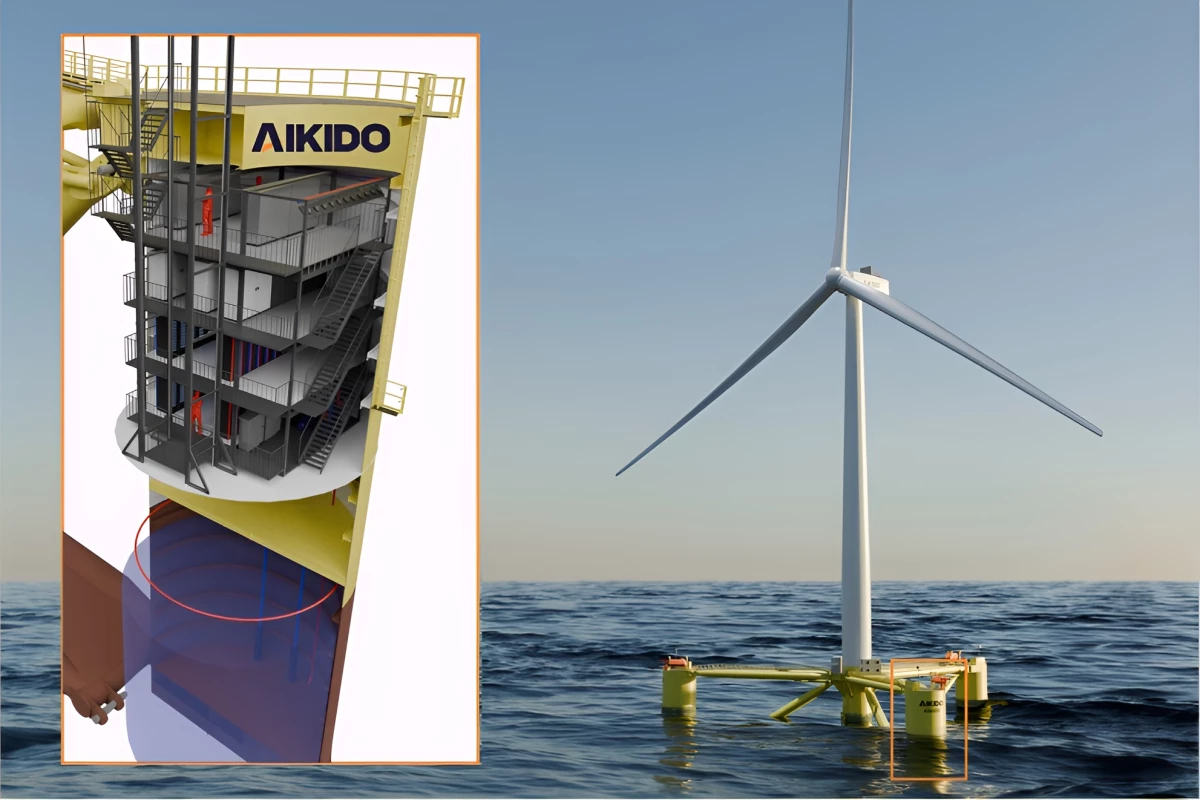
AI Energy Consumption Growth and Challenges for Data Centers
As the computational demands of artificial intelligence increase, so does the energy consumption of data centers. In 2025, data centers serving AI are projected to use 448 TWh of electricity—comparable to Germany’s annual energy needs. Forecasts suggest this figure could double within five years. Such high energy usage places significant strain on local power grids and raises concerns about the stability of AI operations, especially as the world transitions to renewable energy sources.
Seeking Sustainable Solutions
Efforts are underway to reduce data centers’ dependence on traditional power grids, including through local generation of clean energy. However, building new data centers and the necessary infrastructure often faces opposition in the US and Europe due to concerns over land use, energy consumption, and environmental impact.
The Floating Offshore Data Center Concept
San Francisco-based Aikido Technologies has proposed a solution that combines offshore wind power, autonomous energy supply, and the placement of data centers far from residential areas. The AO60DC concept envisions a floating platform integrating a large wind turbine, battery storage, and a modular data center. This platform is located directly at the renewable energy source, merging power generation, computing, cooling, and energy storage within a single structure.
Platform Design
The platform resembles a floating foundation for an offshore wind installation with three supporting legs. Inside each leg are sealed data center modules housing rows of servers. The wind turbine mounted above supplies electricity to the computing systems, while seawater is used for cooling. Ballast tanks at the ends of the legs are mainly filled with fresh water to maintain buoyancy, and at the top of each tank is a data hall with a capacity of 3–4 megawatts.
A single three-legged platform can support a computing capacity of 10–12 megawatts, powered by a 15–18 megawatt turbine. Built-in batteries store excess energy and smooth out fluctuations in wind generation. Grid connection is available as a backup, but the main goal is autonomous operation using locally generated renewable energy.
Cooling and Energy Efficiency
The data centers are housed within the submerged legs of the structure, protected by steel walls and cooled by seawater. The system uses a passive heat dissipation mechanism, transferring heat through the steel walls of the ballast tanks directly into the surrounding water. According to estimates, the thermal impact on the ocean is limited to just a few meters around the structure.
The platform is expected to achieve a Power Usage Effectiveness (PUE) of 1.08 thanks to its passive cooling system. For comparison, the global average PUE for data centers is around 1.5.
Manufacturing and Deployment
All the systems and technologies needed to realize this concept already exist. Modular steel structures can be manufactured at existing plants, while the turbine, battery system, and platforms are delivered to the site ready for integration. Data halls are built on land and installed on the platform during final assembly in port.
Aikido plans to utilize over 50 GW of underused floating wind platforms worldwide, which can be quickly repurposed to host data centers.
Development Prospects
In the future, the company aims to build offshore wind farms capable of supporting computing capacities from 30 megawatts up to more than 1 gigawatt. The first 100-kilowatt prototype, equipped with a modernized Vestas V-17 turbine, is scheduled to launch in the North Sea off the coast of Norway by the end of 2026. The first commercial project is planned for the UK, with a launch in 2028; the site has already been selected, and engineering and commercial discussions are underway.