

Needles of Ancient Peoples: More Than Just Sewing
A new study reveals that needles and awls used by ancient peoples served not only for sewing clothes, but also played roles in rituals, medicine, tattooing, and weaving. Only about a third of cases were actually related to protection from the cold.
Cursus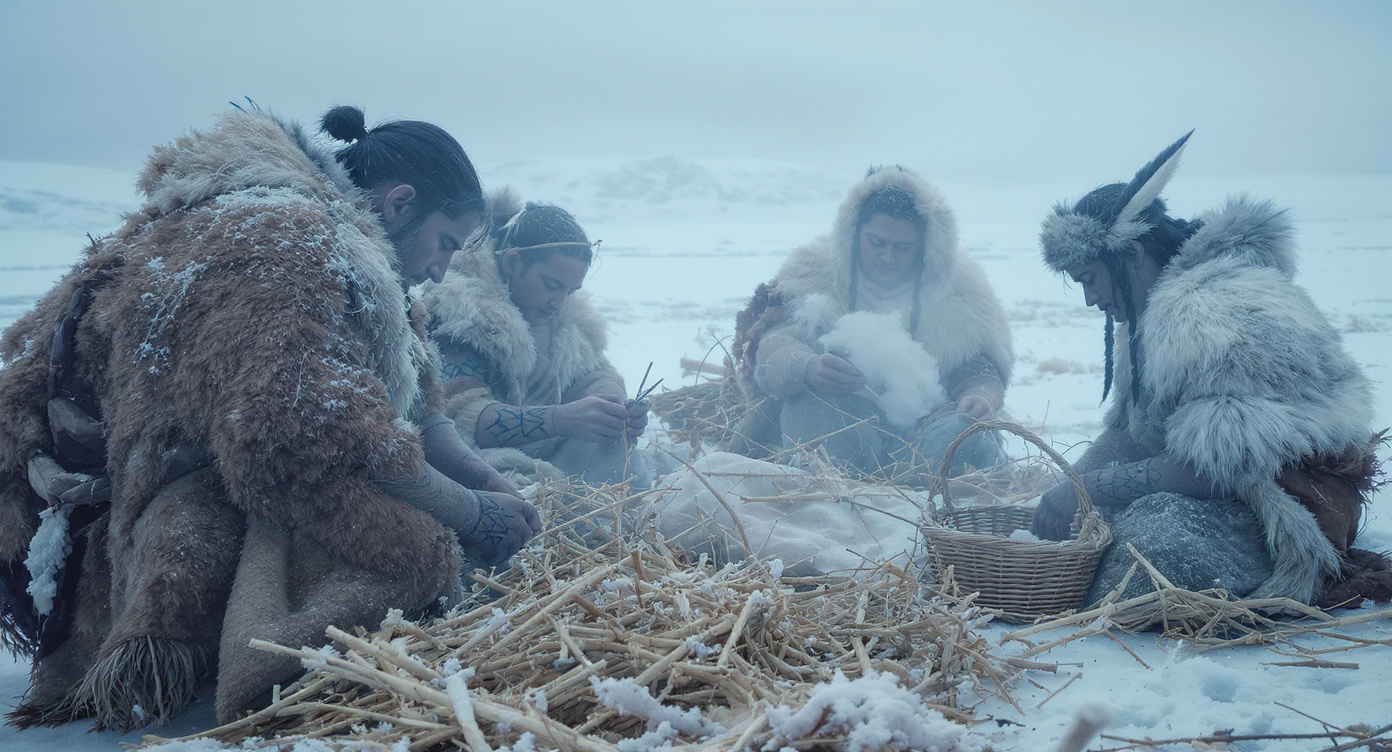
The use of needles and awls by ancient people is traditionally associated with making clothing, but research shows that these tools had a much broader range of applications—from tattooing to basket weaving.
Archaeological finds of bone needles and awls are usually interpreted as evidence of sewing, which has formed the basis for theories about human migration. It is believed that the ability to create warm clothing allowed people to survive in cold climates and settle new territories. However, ethnographic data from traditional societies indicate that bone points were used for more than just sewing.
A study conducted at the University of Wyoming (USA) analyzed the purposes of needles found at archaeological sites. The researchers examined data from 59 groups of Indigenous peoples in North America, living in a variety of climates—from the arctic deserts of Alaska to the deserts of the American Southwest. The authors organized hundreds of ethnographic documents and recorded 1,192 instances of needle and awl use.
As a result, they identified 92 different ways these tools were used. All cases were divided into two main categories: thermoregulatory (related to protection from the cold) and alternative uses. Only 31% of mentions referred to making clothing, footwear, blankets, and shelters, while the remaining 69% were unrelated to cold protection.
Among the alternative uses, ceremonies and rituals were most prominent, where the tools served as sacred objects or for creating ritual accessories. Needles were also widely used for tattooing. In medicine, needles were used for stitching wounds.
Women in many cultures actively used awls for weaving baskets and mats, as well as for processing hides when making coverings for dwellings and boats. Needles also served as items of trade and as components of fishing gear.
The researchers compared each ethnographic mention with the minimum average temperature of the coldest month in the group's region. The colder the climate, the more likely it was that needles and awls were present in the community. At an average coldest-month temperature of minus 35 degrees, the probability of having these tools was 52%. In warmer regions, where winter temperatures reached nearly plus 13 degrees, this probability dropped to 37%.
It is noted that the database used has certain limitations. The use of modern climate data does not account for possible local temperature changes over the past 100–150 years. Additionally, ethnographers may have recorded mainly unusual or exotic practices, overlooking routine and widespread uses.