

Hubble and Euclid unveil the secrets of the Cat's Eye Nebula
New images of the Cat's Eye Nebula, captured by the Hubble and Euclid telescopes, reveal its intricate structure and dynamic nature. This data will help astronomers gain a deeper understanding of such cosmic objects.
Cursus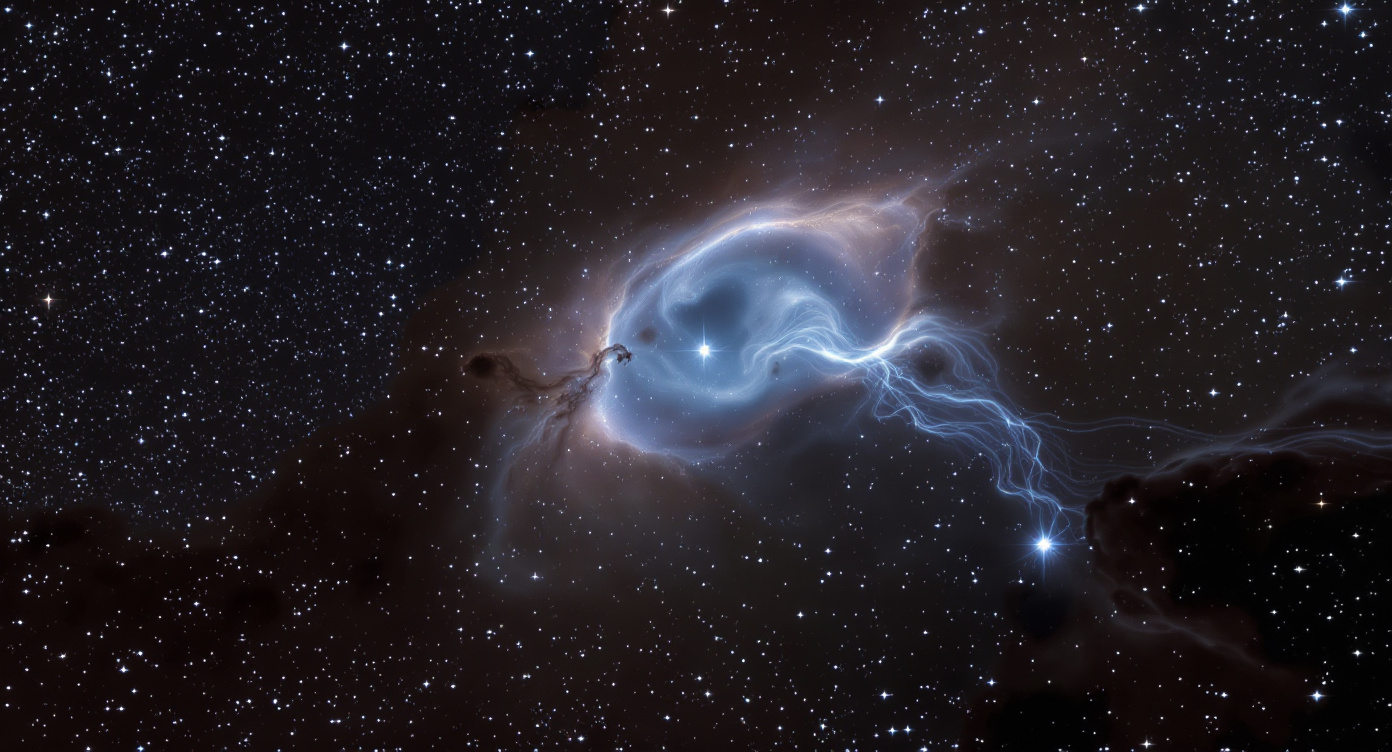
New images of the Cat's Eye Nebula, captured by the Hubble and Euclid telescopes, have been presented to the public. These images provide additional data for studying similar cosmic objects.
Nebulae are structures in space that attract astronomers' attention due to their chemical composition. When a star reaches the end of its life cycle, it goes through several stages, some of which remain insufficiently studied to this day.
The Cat's Eye Nebula, also known as NGC 6543, is located about 4,400 light-years from Earth. Discovered in 1864, it helped establish that the round shape of such nebulae is caused by expanding gas surrounding the star. In 1995, the Hubble Space Telescope conducted a detailed study of this structure, contributing to a deeper understanding of planetary nebulae.
Recently, the Hubble and Euclid telescopes took new photographs of the nebula, highlighting its intricate structure. In one of the images taken by Euclid, a bright gaseous halo can be seen moving away from the central star. Hubble captured the central region of the nebula, where streams of gas are observed moving at high speeds. This data allows scientists to assess the dynamics of the processes occurring at the core of the object.
The obtained images and research results will help astronomers better understand the nature of the Cat's Eye Nebula and the composition of similar planetary nebulae.