

Titan and Saturn's rings formed after a collision
A new study suggests that Titan and Saturn’s famous rings may have formed as a result of a collision between ancient moons several hundred million years ago. The upcoming Dragonfly mission is expected to help confirm these hypotheses.
Cursus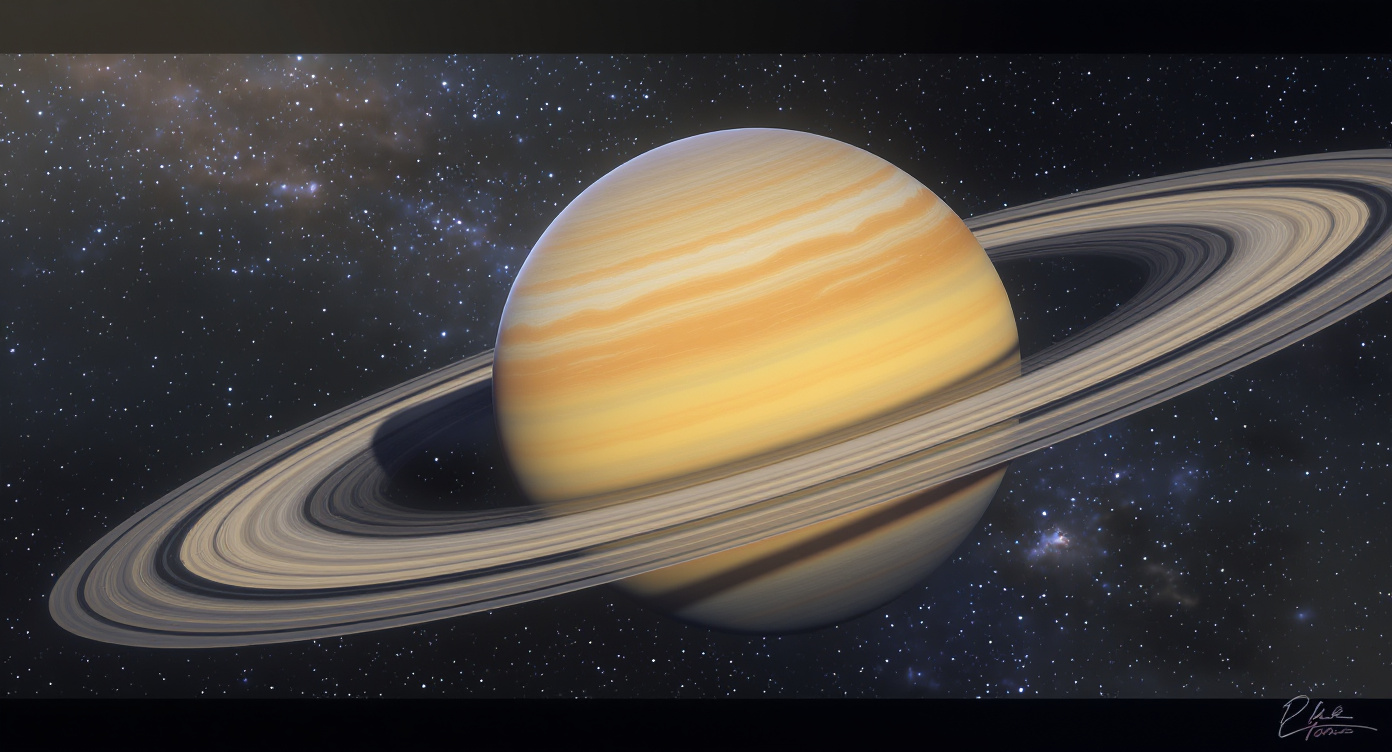
Titan, one of Saturn's largest moons, may have formed as a result of a massive collision between two other moons of the planet, according to recent research. Scientists believe this event could also have led to the creation of Saturn's famous rings several hundred million years ago.
The Mystery of Saturn's Moons' Origins
The origins of many moons in our Solar System remain not fully understood. Recent studies have allowed astronomers to propose a hypothesis that Titan, one of Saturn's 274 known moons, was formed as a result of a catastrophic collision.
Among Saturn's moons, some likely originated at the same time as the planet itself, about 4.5 billion years ago. Others are thought to be small asteroids captured by the gas giant's gravity. The Cassini-Huygens spacecraft revealed that Saturn's mass is concentrated closer to its center, which scientists believe is linked to the existence of an ancient moon that once orbited the planet.
Modeling Ancient Collisions
Computer simulations have enabled researchers to suggest that Titan was formed after a collision between a large moon and a smaller celestial body several hundred million years ago. Scientists believe a similar fate may have befallen Hyperion, another of Saturn's moons.
The Origin of Saturn's Rings
Simulations dedicated to the origin of Saturn's rings, which captivate thousands of observers, have shown that they could have formed as a result of numerous collisions between ancient moons. Titan's eccentric orbit may have played a key role in this process. Thus, Saturn's rings may have formed relatively recently—just a few hundred million years ago.
Future Research
To confirm these hypotheses, scientists are awaiting the results of the Dragonfly mission, which plans to land on Titan in 2034. This mission could provide new answers to questions about the origins of Saturn's moons and rings.