

Archaeologists have found the first evidence of Hannibal's war elephants.
Archaeologists have, for the first time, discovered direct anatomical evidence of war elephants being used in Hannibal's army during the Second Punic War on the Iberian Peninsula. This finding confirms historical accounts of Carthage's use of elephants in warfare.
Cursus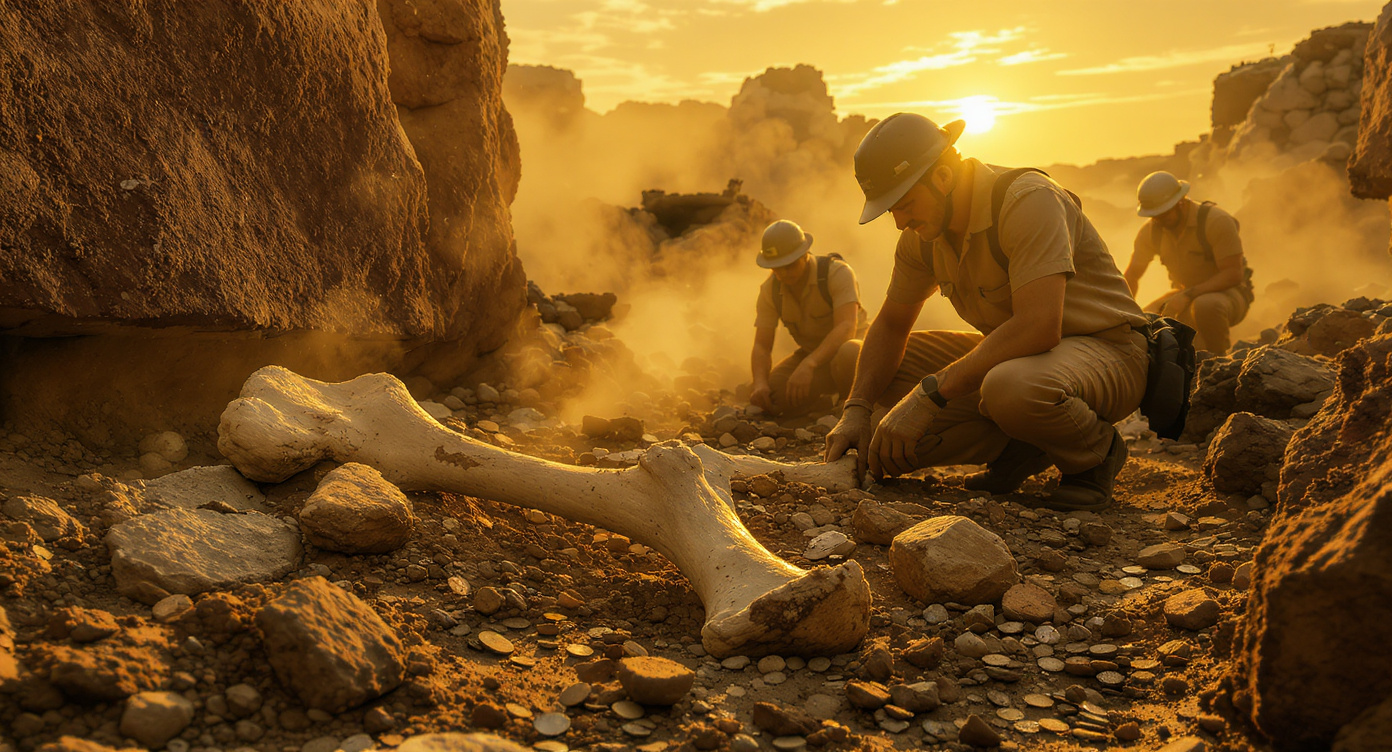
Legends about the use of war elephants in Hannibal's army have long been known, but until recently, there was no physical evidence confirming their participation in military campaigns. Recently, archaeologists in southern Spain discovered the first direct proof of these animals' presence during the Second Punic War.
Carthaginian War Elephants: From Legend to Fact
The use of elephants by the Carthaginians, especially during Hannibal's famous crossing of the Alps in 218 BC, has long been considered a well-established historical fact. However, until now, all information was based solely on written sources, coins, and works of art. Archaeological finds confirming the presence of elephants on European battlefields were virtually nonexistent. This led to debates about the reliability of historical accounts and made it difficult to determine exactly which species of elephants were used and how they arrived in Spain—whether from Africa or via Hellenistic states.
A Unique Discovery in Cordoba
In 2020, during excavations at the Colina de los Quemados site in Cordoba, a bone was unearthed. Before the founding of the Roman city at this location, there was an Iberian oppidum (fortified settlement). The bone was found beneath a collapsed wall of this oppidum. In the same archaeological layer, researchers found 12 stone projectiles for slings and coins, indicating a military conflict—the Second Punic War.
Scientific Analysis and Dating
A comprehensive analysis of the find, published in the Journal of Archaeological Science: Reports, allowed scientists to identify the bone as the metacarpal bone of the right forelimb of an adult elephant. Radiocarbon dating showed that the bone dates to between the 4th and 3rd centuries BC, which coincides with the timeline of the Punic Wars.
Elephant Species and Historical Context
Detailed taxonomic analysis revealed that, although it is difficult to determine the exact species from a single bone, the morphological data do not contradict historical accounts that Carthage used African forest elephants, which were smaller than their savanna and Asian relatives. The context of the discovery suggests that the bone belonged to an animal that died or was killed directly during the fighting at the oppidum walls, rather than being raw material or a trophy.
The Significance of the Discovery
This find represents the first known anatomical evidence of an elephant directly linked to the events of the Second Punic War on the Iberian Peninsula. Researchers believe the elephant belonged to the Carthaginian army that participated in the siege or assault of the settlement.