

Fireproof drones make rescue operations safer
In Switzerland, the FireDrone has been developed—a drone capable of operating at temperatures up to 200 °C and transmitting real-time data, which enhances the safety and efficiency of firefighters. This new technology helps minimize risks for rescue teams and speeds up response to emergencies.
Ingenium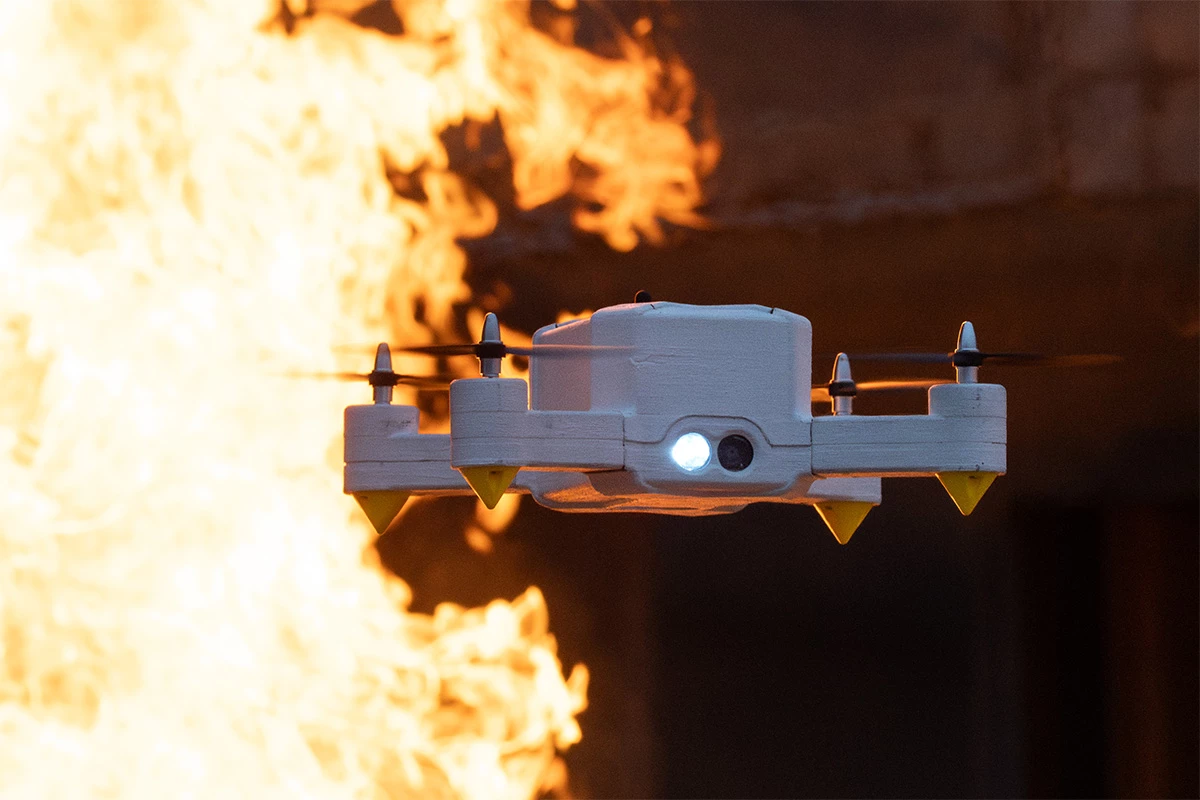
Firefighters will soon be able to rely on innovative assistants for working in extreme conditions—specialized drones capable of withstanding the high temperatures of open flames and transmitting visual data to assess the situation.
A Breakthrough in Firefighting Technology
In recent years, the Swiss Federal Laboratories for Materials Science and Technology (EMPA) in Dübendorf have been developing unique drones designed specifically for use in fire environments. The result is the FireDrone prototype, which successfully passed tests at temperatures up to 200 °C in 2023—a significant leap forward compared to conventional drones, which can only withstand up to 40 °C.
This progress became possible thanks to the use of an ultra-lightweight porous gel with air pockets that surrounds the drone’s electronics with an insulating layer, as well as heat-resistant plastic.
The New Generation of FireDrone
The development team has improved FireDrone’s insulation by replacing the composite structure reinforced with fiberglass with pure polyimide aerogel. This material can be molded into any shape, allowing all electronic components to be protected by a single solid piece. Additionally, the drone is now equipped with an internal temperature management system that monitors the electronics and, when necessary, activates active cooling to prevent overheating. Thanks to these innovations, FireDrone can withstand temperatures up to 200 °C for about 10 minutes.
Technical Capabilities and Applications
FireDrone is equipped with cameras and sensors that transmit high-quality thermal images in real time to a large-screen control panel. This enables several specialists to analyze the situation simultaneously. The drone’s flight characteristics are optimized for maneuvering indoors—in buildings, tunnels, and industrial facilities. Pilot assistance and localization systems function even without GPS, which is especially important in challenging environments.
While FireDrone’s primary purpose is to assist in rescuing people from burning buildings, it is also invaluable for tackling industrial fires, such as at plants with furnaces or chemical factories, where dangerous temperatures can persist for several days.
Enhancing Safety and Efficiency
Using such drones helps not only to reduce damage and losses for businesses but also to minimize risks for firefighters when inspecting hazardous sites. Drones can fly ahead of rescue teams in complex structures like residential buildings and parking garages, providing a clear view of the situation through smoke. This allows for faster response to incidents, reduces the time people spend in dangerous environments, and lowers the risk of explosions.
Development Prospects
In recent years, the FireDrone concept has evolved from a research project into a product now being developed by an EMPA subsidiary for commercialization. The drone has undergone extensive testing at training grounds and a cement plant in Switzerland.
FireDrone is designed to be equipped with additional sensors for detecting gases released during fires and for measuring external temperatures. A portable thermally insulated service and charging station is also being developed, which is planned to be integrated into fire trucks. Furthermore, work is underway on software for data analysis and automated reporting based on information collected by the drone.
All these innovations are expected to make firefighting significantly safer and more predictable in the near future.