

The most complete Homo habilis skeleton has been discovered in Kenya.
A new discovery in Kenya—the most complete Homo habilis skeleton ever found—has allowed scientists to describe its structure in detail for the first time and confirm the unique place this species holds in human evolution.
Cursus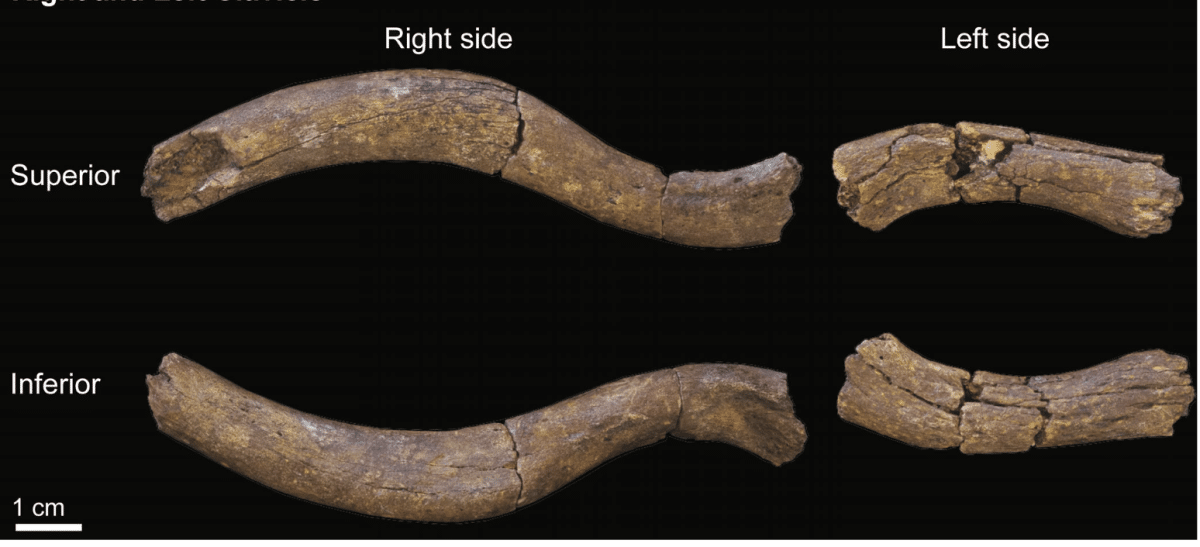
Some members of the genus Homo, such as Homo habilis, remain poorly understood due to the limited number of discoveries and the poor preservation of their remains. The recent discovery of the most complete Homo habilis skeleton in Kenya has provided scientists with new insights: Homo habilis was a miniature transitional form within the Homo genus.
The Unique Role of Homo habilis in Evolution
Homo habilis occupies a special place in paleoanthropology. It is considered one of the earliest representatives of our genus, living approximately 2.5 to 1.5 million years ago. For a long time, this species was more of a theoretical concept than a confirmed biological reality. Its status as the "first human" is linked to two key features: an increase in brain volume to 600–700 cubic centimeters compared to australopithecines, and the presence of direct evidence of stone tool production.
Challenges in Study and New Discoveries
Despite the importance of Homo habilis, knowledge about its appearance, body proportions, and lifestyle remained fragmented and contradictory for a long time. Researchers mainly had isolated skull fragments and individual bones, which led to debates about the degree of "humanity" of this species and its similarities to australopithecines.
American scientists discovered and analyzed a Homo habilis skeleton in Kenya, dated to 2.02–2.06 million years ago. The results were published in The Anatomical Record. Previously, paleoanthropologists had found only three extremely fragmentary and incomplete skeletons of this species. The new find turned out to be the most complete and best-preserved to date.
Features of the Skeleton and Anatomy
The skeleton includes clavicles, fragments of shoulder blades, all the bones of both arms (humerus, radius, ulna), as well as parts of the sacrum and pelvis. Importantly, these postcranial remains were taphonomically and geochemically linked to an almost complete lower jaw and teeth, allowing scientists to confidently assert that all the bones belonged to a single individual. Such favorable conditions for studying Homo habilis had not existed before.
For the first time, a detailed morphological analysis made it possible to accurately describe the physique of Homo habilis. It turned out that this species represented a classic transitional form: its anatomy combined primitive traits inherited from australopithecines with progressive features characteristic of later humans.
New Data on Structure and Lifestyle
The study showed that Homo habilis had unusually long and strong arms, with forearms longer than those of the subsequent Homo erectus. This suggests significant physical demands and possibly the retention of adaptations for climbing. Despite the fragmentary nature of the remains, the pelvis demonstrates mechanics more similar to the genus Homo than to australopithecines. The bipedalism of Homo habilis was likely more efficient than that of its predecessors.
The discovered individual was a young adult, about 160 centimeters tall and weighing just over 30 kilograms. These parameters are smaller than those of the later Homo erectus and indicate a lighter and more agile being than previously assumed.
The Significance of the Discovery
Thus, the new find confirms that Homo habilis was a fully-fledged species with unique anatomy: a miniature but progressive creature with a powerful shoulder girdle, a developed pelvis, and transitional body proportions. It represents an evolutionary stage in which terrestrial bipedalism had not yet completely replaced arboreal skills.