

Solar panels purify seawater and extract lithium
Scientists have developed a new solar desalination technology that efficiently purifies seawater and allows for the extraction of valuable minerals, including lithium, without producing harmful waste. This system can simultaneously expand access to fresh water and create sustainable sources of useful resources.
Ingenium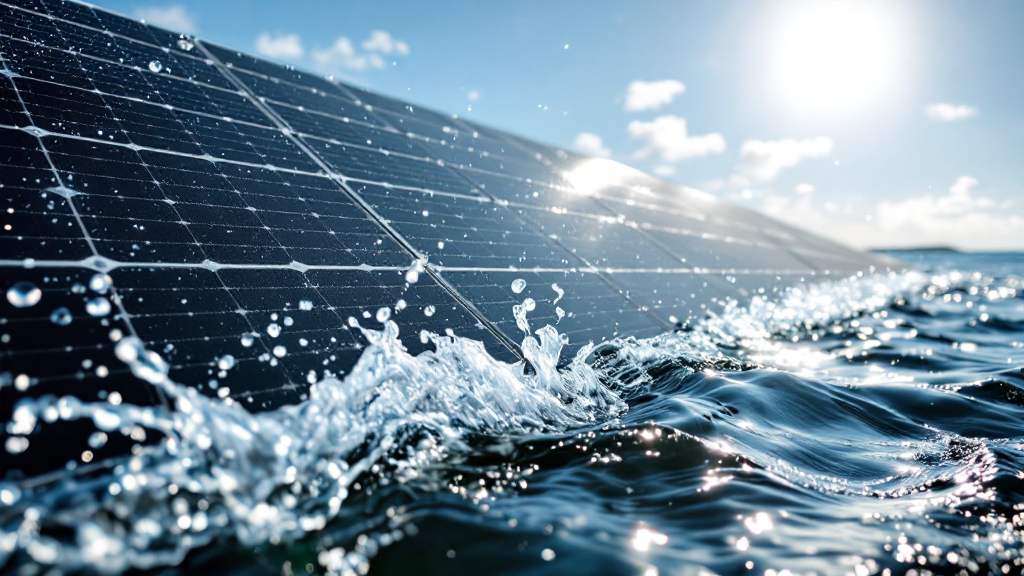
Currently, billions of people around the world face a lack of reliable access to safe drinking water. According to the United Nations, about 2.2 billion people do not have organized water supply, and in some regions, including California and the Middle East, desalination plants are increasingly used to obtain fresh water from seawater.
Modern Desalination Methods and Their Limitations
Desalinating seawater can become an important source of fresh water, but the most common technologies have significant drawbacks. Reverse osmosis uses special membranes to remove salt, while thermal distillation separates fresh water through heating. Both methods require substantial energy, often need pre- and post-treatment of water, and result in concentrated salty waste (brine). Discharging brine into the ocean increases local salinity and reduces oxygen levels, negatively impacting marine ecosystems.
A New Approach to Solar Desalination
Researchers at the University of Rochester have developed an alternative solar thermal desalination system that efficiently produces fresh water without generating liquid brine or requiring chemical additives for pre-treatment. The technology is based on solar panels made from black metal treated with femtosecond lasers. This treatment creates microscopic structures on the metal surface, greatly enhancing its ability to absorb sunlight and giving it super-absorptive properties—water spreads quickly across the surface instead of forming droplets.
How the System Works
Each panel contains an active area, laser-treated, that draws in a thin layer of seawater. The black metal almost completely absorbs solar radiation, heating the water and promoting evaporation. As the water evaporates, salts and other dissolved minerals remain on the surface. Instead of accumulating in the evaporation zone, the panel directs these substances toward untreated sections at the edges—the so-called passive area.
This movement is crucial because salt buildup is one of the main challenges for solar desalination systems. If minerals form a solid layer on the active surface, it can block water flow and halt the system’s operation.
Interaction with Seawater
In laboratory tests with artificial seawater (water with sodium chloride), salt crystals usually form a porous structure that allows water to keep moving, making surface cleaning easier. However, real seawater contains many other dissolved substances, including magnesium and calcium, which can create dense deposits similar to limescale in household appliances, but on a much larger scale.
As these deposits accumulate, water loses its ability to move freely across the surface, reducing efficiency and leading to system clogging.
Solutions to Prevent Clogging
To address this issue, the research team designed microscopic grooves in the black metal so that salts and minerals are pushed out of the active area and do not form a persistent crust. They also used a physical phenomenon known as the coffee ring effect: as liquid evaporates, suspended particles move to the edge of the droplet, forming a concentrated ring. This same principle is used to move salts into the panel’s passive area.
During experiments with real seawater collected from the Pacific, Atlantic, and Indian Oceans, the panel surface effectively self-cleaned, directing remaining salts into the passive area where they could be collected. Importantly, the desalination efficiency did not decrease.
Additional Benefits: Extracting Valuable Minerals
Unlike traditional methods, the new system extracts almost all dissolved salts in solid form, not as liquid brine, allowing them to be considered a resource. Some of the collected material can be used as table salt, and it may also be possible to recover more valuable minerals.
Lithium is of particular importance—a key element for manufacturing batteries used in electric vehicles, smartphones, and other electronics. A related study showed that super-absorptive solar panels can be modified to separate lithium from other salts. For this, nanohydrotitanate particles are embedded in the black metal’s microgrooves, selectively isolating lithium from the mixture of salts and minerals.
In experiments with samples from the Great Salt Lake, about 50% of the lithium contained in the salts after desalination was successfully extracted.
Technology Development Prospects
The technology is at an early stage of development and has so far been demonstrated only in relatively small experimental devices. However, the basic design is scalable and in the future could help expand access to fresh water and create sustainable sources of valuable minerals.
If successfully scaled up, this approach could simultaneously address two major challenges: producing more fresh water for the planet’s growing population and reducing the environmental impact associated with both desalination waste and mineral extraction.