

A loud shout is an effective way to scare seagulls away from food.
A study by British zoopsychologists has shown that to scare seagulls away from food, it is enough to shout loudly—these birds respond to a threatening tone of voice and fly off without the need for force.
Cursus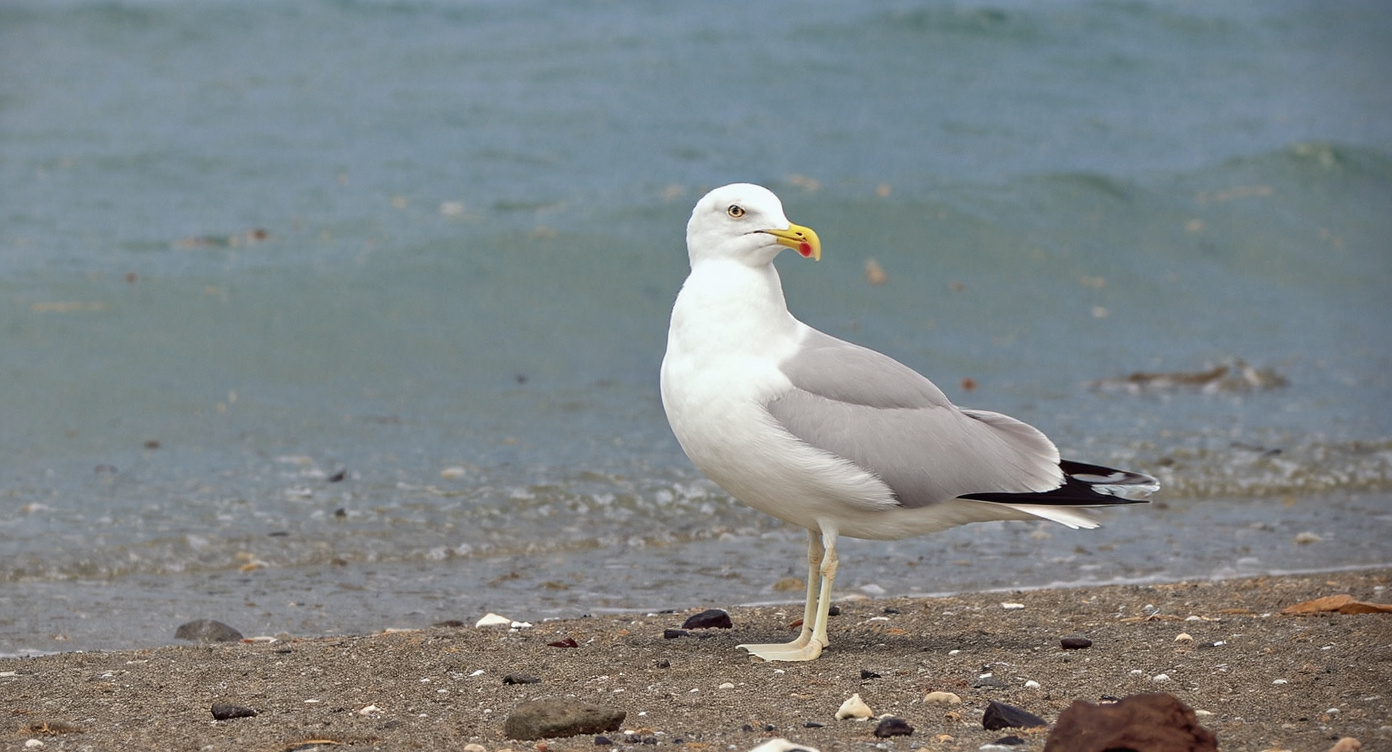
Zoopsychologists from the University of Exeter (UK) conducted an experiment that revealed: to deter persistent seagulls trying to steal food from passersby, it’s not necessary to use force—simply shouting loudly at them is enough.
The study, whose results were published in the journal Biology Letters, took place in February–March 2025 across nine cities in Southwest England. During the experiment, scientists tested three methods of scaring away 61 wild herring gulls (Larus argentatus).
How the experiment was conducted
To attract the gulls to the ground, researchers set out a closed box filled with chips. When the birds approached the bait, an audio recording of a male voice would play, loudly shouting: “No, don’t come closer, this is my food, this is my pie.” In the second scenario, the same text was spoken in a calm tone, and in the third, a neutral recording of a robin’s song (Erithacus rubecula) was played. All events were recorded on video.
Study results
In nearly half the cases when the shout was played, the gulls flew away within a minute. With the calm voice, only 15% of the birds left the area, though the rest still moved away from the food, sensing a threat. The robin’s song had almost no effect on the gulls’ behavior: about 70% of the birds stayed near the food throughout the experiment.
The researchers emphasized that all recordings were played at the same volume. This indicates that the gulls responded not just to a loud sound, but could distinguish acoustic features and signs of threat in the shout, making it more effective than calm speech.
Seagull perception features
“It seems gulls pay attention to how we speak, something previously observed only in domestic animals like dogs, pigs, and horses, but not in wild species,” noted one of the study’s authors, Neeltje Boogert, in a comment to The Guardian.
Practical significance
The aim of the experiment was to prove that deterring gulls does not require physical force. A male voice was chosen because men are involved in most incidents of harm to wild animals. In the future, specialists plan to test whether a female voice will be just as effective.
The researchers reminded that in the UK, herring gulls are considered a protected species due to declining numbers. The experiment showed that they can be deterred by peaceful means, without resorting to violence. Previously, scientists from the same university found that gulls are less likely to steal food if a person is watching them attentively.