

SSD and HDD prices have soared due to AI demand
Prices for enterprise SSDs and HDDs have risen significantly due to high demand for storage solutions supporting artificial intelligence infrastructure. HDD supplies are locked in by contracts until 2027, while SSD prices have increased 6.5 times over the past year.
Crius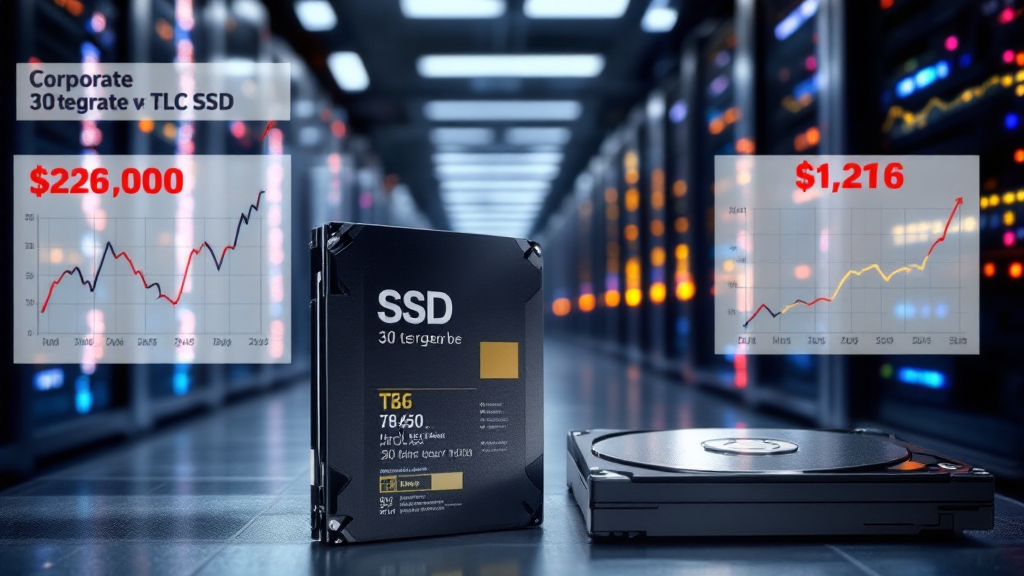
Rising SSD Prices
In recent months, there has been a significant increase in the prices of enterprise SSDs, driven by growing demand for data storage systems to support artificial intelligence infrastructure. Currently, a 30-terabyte TLC SSD costs around $22,600. For comparison, a hard drive of the same capacity is priced at approximately $1,216. Although HDDs remain much cheaper, securing their supply through 2027 is becoming increasingly challenging.
SSD vs HDD Cost Comparison
Flash storage is about 18.6 times more expensive than hard drives of equivalent capacity. This gap has narrowed slightly from its peak of 23.2 times in the first quarter, but SSDs are still considerably pricier. Over the past year, the price of a 30-terabyte TLC SSD has surged 6.5 times—from $3,460 to $22,600. In July, the Vdura index recorded an additional 5% increase in flash memory prices. HDD prices have also risen: a comparable 30-terabyte drive jumped from $495 in the third quarter of 2025 to $1,216 today, representing a 2.5-fold increase.
Impact on AI Infrastructure
The price difference is especially critical for data centers supporting AI infrastructure, which require vast storage capacities. Estimates suggest that a 25 PB storage system built entirely on SSDs would cost about $51.6 million at current prices. A hybrid system using both SSDs and HDDs would cost around $12.86 million, saving nearly $39 million.
HDD Shortages and Supply Challenges
Securing the necessary number of hard drives is becoming increasingly difficult. Major manufacturers like Seagate and Western Digital have allocated nearline HDD production under contracts through 2027. Western Digital has signed firm contracts with its largest clients for 2026 and agreements with several others extending into 2027 and 2028. Seagate has also committed nearly all its nearline drive capacity through 2027.
Clients without long-term agreements may be forced to turn to the spot market, where prices can significantly exceed the reference cost of $1,216 per drive. Analysts estimate spot market markups for HDDs in the range of 30–40%.
Trends in NAND and SSD Pricing
NAND memory prices continue to climb. In the third quarter, contract prices for NAND rose by 10–15% compared to the previous quarter, following increases of 70–75% in the second quarter and 55–60% in the first. In the first quarter, contract prices for enterprise SSDs jumped by about 80% in just one quarter.