

Lightning on Venus: The Mystery of Hidden Electrical Storms
Chemical traces have been detected in Venus's atmosphere, indicating frequent and intense lightning hidden beneath its thick clouds. Scientists are discussing the possible origins of these phenomena and their role in the planet's chemistry.
Cursus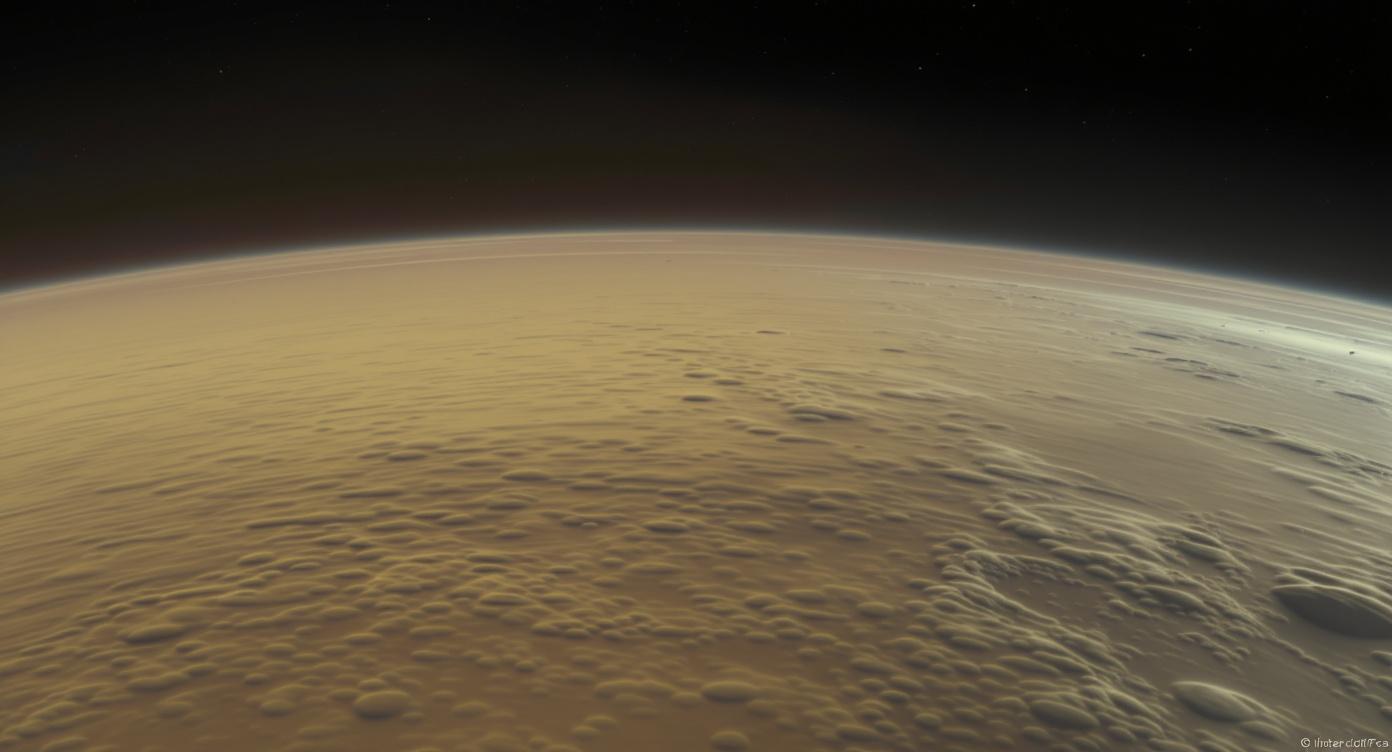
Scientists have detected chemical traces in Venus's atmosphere that indicate the frequent occurrence of lightning. Researchers from the University of Cambridge have determined that these electrical discharges are either significantly more powerful than those on Earth or happen much more often.
In the 1970s, Soviet Venera probes recorded optical signals and radio waves in the planet's atmosphere that could be linked to lightning. In 1990, the Pioneer Venus Orbiter detected low-frequency radio signals. In 2006, using NASA's ground-based infrared telescope in Hawaii, scientists discovered nitrogen oxide (NO) in Venus's atmosphere.
Venus's atmosphere is composed of about 96% carbon dioxide and 3.5% molecular nitrogen. The formation of nitrogen oxide requires energy strong enough to break the stable molecules of CO2 and N2. Nitrogen oxide has been detected at altitudes around 60 kilometers and lower, down to the planet's surface.
According to researchers' calculations, to produce the observed amount of NO, the total power of Venusian lightning must be about three times greater than that of Earth's. This suggests that the discharges are either more energetic or occur more frequently.
Direct observation of lightning is not possible because the light from the flashes is absorbed and scattered by Venus's dense sulfuric acid clouds. These clouds contain a significant amount of water in the form of hydrated sulfates.
There are hypotheses that lightning may also occur closer to the surface: volcanic lightning caused by friction between erupting particles, or aeolian lightning generated when dust and sand particles collide and are carried by winds in the dense atmosphere.