

The mystery of the thick crust on the far side of the Moon
Scientists have proposed a new hypothesis explaining why the crust on the far side of the Moon is thicker and contains fewer rare earth elements: its formation may have been influenced by heat radiating from the young Earth. This theory offers a fresh perspective on the differences between the two sides of the Moon, though it still leaves some questions unanswered.
Cursus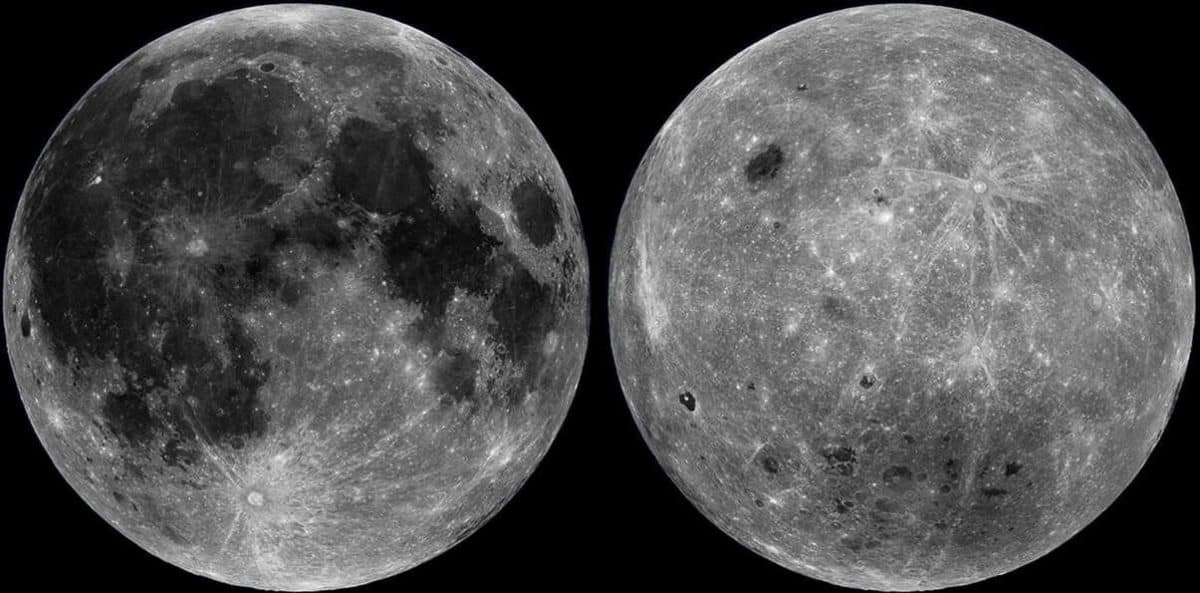
On the far side of the Moon, the crust is significantly thicker, and the concentration of rare earth elements is extremely low. According to a Chinese planetary scientist, this is linked to the influence of Earth, which we can still observe today as the "ashen light of the Moon" on clear nights.
The Discovery of the Moon’s Far Side
In 1959, the Soviet spacecraft Luna-3 took the first photographs of the far side of Earth’s natural satellite, causing a real sensation. The images immediately revealed striking differences between this part of the Moon and the side we see from Earth: there was an almost complete absence of dark basaltic seas and an abundance of craters. It also became clear that the crust on the far side is tens of kilometers thicker, and for some reason, rare radioactive elements are concentrated mainly on the near side.
Mysteries of the Lunar Crust
These differences have become the subject of ongoing scientific research. One hypothesis suggests that soon after the Moon formed, a large celestial body crashed into its far side, was completely destroyed, and covered almost the entire hemisphere with its material. The South Pole–Aitken basin, the largest and oldest lunar crater, is believed to be the result of this event.
A New Hypothesis on Earth’s Influence
Recently, Lü Wenshuai from the School of Physics at Henan Normal University proposed a different theory. In his article on arXiv.org, he suggested that the modern appearance of the Moon was largely shaped by Earth’s influence, and in a rather unusual way. The scientist believes that heat from the young, hot Earth played a key role. In space, atoms are extremely sparse and rarely interact, so the space between planets does not conduct heat directly.
The Mechanism of Heat Transfer
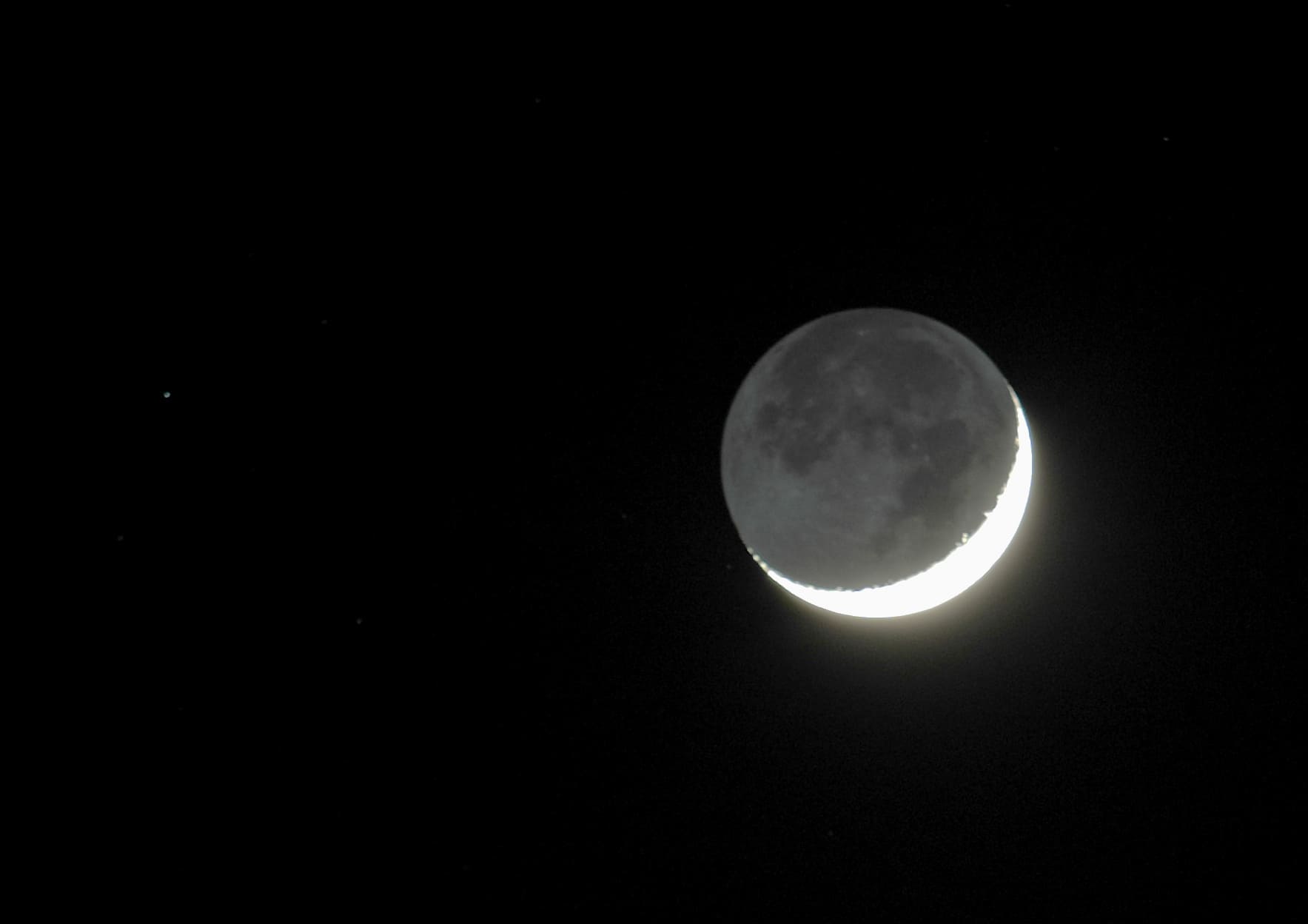
According to the researcher, heat was transferred by radiation—the same phenomenon we now see as the "ashen light of the Moon." This effect appears when, during the crescent phase, the part of the lunar disk not illuminated by the Sun is faintly visible thanks to light reflected from Earth.
Today, this light is very faint and has no physical impact. However, 4.5 billion years ago, the molten Earth emitted powerful infrared, that is, thermal, radiation.
Impact on the Moon’s Structure
The side of the Moon constantly facing Earth was heated, causing material movement: magma rose and spread across the near side, gradually flowing to the far side as well. In the cold conditions on the far side, the material solidified quickly, thickening the crust.
As for radioactive elements, this hypothesis suggests the opposite process. Initially, these elements were denser and heavier than the crust material and, under the influence of gravity, tended to sink deeper into the Moon. On the far side, where the crust is thicker, they could not penetrate through it, so they gradually migrated to where sinking was easier—to the near side.
Open Questions
It remains to be explained why radioactive elements are still present in the South Pole–Aitken basin, which is believed to be the result of an ancient impact on the far side of the Moon. Perhaps some of these elements managed to "flow" beneath the thick crust, and the impact of the celestial body broke through it, exposing deeper layers.