

Breakthrough in Oxide Material Control for Electronics
Scientists have developed a method to create twisted oxide materials with precise control over the angle between layers and strong chemical bonds. This technology opens up new possibilities for designing complex electronic devices and tailoring their properties.
Cursus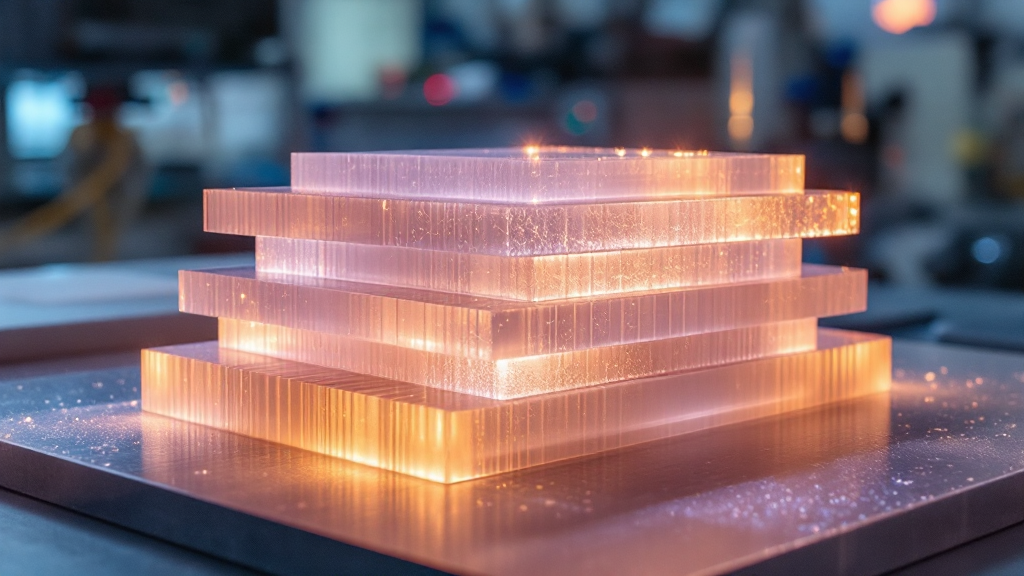
Researchers have developed a technique for creating twisted oxide materials on significantly larger surfaces, allowing for precise control over the rotation angle between layers. This approach broadens the potential applications of twistronics in practical electronic devices, enabling control over both the scale and internal structure of materials.
Features of Twistronics
Twistronics explores how changing the angle between layers of two-dimensional materials affects their electronic properties. Previous studies in this field focused on ultrathin materials connected by weak interlayer interactions. The new method makes it possible to use oxide materials bonded by strong chemical links, while still ensuring precise control over the twist angle between crystalline membranes. These robust bonds between oxide layers open up opportunities to study new interfacial phenomena. The research demonstrated that characteristics such as phase structure and domain configuration can be controlled, paving the way for designing materials and devices tailored to specific needs.
Manufacturing Technology
To demonstrate the method, crystalline membranes of sodium niobate (NaNbO3) were fabricated. Using photolithography, visual markers were applied to the edges of each membrane. One NaNbO3 membrane was then carefully placed on top of another, aligning the markers to precisely set the angle between the layers. After achieving the desired orientation, a special annealing process was used to form strong chemical bonds between the membranes.
Application Prospects
Crystalline membranes can be produced on large surfaces and transferred onto various substrates, opening the door to the creation of oxide electronics with controllable layer twisting. In the experiment, synchrotron X-ray diffraction was used to study the interface between two oxide layers. Measurements showed that the strong bonds not only hold the membranes together but also cause gradual rotation of the atomic lattice at the interface, as well as changes in the material's phase structure. The impact of these changes on material properties requires further investigation.
Opportunities for Further Research
In the experiment, NaNbO3 was used as a model system, but the method can also be applied to other complex oxide materials. The work demonstrates the possibility of creating large-area oxide twistronic materials with controllable twist angles and strong chemical bonding between layers. This opens new avenues for controlling the complex functions of oxides through layer twisting.