

The United Kingdom is accelerating the development of its carbon storage market.
The United Kingdom is actively developing the carbon storage market, exploring the use of new and repurposed pipelines for transporting CO2. These measures are considered essential for achieving the country's climate goals by 2050.
Vigor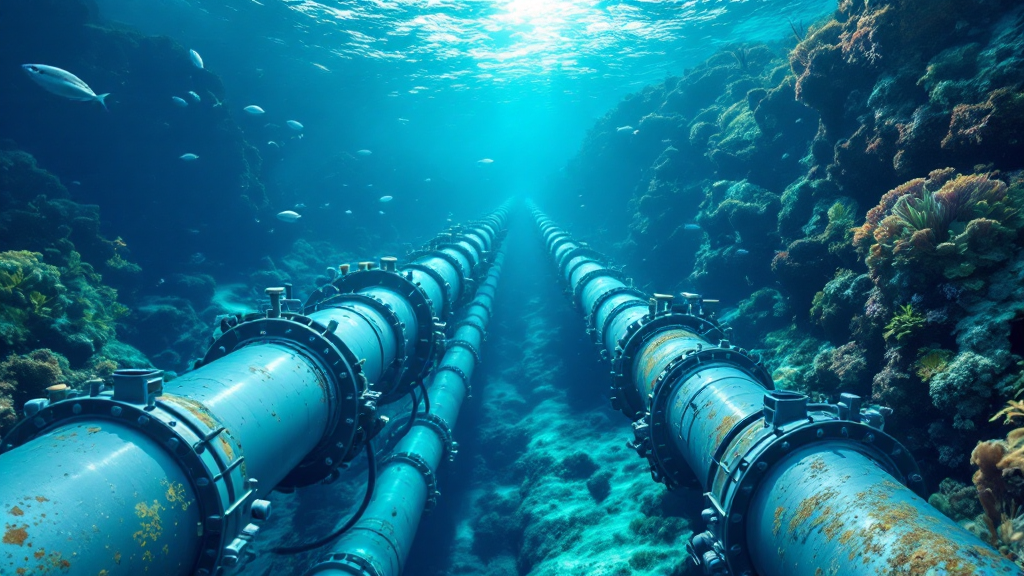
New research commissioned by the UK’s North Sea Transition Authority (NSTA) is aimed at developing the country’s carbon storage market.
These studies, now available to the industry, examine the use of both new and repurposed pipelines for transporting carbon dioxide for offshore storage.
The UK government views carbon capture and storage as a key tool for achieving its net zero emissions targets by 2050 and is supporting several projects, including the Northern Endurance Partnership and HyNet.
In 2023, the NSTA held its first round of carbon storage licensing, followed by a second round in December of the same year. Applications for the second round are currently under review.
The NSTA notes that defining detailed requirements for pipeline systems used in CCS (carbon capture and storage) is crucial for scaling up the sector in the UK.
To address the limited global experience with large-scale carbon pipelines, Penspen has prepared a report assessing the characteristics of new pipelines, including contamination management, fracture control, long subsea connections, as well as flow measurement and modeling.
A second study, conducted by DNV, focuses on converting existing oil and gas pipelines for CO2 transport and includes a methodology for assessing the feasibility of such conversions.
As the CCUS (carbon capture, utilization, and storage) sector develops in the UK, the reuse of offshore hydrocarbon pipelines is seen as a significant opportunity to accelerate technology deployment and make the most of existing assets.